.svg)
.svg)


What Is the Brand Naming Process, Step by Step?
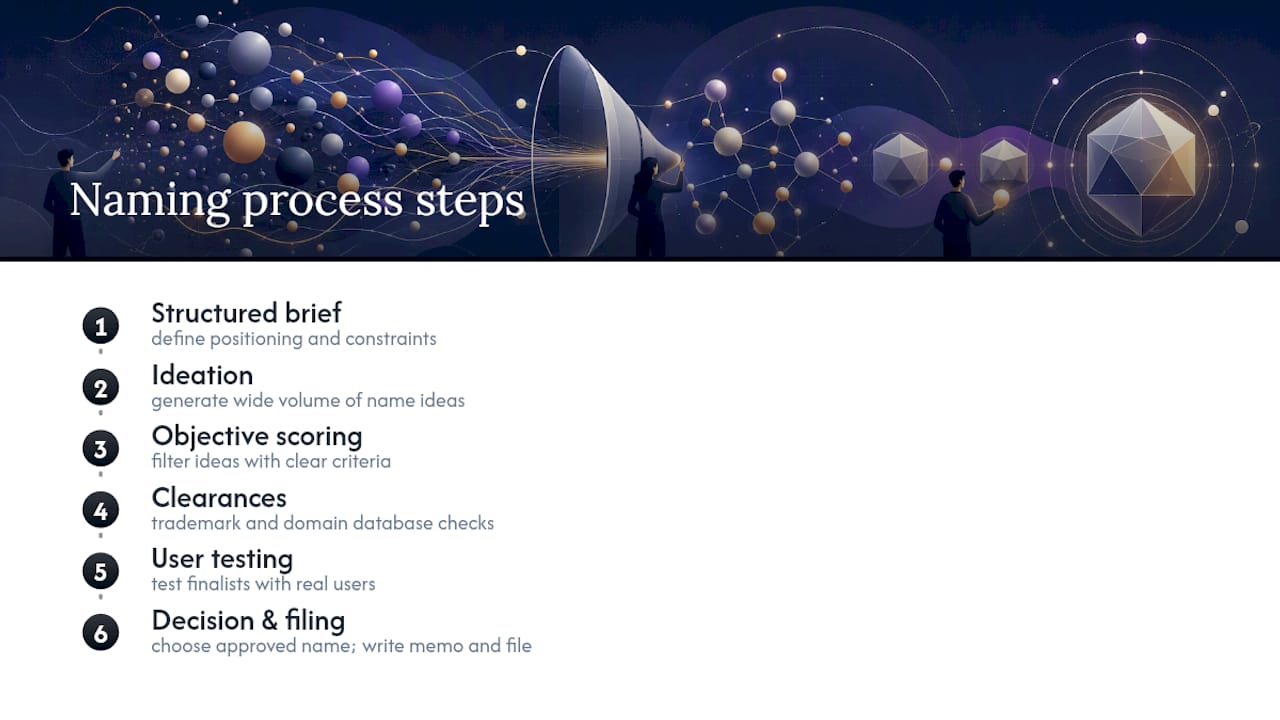
A brand naming process is really a filtering machine. You feed it a wide net of ideas and it narrows them down through legal, linguistic, and emotional checkpoints until one name survives every test. Martin Roll's naming toolkit describes this as a funnel, and that image holds up: volume goes in at the top, and only a name aligned with your positioning comes out the bottom, ready to carry the brand's differentiation into the market.
The stages, in order, look like this: write a structured brief, run ideation to generate volume, filter with objective scoring, clear the survivors against trademark and domain databases, test the finalists with real users, then write a decision memo and file. Stripe's own naming guide backs this sequence, and it specifically warns against letting domain availability checks block your creative thinking before you've even generated real options. That's a common mistake: killing a strong name in round one because the exact-match .com is taken, when a modified domain or a different top-level domain would have worked fine.
How long should this take and how much should it cost? Atlassian makes the point that naming is genuinely both art and science, and the depth of your process should scale to your budget and timeline, not to some fixed industry standard. A scrappy startup naming a side project can compress this into a week. A funded company launching across multiple markets should expect to spend real weeks on it, and we'll get into specific ranges in the timeline and budget sections below.
How Do You Write a Naming Brief?
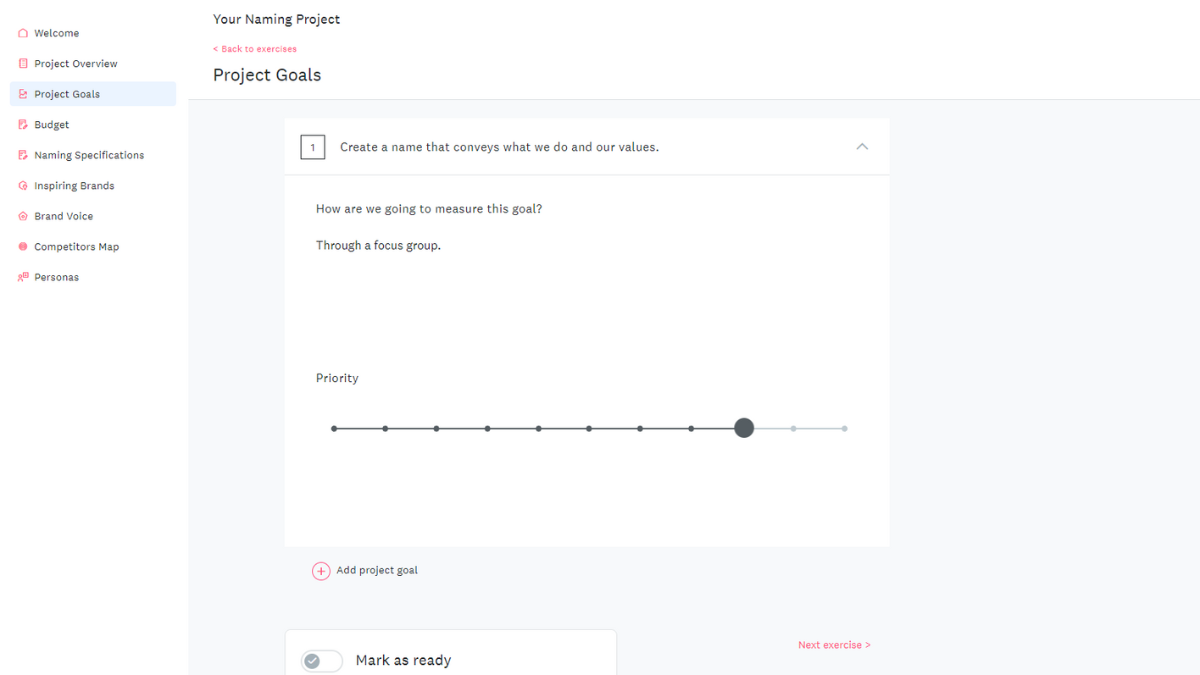
The naming brief, sometimes called the naming box, is the single document that prevents your project from turning into an endless argument about personal taste. Skip it, and you'll spend three weeks debating whether a name "feels right" with no shared criteria for what "right" even means. A structured brief and agreed constraints at the start of the project measurably reduce the late stage rework and reversals that sink naming timelines.
A working brief needs to answer five questions in five words or fewer each: What is the positioning? Who is the target cohort? What emotional territory should the name occupy? What are the non-negotiable must-haves? And what's explicitly off-limits?
Beyond that core, record the practical constraints that will shape every later decision:
- Domain requirements — which TLDs matter (.com, .co, a country-code domain) and whether an exact match is required or a modified version is acceptable
- Trademark classes — the Nice Classification categories your business actually operates in, since a clean check in the wrong class means nothing
- Language coverage — every market where the name needs to work, read, and mean something appropriate
- Budget ceiling — what you're prepared to spend across ideation, legal search, and testing
- Launch markets and timing — which countries come first, since that determines how many jurisdictions need clearance before day one
Sign-off mechanics matter as much as the content. Name one decision-maker with final authority, even if a committee contributes ideas. Circulate the brief in writing, get explicit sign-off (an email reply counts) from every stakeholder before ideation starts, and revisit it only if a genuine constraint changes, not because someone changed their mind about tone. A free branding checklist can give you a working template if you'd rather adapt one than build from scratch.
What Are the Main Types of Brand Names?
Every name falls somewhere on a spectrum from literal to abstract, and where you land determines how much marketing muscle you'll need to make it stick. Choosing a naming strategy is really choosing a tradeoff between instant clarity and long-term ownability.
- Descriptive names (Whole Foods, General Motors) tell customers exactly what you do on first contact, which shortens the education curve. The tradeoff: they're brutally hard to trademark broadly and offer almost no differentiation once competitors enter the category.
- Evocative names (Amazon, Nike) suggest a feeling or association without stating the product outright. They carry more emotional range but need marketing investment to build the connection in people's minds.
- Invented or coined names (Google, Kodak) are built from scratch, which makes them maximally protectable since no dictionary definition exists to dilute the trademark. The cost is that you're starting from zero brand recognition.
- Lexical names (Twitter, before the rebrand) repurpose a real word in an unexpected context. They're memorable because the word already lives in people's vocabulary, but you inherit whatever baggage that word carries.
- Acronymic names (IBM, HBO) compress a longer name into initials, useful for legacy brands shedding a clunky full name but weak for new brands with no existing recognition to shorten.
- Geographic names (Patagonia, Cisco) borrow a place's associations, strong for authenticity but risky if you ever expand beyond that region's story.
- Founder names (Ford, Dyson) trade on a real person's reputation and work well in professional services, though they cap out if you ever want to sell the business independent of that person.
Sound itself carries meaning before a listener processes the actual word. This is sound symbolism, and it's a real lever, not a gimmick: hard consonants like k and t read as fast, sharp, or technical, while soft sounds like l, m, and long vowels read as warm, slow, or trustworthy. Deliberate phoneme mapping during ideation lets you encode an emotional register into a name before a single person hears your tagline.
What Ideation Techniques Generate the Best Name Candidates?
Most naming projects fail not because the team lacked creativity, but because they stopped generating too early. The single best predictor of finding a genuinely strong, ownable name is sheer volume: teams that produce dozens of options before filtering consistently land on better finalists than teams that fall in love with idea number four.
Run ideation in structured rounds rather than one open-ended brainstorm:
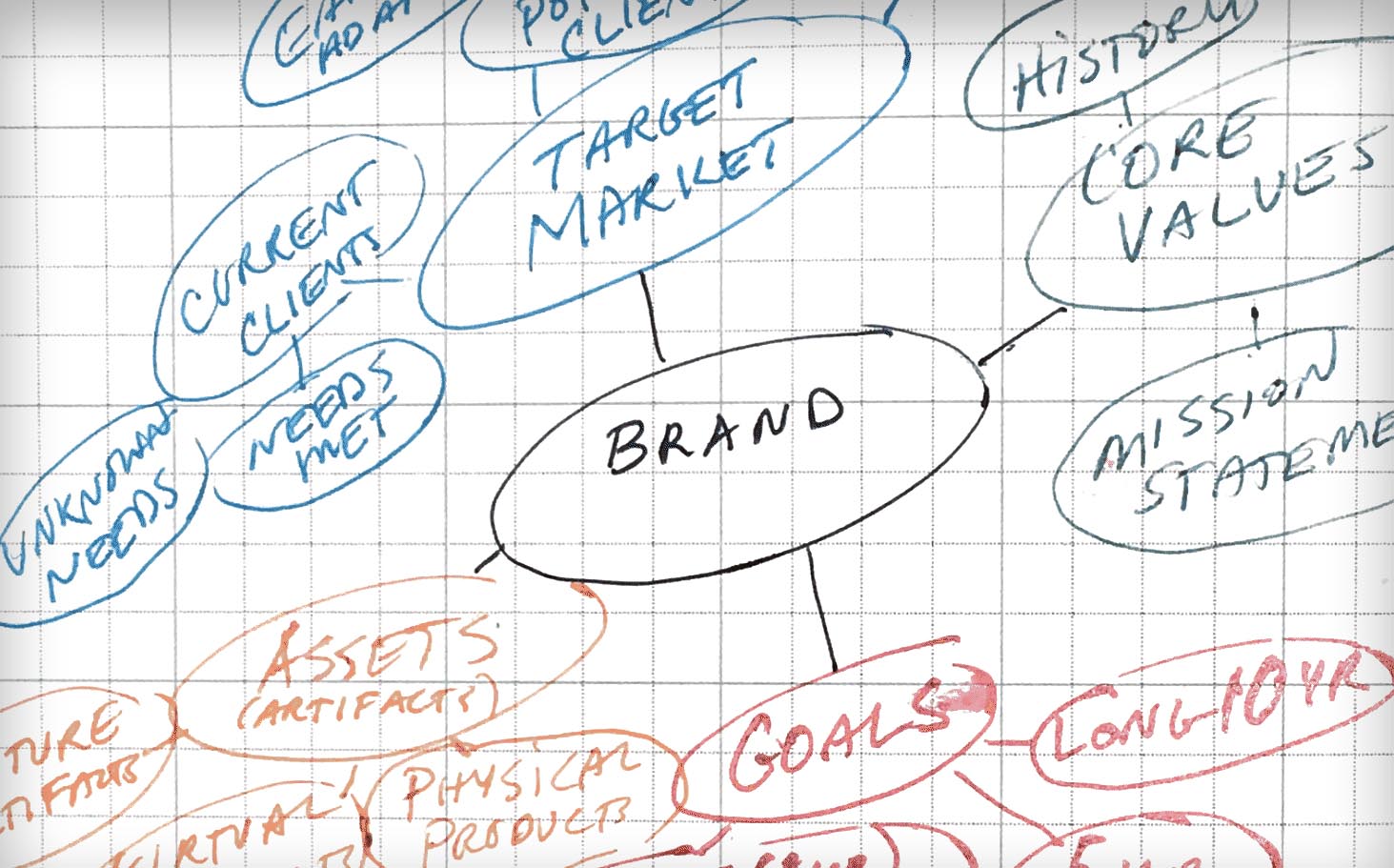
- Word mapping. Start from the brief's five keywords and branch outward with synonyms, related concepts, and adjacent industries. This surfaces lexical and evocative candidates fast.
- Found-object naming. Pull words from unrelated domains, mythology, geography, science, and see what resonates against the positioning. This is where unexpected coined names often surface.
- Phoneme play. Take your strongest word-map candidates and manipulate sounds deliberately, swapping hard consonants for soft ones or shortening syllables, to test how sound symbolism shifts the feel.
- Constrained rounds. Force limits, such as "four letters only" or "must contain a hard consonant," to push past obvious answers once the easy ideas are exhausted.
On volume: high-quality naming projects typically generate somewhere in the range of 60 to 120 initial candidates before narrowing to a shortlist of 10 to 12 finalists for verification. A useful working rhythm is six rounds of ten names each, spaced across a day or two so fatigue doesn't flatten your later rounds.
Structure the workshop itself with clear roles: one facilitator who keeps time and enforces rounds, one scribe who captures every name without editorial judgment mid-session, and every stakeholder from the brief sign-off present so nobody feels blindsided later. A shared spreadsheet or a tool like Miro works fine for capture; the format matters less than the discipline of not filtering while you generate.

Pro Tip: Never let anyone say "I don't like it" during ideation. Ban judgment language entirely until the filtering stage. Killing ideas early is the single fastest way to end up with a shortlist of five safe, forgettable names.
How Do You Filter and Score Brand Name Candidates?
Filtering is where volume becomes value, and it needs objective criteria, not a show of hands. A practical scoring system for naming candidates typically checks around a dozen dimensions, and you can distill that into a working shortlist checklist without needing formal software.
Score every surviving candidate against these criteria, on a simple scale of one to five:
- Memorability — does it stick after a single hearing?
- Pronounceability — can a stranger say it correctly on first try, in every target market's dominant language?
- Distinctiveness — does it stand apart visually and phonetically from existing players in your category?
- Spelling clarity — can someone type it correctly after hearing it spoken?
- Positioning fit — does it match the emotional direction from the brief?
- Visual/logo potential — does it lend itself to a distinct wordmark or icon?
- Extension flexibility — will it still work if you add product lines or enter new markets?
- Domain and handle plausibility — is some reasonable version of it likely to be available?
- Trademark risk (preliminary) — does a quick web search surface an obvious conflict?
- Cultural safety — any obvious negative meaning in a language you know?
- Length and rhythm — is it short enough to say in a sentence without feeling clunky?
- Founder/team gut check — does the internal team feel genuine enthusiasm, weighted last, not first?
Have every stakeholder score independently before comparing notes, which prevents the loudest voice in the room from anchoring everyone else's opinion. Rank by total score, and set your tie-breaker rule before you need it, not after: a common approach is defaulting to whichever name scores higher on distinctiveness and trademark risk, since those two are the hardest to fix later. Advance your top eight to ten names to formal legal clearance. Anything below that cutoff isn't worth the search fees.

How Do You Check Trademark and Domain Availability?
Clearance happens in stages, cheapest checks first, because there's no point paying for a formal trademark search on a name that dies in a five-minute web search. The sequence practitioners use runs from quick and free to slow and expensive: a web and social media scan, then a national trademark database search, then international screening, then formal legal counsel only for your final one or two candidates.
Start with a manual search on Google, Instagram, and LinkedIn for each shortlisted name plus your industry keyword. This catches the obvious conflicts, an existing company using the identical name in your space, for almost no cost. Next, run each survivor through your national trademark office's database. For international ambitions, the WIPO Global Brand Database covers many jurisdictions in one search and is free, making it the standard tool for a preliminary international scan before you commit legal budget to formal counsel.
On domains, resist the pull toward .com obsession. Experienced naming practitioners consistently advise focusing on ownability across the TLDs and social handles you'll actually use, rather than treating a single exact-match domain as a dealbreaker. A strong name with a .co or a slightly modified domain beats a mediocre name that happened to have the .com free.
Watch for three traps that sink otherwise-solid names late in the process:
- Likelihood of confusion with an existing mark, even when the spelling differs, if the sound or meaning is close enough to confuse a customer.
- Wrong Nice Classification — clearing your name in the wrong trademark class gives you a false sense of safety while leaving you exposed in the class you actually operate in.
- Common-law marks — a business using a name without a registered trademark can still hold enforceable rights in some jurisdictions, and a database search alone won't catch this.
Formal legal counsel should review your final two or three names before you file anything. That final review is not optional once real money and reputation are on the line.
How Do You Test a Brand Name Before Launch?
Testing turns internal confidence into external evidence, and it doesn't need to be expensive or slow to be useful. Run three checks on your finalists: recall, pronunciation, and cultural read.
- Recall testing. Show participants your finalist names embedded in a short list of decoys, wait a few minutes doing an unrelated task, then ask them to recall the names unprompted. Practitioner benchmarks treat a recall score below roughly 7 out of 10 correct after a short delay as a signal the name carries real risk of failing to stick in a crowded market.
- Pronunciation testing. Ask participants across different accents and language backgrounds to read the name aloud cold, with no prior exposure. If more than a small share stumble or guess wrong on the first attempt, that's a rework signal, not a nitpick.
- Cultural scanning. Run each finalist past native speakers in every launch market for unintended meanings, slang collisions, or awkward associations that a dictionary search won't surface.
You don't need a market-research firm for this. A cohort of 15 to 25 people per target market, recruited through a simple survey tool, gives you a directionally reliable read. Brand recognition testing methods generally rely on exactly this kind of unprompted recall check as the core metric, because it mirrors how customers actually encounter a name in the real world: once, in passing, with competing noise around it.
Recall Threshold Guidance: a score under 7 out of 10 correct recall after a short delay flags high risk. Mixed results across markets don't necessarily kill a name. They tell you where you'll need extra marketing investment to compensate.
How Do You Finalize, File, and Launch a Brand Name?
The decision meeting is where naming projects most often stall, not because the options are bad, but because nobody agreed in advance on how a final call gets made. Fix that by writing a decision memo before the meeting, not during it.
A useful decision memo includes the shortlist names, every evaluation score from the filtering stage, the recall and pronunciation test results, and a plain-language legal readout on each finalist's clearance status. Decision memos paired with pre-agreed tie-breaker rules prevent the kind of stakeholder paralysis that turns a final meeting into a rehash of every argument from week one. Agree the tie-breaker rule in the brief stage, not the week of the decision.
Once a name is chosen, file the trademark application immediately. Every week you wait is a week a competitor could file first, and trademark rights in most systems run substantially on a first-to-file basis within the relevant class.
Rollout consistency closes the project properly:
- Set up domain redirects from any secondary domains you purchased to your primary one
- Write a one-page style guide covering capitalization, spacing, and approved variations of the name
- Register the name across every social platform you'll realistically use, even ones you won't launch on day one
- Set a recurring calendar reminder to monitor trademark databases for new filings that might infringe on your mark
How Does an Agency Run a Naming Project?
Naming work can run as one track inside a broader Design Sprint or RapidMVP engagement, rather than as an isolated task handed off in a vacuum. That matters because a name divorced from the positioning, UX, and go-to-market work happening around it tends to drift, and the sprint format keeps naming decisions tied to the same research driving the rest of the brand build.
A typical engagement moves through recognizable milestones:
- Brief and positioning workshop, run collaboratively with the client's stakeholders in the room
- Structured ideation sessions producing a high-volume candidate pool
- Filtering and staged legal/domain clearance run in parallel with early branding direction
- Recall and pronunciation testing folded into the same user research cycle used for other design decisions
Running naming inside this cadence means the name, the visual identity, and the user experience get validated against the same research at the same time, instead of naming happening in isolation and colliding with brand decisions made weeks later.
What Does a Brand Naming Project Cost?
Naming budgets scale with three variables: how many markets you're clearing, how much testing rigor you want, and whether you're running the project internally or bringing in outside expertise. There's no universal number, but the cost drivers are predictable.
DIY naming, run entirely in-house with a motivated team, costs mostly time rather than cash. Expect to spend on a national trademark database search (often free to browse, though a formal attorney opinion costs more), domain registrations for your shortlist (typically a modest annual fee per domain), and possibly a paid survey tool for recall testing if you want more than a handful of informal opinions.
Legal clearance is where costs escalate fastest, and appropriately so. A preliminary WIPO or national database search costs nothing beyond your time. A formal trademark attorney opinion on your final one or two candidates is where real money enters the picture, and that spend is non-negotiable once you're filing in multiple classes or multiple countries. Skimping here is the single most expensive mistake founders make, because a rejected or contested trademark application costs far more in rebranding and legal fees than a proper clearance search would have.
Agency-led projects bundle brief facilitation, ideation workshops, filtering, testing coordination, and rollout guidance into a single engagement, which trades cash for speed and reduced internal hours. For teams that want that bundled approach, Raw's pricing page lays out what a structured, research-backed naming and branding engagement actually involves.
As a rule, weight your budget toward legal clearance and real user testing over agency polish on the ideation phase itself. A cheap, ugly workshop that generates 100 honest candidates beats an expensive one that produces twelve safe, unremarkable options.
What Founders Consistently Get Wrong
The biggest failure I see is falling in love with a name in round one and spending the rest of the project trying to justify it rather than testing it fairly. Volume protects you from that. So does weaving legal clearance in early instead of bolting it on at the end, when a rejected trademark application means restarting the entire brief.
How Raw Can Run Your Naming Project With You
Raw treats naming as a research problem, not a guessing game, which is the real gap between a name that tests well and one that just sounds nice in a meeting. If you're weighing whether to run this in-house or bring in outside help, the honest answer depends on stakes: a single-market side project can usually be named by a disciplined internal team using the checklist above; a funded launch across multiple markets, with real trademark exposure and multiple stakeholders, is where an outside facilitator earns its cost fast.
Raw's naming work runs inside broader Branding and Design Sprint engagements, combining structured ideation, staged legal and domain clearance, and real user research testing rather than internal opinion alone. If you want to try the brief-first approach yourself before committing budget, start with the free branding checklist to structure your first workshop. If you'd rather hand the whole pipeline to a team that runs it weekly, Raw's pricing page outlines how a full naming and branding engagement is scoped.