


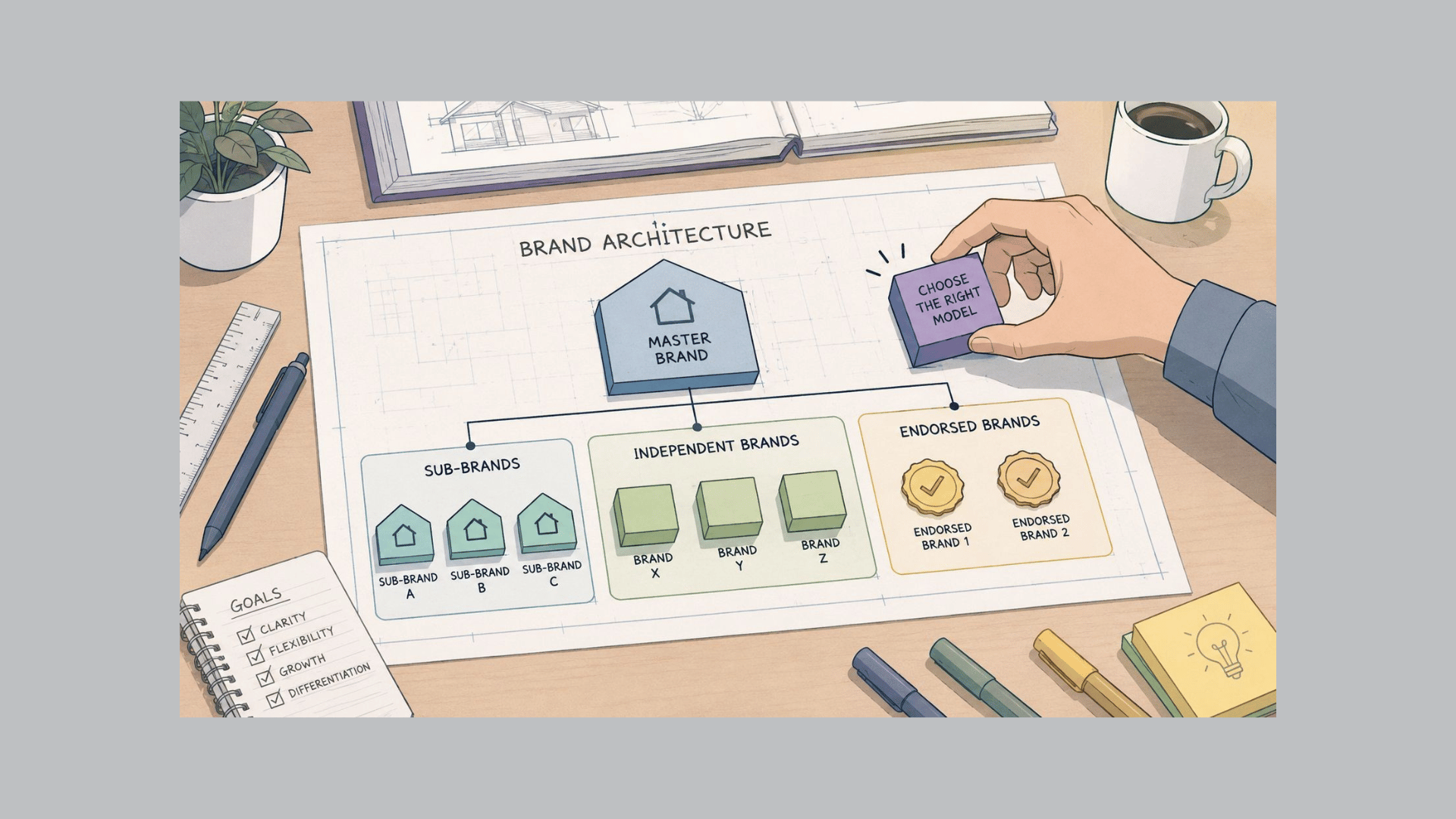

Brand architecture is the structure that decides how your brands, products and services relate to each other and to the company behind them. It answers a practical question: when you launch something new, does it wear your name, borrow your reputation, or stand on its own? Getting that answer right early saves a startup from naming chaos and saves a mature company from a website nobody can navigate. If you are weighing your options, our branding service is where we work through this structure with founders and marketing teams.
What brand architecture actually defines
Think of it as the floor plan of a building. Before you choose paint colors (your visual identity) or hang signs (your naming), you decide which rooms exist, how they connect and which ones share a front door.
A 2018 academic comparison of brand portfolio strategy and brand architecture puts the split cleanly. Portfolio strategy manages which brands and sub-brands you run in a market, based on how customers perceive price and quality and what competitors are doing. Architecture organizes how those brands are developed and presented to customers. Together they help a customer understand what is in your portfolio and which brand meets their need.
That last point is the one most teams forget. The same study frames customer mental organization as central: the structure should show where each brand sits, what sets it apart and who it is for. It is a communication tool first and an ownership chart second.
For a founder, that translates into everyday decisions:
- Do we name our second product after the first, or give it a fresh name?
- Does the new audience see our logo on the homepage, or a separate site?
- Which brand gets the marketing budget this year?
Each of those is an architecture decision, whether or not anyone called it that.
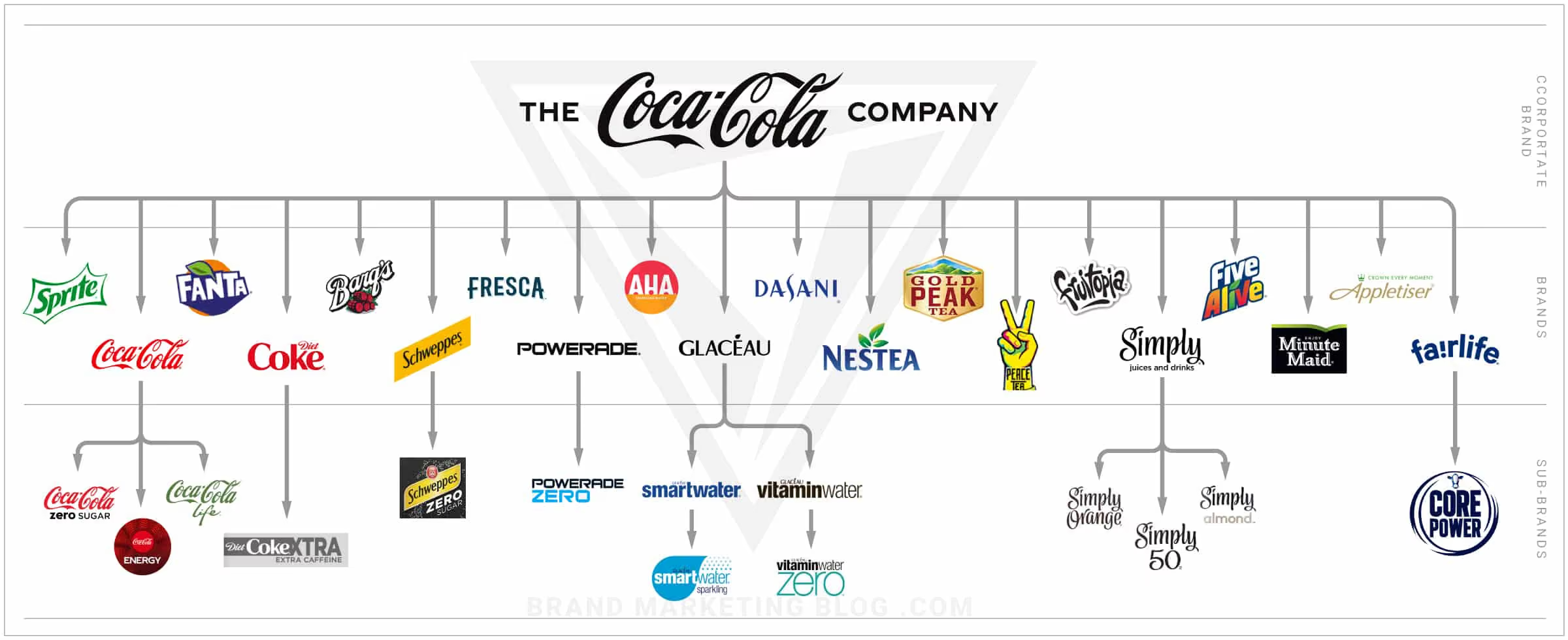
Brand hierarchy: the levels inside the structure
Hierarchy is the vertical view of the same idea. The academic study describes it as a ladder of corporate, family, individual and modifier levels. An Australian trade mark commentary by Spruson & Ferguson uses the same four-level language when discussing evidence in a trade mark dispute, which shows the structure matters legally as well as commercially.
Here is how the four levels read in plain terms, using a made-up software company called Orbit:
Not every business needs all four. A startup with one product usually has a corporate level and a modifier or two. The ladder gets taller as you add audiences, categories or acquisitions. The trick is to add a level only when it helps a customer decide something.
The main models of brand architecture
You will see three to five models named across the industry, but they sit on one spectrum. At one end every offering carries the master brand. At the other end every offering stands alone. In between, brands are linked by a visible endorsement.
Branded house
A branded house puts the weight on one name. New products arrive with a descriptor, and every launch strengthens the same asset. For a startup, this is often the leanest option: one name to protect, one identity to design, one story to tell. It also keeps your digital product consistent, because navigation, tone and visuals all trace back to a single system.
The cost is flexibility. If the master brand stands for one thing, stretching it to something very different can confuse people.
House of brands
A house of brands does the reverse. Each brand is built for its own audience, and the parent company sits in the background. This suits portfolios where one brand's positioning would clash with another's, for example a premium line and a budget line from the same owner. It demands more budget, since every brand needs its own identity, site and marketing.
Endorsed brands
Endorsed architecture sits between the two. Each sub-brand has its own name and personality, and a parent signal, such as a "from" line or a small logo lockup, lends it credibility. It is a good fit when you want a new offering to feel fresh but still need a buyer to trust it on day one.
Australia gives a clear illustration. Macquarie's official brand overview describes an agile master-brand approach that builds equity in the master brand while pursuing opportunities. It names Macquarie Bank as the most visible customer-facing flagship and says the group also has wholly owned endorsed brands with their own identities. That is a hybrid in practice: a strong flagship, with endorsed brands alongside it.

House of brands vs branded house: how to pick
This is the decision most readers are really facing. Skip the theory and answer five questions.
- How different are your audiences? If a single buyer could plausibly use everything you sell, a branded house is natural. If a procurement manager and a teenager would never meet your offerings in the same place, separate brands start to make sense.
- How much does your name carry? A young company with little recognition gains more from concentrating every launch behind one name. A trusted name is an asset you can lend through endorsement.
- Could one brand's reputation hurt another? If a risky experiment could damage your core product, distance it with its own identity.
- What can you fund and maintain? Each independent brand needs its own research, design, content and upkeep. Be honest about capacity.
- How will customers meet you online? Your site structure is your architecture made visible. A branded house usually means one site with clear sections. A house of brands often means separate sites, each needing its own UX.
The Harvard Business School background note on portfolio strategy and brand architecture describes portfolio strategy as coordinating multiple brands to serve diverse customer needs, maximize returns and minimize risk. It adds that portfolio planning can guide where to invest, which brands to prune or revitalize, and where gaps point to growth. Those are useful lenses for the questions above: investment, pruning and gaps.
How to build your brand architecture, step by step
Here is the routine we would follow, and where it tends to go wrong.
1. Audit what you already have
List every brand, product, service, sub-domain and campaign name currently in use, including the informal ones your team invented. Screenshot your site navigation, pricing page and sales deck. Most companies find overlapping names and orphan products they forgot to retire. This is the step where a fresh pair of eyes helps most, because internal teams stop seeing their own inconsistencies.
2. Map the audiences and their overlap
For each offering, write down who buys it, what job it does for them and where they first hear about it. Then mark where the same person appears twice. High overlap pushes you toward a branded house or endorsed model. Low overlap keeps independent brands on the table. Use real data here: analytics, customer interviews and sales notes beat opinion.
3. Choose the model
Match the audit and the audience map to the spectrum above. Pick the simplest structure that can carry your next two or three years of launches, not the one that impresses in a diagram. An early-stage company expecting to pivot should lean toward fewer brands, since every extra name is one more thing to unwind later.
4. Write the naming and design rules
Architecture only works if people can apply it without you in the room. Document how new products are named, where the logo goes, which colors and typefaces are shared, and what tone of voice every brand uses. Include a short decision guide: when does a new offering earn its own name?
5. Apply it to the product and the site
This is where architecture meets the screen. Navigation labels, page templates, onboarding and pricing tables are the places customers actually feel your structure. Our piece on how brand strategy and UX design work together goes deeper on keeping the experience aligned with the identity, and on why consistency builds trust.
6. Review on a schedule
Revisit the structure once a year and after big events such as a launch, a merger or a move into a new market. Architecture that fit a ten-person company often strains at fifty.
How to tell whether your architecture is working
Because the structure exists for customers, test it with them. The 2018 study's customer-mental-organization view suggests a structure should make each brand's differences and relevance to needs intelligible to buyers, not simply mirror who owns what inside the company.
A practical way to check:
- Ask five customers to sort your offerings. Give them cards with each product or brand name and ask them to group them. If their groups differ from yours, your structure is not yet readable.
- Watch navigation behavior. Look at where visitors hesitate, backtrack or use site search to find something that should be one click away. Those are architecture problems showing up as UX problems.
- Check the sales conversation. If your team needs a long preamble to explain how your offerings differ, the naming is doing too little work.
- Look at conversion by entry point. When one product page converts well and a sibling page does not, the way the sibling is framed is worth examining.
That last check is where brand work and conversion work meet, and it is why we treat structure as part of the product experience rather than a one-off naming exercise.
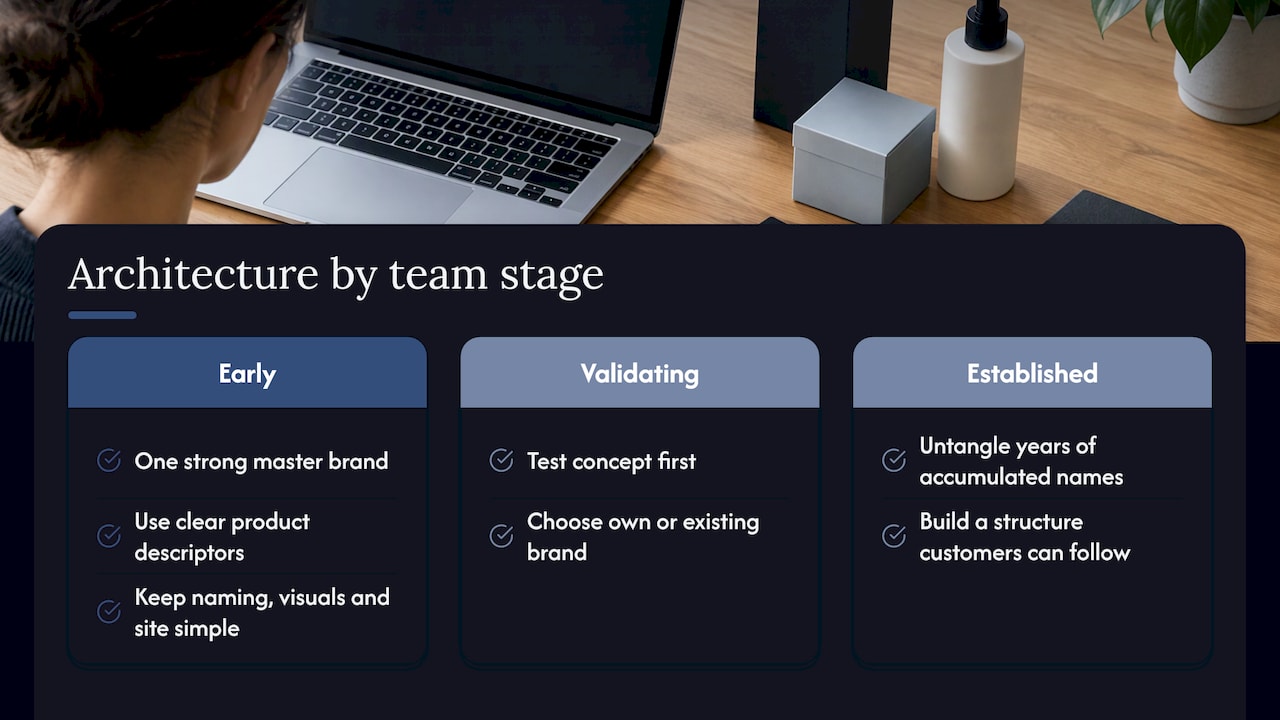
Architecture for startups and growing teams
If you are early, resist the pull of an elaborate system. One strong master brand with clear product descriptors is usually enough, and it keeps your naming, visuals and site simple while you learn what the market wants. Our guide to tech startup branding covers how engineering-led founders can get a brand in place quickly, and our article on branding a digital product shows how identity carries through to the interface.
If you are validating an idea, you may not need to settle architecture at all yet. Test the concept first, then decide whether it deserves its own brand or belongs under an existing one. For established companies, the work is usually the opposite: untangling years of accumulated names into a structure customers can follow.
Where Raw can help
We are a Sydney-based digital creative agency, and brand structure is something we work on alongside UX/UI design and conversion optimization. Our Branding service is the starting point for startups building an identity and for established companies reshaping one. Our pricing page also lists Idea to Vision and Brand Elevation, which suit a new concept and an existing brand respectively, plus a Full UX/CRO Audit from $2,500 one-off, and a Design Team (Platinum) plan at $8,400 per month for ongoing design support. You can see the full range on our pricing page.
If your architecture question is really a website question, such as how several offerings should live on one site, our services overview shows how branding, UX and development fit together.
Our perspective
Most architecture problems we meet are not naming problems. They are decision problems that nobody made on purpose. A product launched under a placeholder name, a campaign got its own site, and two years later nobody can explain the logic.
We think the best structure is the simplest one that matches how customers think. That is why we pair brand work with research and UX: a diagram is only right if people can use it. When a buyer lands on your site and finds their way without effort, the architecture is doing its job.
Our approach is built around research, collaboration and testing, so decisions about structure rest on how your audience behaves, not on taste. Start with what customers need to understand, build the simplest model that serves them, and let it grow with the business.
Sources
- Brand portfolio strategy and brand architecture: a comparative study (2018)
- Brand Portfolio Strategy and Brand Architecture, Harvard Business School
- Macquarie brand overview
- Trade Marks and "style names", Spruson & Ferguson (2019)
Recommended