


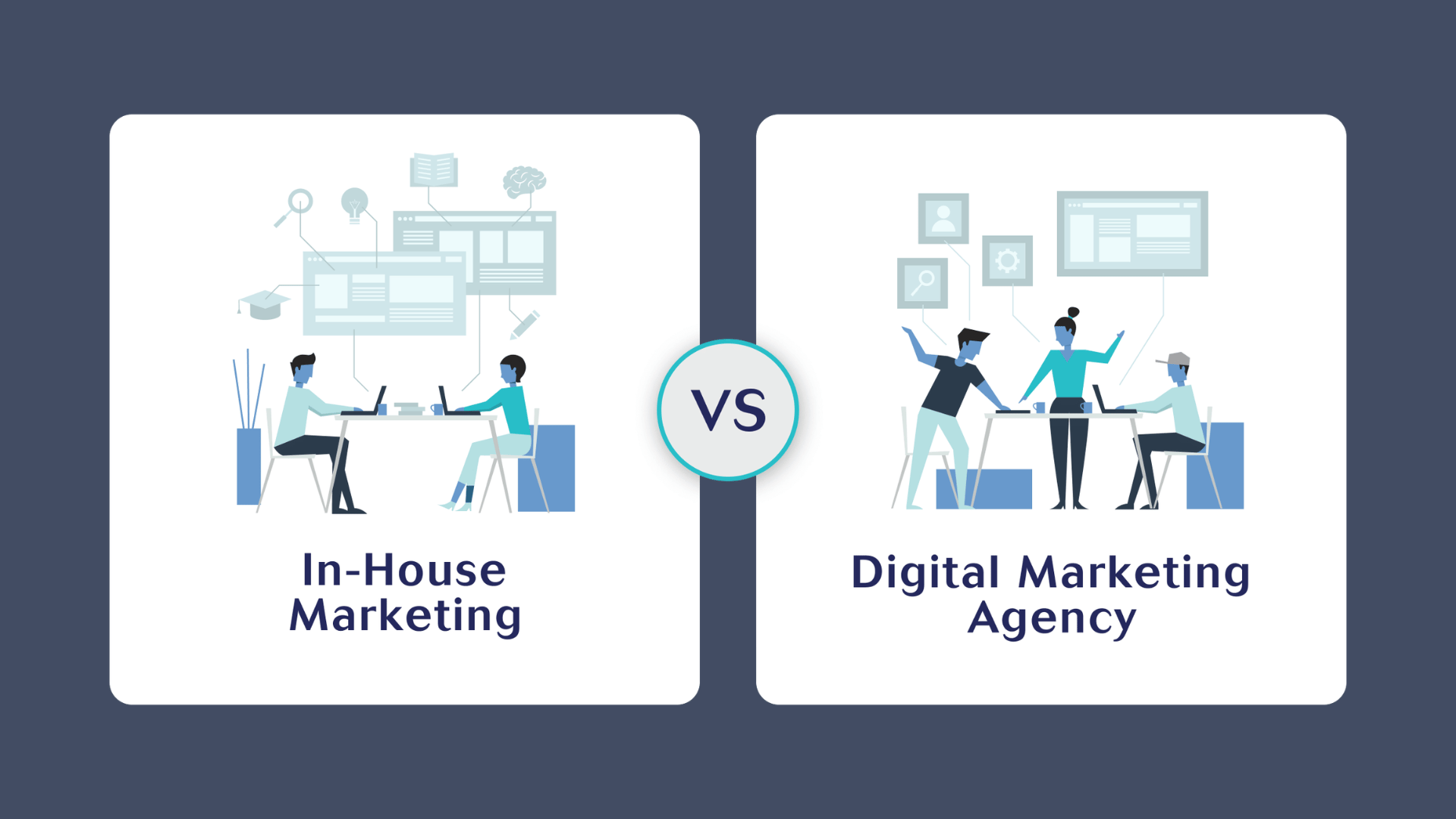

An in-house team can build context through ongoing work. An agency can supply a defined project or specialist capacity. Fractional leadership and embedded teams offer different forms of part-time support; neither is automatically the best option for a startup or scale-up.
This guide compares the three models on the things that actually decide the outcome: speed, cost shape, depth of context, quality over time and risk. We are an agency, so we will say where an agency is the wrong call too.
What you are really choosing between
Most comparisons treat this as a contest. It is closer to a question about shape: how is your design need shaped over the next 12 months?
In-house means employees. You pay salary, benefits and management time, and in return you get people who live inside your product, know your customers' complaints by heart and can walk over to an engineer's desk.
An agency means a team you engage for a defined scope. You get a ready-made mix of skills (research, UX, UI, brand, development) and a fixed point of delivery, then the team moves on.
A fractional or embedded model means senior design capacity for part of the week or month. It might be a fractional head of design who sets direction and mentors, or a subscription-style design team that works through a queue of requests.
These are operating models, not fixed descriptions of every designer or supplier. An agency may work on a long retainer, an employee may lead a short initiative, and an embedded team may build substantial product knowledge. Define the actual responsibilities and handover rather than choosing from a label alone.
Side-by-side comparison
Here is the short version before we go criterion by criterion.
Treat the table as a starting point. The right choice depends on the rest of this guide.
Cost: it is the shape that matters
People compare a salary with an agency invoice and conclude one is cheaper. That is rarely a fair comparison, because the two costs behave differently.
Include recruitment, onboarding, salary, employer costs, tools, leave, development and management in an in-house estimate. A single designer may still need senior review or specialist support; that depends on their role and the capabilities already in your organisation.
Agency fees may be project-based, time-based or retained. Compare deliverables, seniority, research access, revision limits, management and handover against an equivalent internal scope. A fractional lead is usually retained for agreed leadership capacity. GoFractional advertises a roughly three-day matching process; that is not an industry-wide hiring or onboarding deadline.
Here is a simple way to test cost for yourself:
- Write down the design work you expect over the next 12 months, in weeks of effort.
- Price one full-time hire fully loaded, including management time and tools.
- Compare it with the same weeks of work bought as projects or a retainer.
- Test different workload and capacity scenarios, including research, iteration, leave and unexpected work. There is no universal 70-to-80-percent utilisation threshold that determines whether hiring is economical.
The current Raw Studio pricing page lists the UX/UI Design Team from $8,400 per month plus GST and the Full UX/CRO Audit from $3,500 plus GST as a one-off. Check current scope, capacity, exclusions and contract terms before comparing either with a salary.
Speed and flexibility
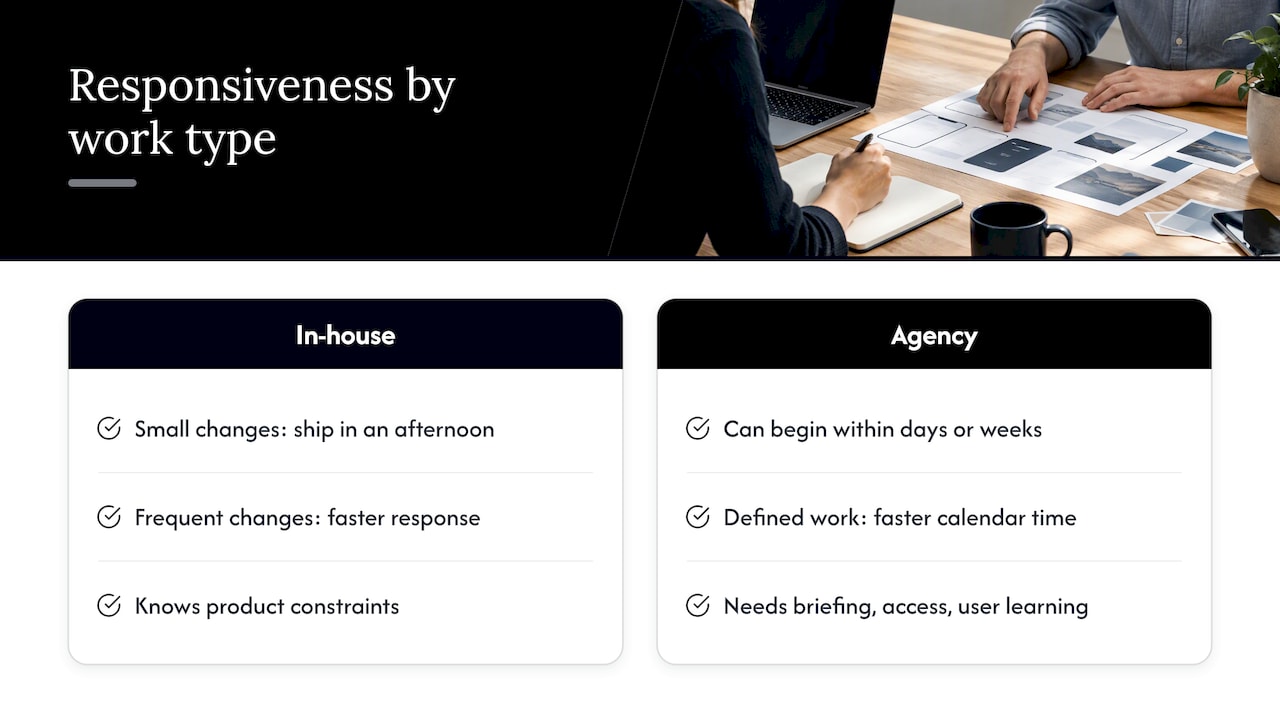
Hiring can involve screening, interviews, notice periods and onboarding. An external team may start sooner if suitable people are available, but procurement, access, briefing and research also take time. Confirm an actual start date and delivery plan rather than assuming an agency or fractional lead is ready immediately.
Existing product knowledge can shorten the time needed for a small change, while an external team may offer more parallel skills for a larger project. Capacity, dependencies and feedback speed matter in both models. Treat these as possible advantages to test, not guaranteed speed rankings.
A design sprint structures a short cycle of framing, prototyping and user feedback. A rapid MVP can test selected assumptions with a limited implementation. Either approach can be run internally or externally; neither validates the whole business or guarantees a decision within a fixed number of days.
Depth of context and ownership
The strongest argument for in-house is context. An internal designer sits in your planning meetings, hears support calls and sees how a feature performs after launch. Career writers on Behance make the same point from the designer's side: in-house roles are about building consistency, evolving a brand and thinking long term, rather than rotating between projects.
The agency counterargument is fresh eyes. An outside team has seen similar problems in other companies and has no political stake in last year's decisions. They can say that the navigation is confusing without worrying about who designed it.
The risk to watch for with agencies is what happens after delivery. Fractionus, which sells fractional design leadership, makes the case that an agency delivers a defined project and leaves, so the standard can drift once the team is gone. That is a fair warning even from an interested party. The fix is not to avoid agencies. It is to ask for a design system, documentation and a handover that your own people can maintain.
Quality and measurable results
The Design Council study of eleven global brands describes design processes and research practices in selected organisations. It is qualitative evidence about how those teams worked, not a controlled comparison proving that one staffing model produces better financial results.
One caution from Kainos on valuing design: design helps teams focus on goals and outcomes, not only on single metrics such as NPS scores. Use numbers to steer, but do not let one number define the brief.
When in-house is the right call
Build a team when most of these are true:
- Design work is continuous, and the backlog is never empty.
- The product is complex enough that months of learning pay off, such as a SaaS dashboard with many roles and workflows.
- You can hire a senior person who sets standards, or you already have one.
- You are ready to invest in design operations: a design system, research habits, tools and career paths.
- The brand and product are stable enough that you are evolving them, not reinventing them.
The common failure is hiring a single junior or mid-level designer into a company with no design leadership. They become the order-taker for every department, with nobody to protect their time or sharpen their craft.
When an agency is the right call
Hire an agency when most of these are true:
- The work has a clear beginning and end: a brand identity, a new website, a product redesign, a launch.
- You need several skills at once, such as research, UX, UI and development, and would not keep them all busy year-round.
- You need to validate an idea before committing salaries to it.
- You want an outside view of why conversion is low.
- You need to move faster than hiring allows.
The common failure is treating the agency as a vending machine. The best engagements involve your team in workshops, share raw research and leave behind assets you can use.
The middle path: fractional leads and embedded design teams
Many Australian startups and scale-ups land here, and it is worth a proper look because it answers two of the questions people search for: how to outsource product design without losing control, and what a fractional design lead actually does.
A fractional head of design provides agreed leadership for part of the week or month, such as direction, critique, mentoring and hiring support. An embedded designer or delivery team may instead provide hands-on production. Confirm decision rights, availability and output: the titles alone do not establish whether leadership, research or execution is included.
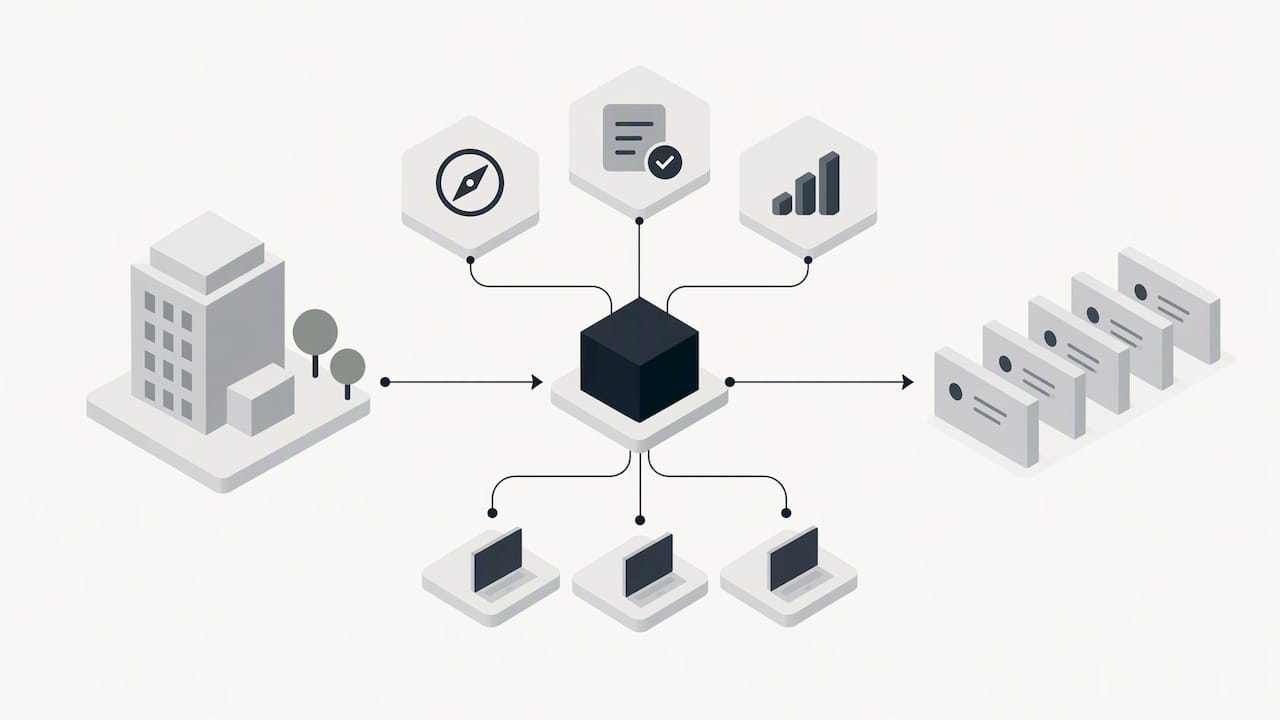
An embedded design team on retainer takes the opposite approach. You get a group of designers who work through your requests every month, often covering UX, UI and brand together. The trade-off is that you steer priorities yourself, so you need someone internally, a product manager or founder, who can set a clear queue.
A sensible pattern for growing companies looks like this:
- Validate: run a design sprint or rapid MVP with an agency to test the idea with real users.
- Build: use an agency or embedded team to design and launch the first version.
- Steer: add a fractional design lead to set direction and standards.
- Internalize: hire your first permanent designer once there is steady work and someone to lead them.
None of these steps locks you out of the next one.
Perspective: what we see working
We are an agency in Sydney, so you should weigh our view accordingly. What we notice, project after project, is that the in-house versus agency debate is usually a proxy for something else. The real question is whether anyone in the company owns the connection between user behavior and design decisions.
When the answer is yes, either model works. We have seen internal teams do brilliant work, and we have seen agency engagements fail because the client could not be reached for feedback. When the answer is no, hiring a designer will not fix it, and neither will hiring us.
That is why we favour research and testing with clear questions, outcomes and limitations. Set a baseline and suitable evaluation plan before claiming a conversion improvement. A before-and-after result can be affected by traffic mix, promotions and other changes; this article does not substantiate a promise that a design engagement will double conversion.
Our honest advice: do not hire a full-time designer because you are tired of agency invoices, and do not hire an agency because you are nervous about management. Choose the model that fits the shape of the work, and make sure the work ends with your team knowing more than it did before.
How to decide: five questions
Run through these with your leadership team. Write down the answers.
- Is the work continuous or episodic? Continuous favors in-house or an embedded team. Episodic favors an agency.
- Who will manage the designer? If nobody senior can direct and critique design, consider a fractional lead before a hire.
- How well is the problem defined? A vague problem is a research and strategy job, which agencies are set up for. A well-defined, ongoing one suits an internal owner.
- What happens if the plan changes? Compare minimum commitments, notice periods, resourcing, change control and handover. Projects and retainers can also create fixed obligations; flexibility depends on the agreement.
- What will you keep when the work ends? Insist on files, a design system, research findings and a handover session, whichever model you pick.
Working with us
If your answers point toward outside help, we can slot in at the stage that suits you. For a quick read on what is holding your site back, start with our free UX audit, or go deeper with the Full UX/CRO Audit. For steady capacity, the Design Team plan gives you a dedicated team on a monthly basis. For a specific project, such as branding, UX or UI design, conversion work or web development, see our services and pricing pages, or contact us through raw.studio and we will tell you honestly if another model suits you better.
Before briefing either an internal or external team, document the audience, business problem, constraints, evidence and the decisions the work should support.