.svg)
.svg)

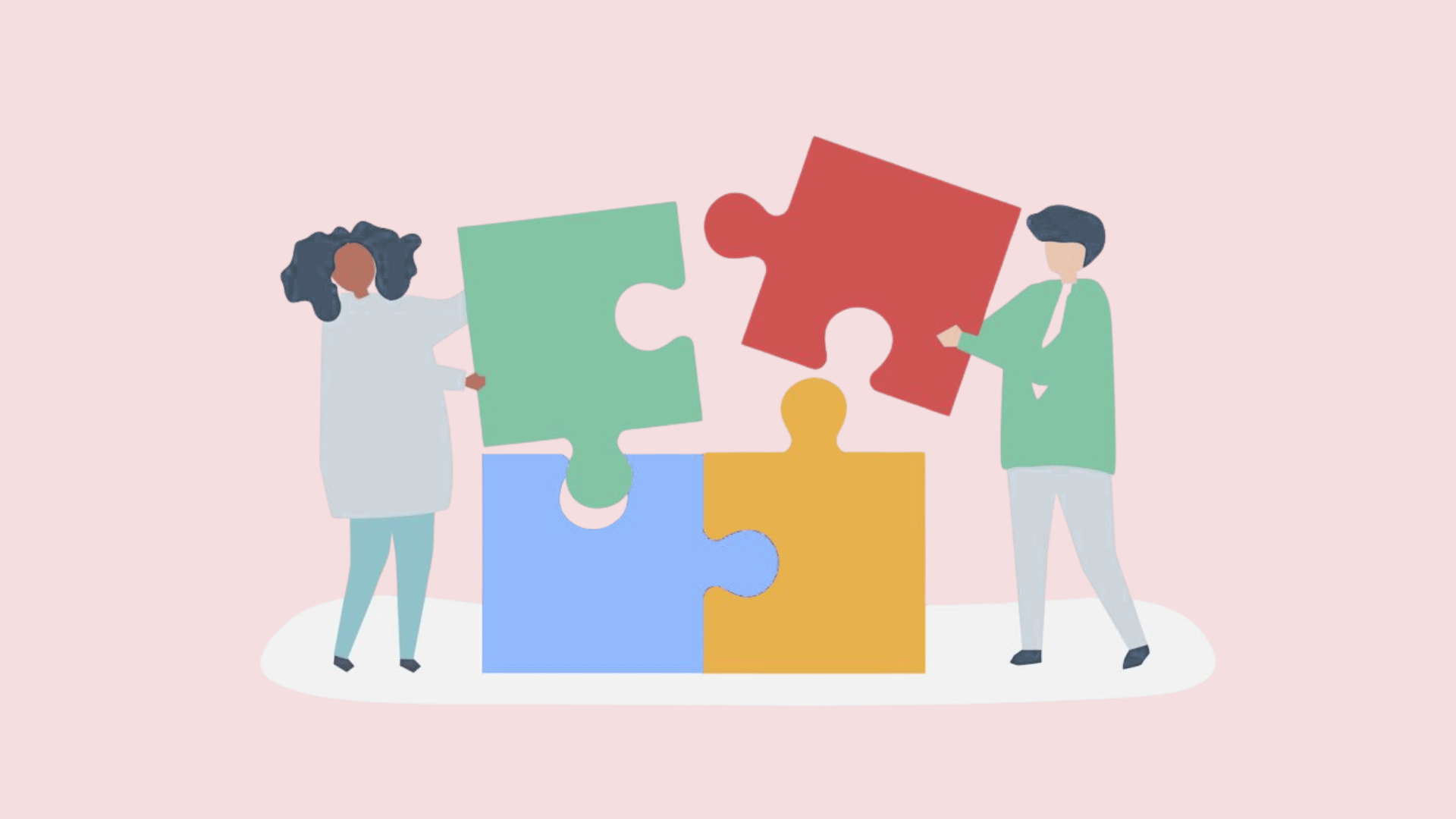

Persona development is the process of turning qualitative and quantitative research about real users into a compact, decision-ready profile your whole team can act on. The best practice we have found: build a minimal viable persona from genuine research, then put a human in the loop for every AI-assisted step. This guide walks through the exact workflow, a copyable template, and the validation habits that keep personas honest.
Why personas matter: purpose and when to use them
Personas earn their place when a team needs a shared, human reference point instead of a pile of disconnected research notes. They give designers, product managers, and marketers a common language for “who are we actually building for,” which cuts down the arguments that start with “well, I think users want…”
A CHI 2020 experiment compared persona-based work against an analytics-only approach on the same underlying data and found that participants using personas completed a user-identification task more efficiently and with higher accuracy. That is a meaningful signal: personas are not just a storytelling exercise, they change how quickly people make correct calls.
Personas tend to deliver the most value in a few specific moments:
- Early-stage design, when the team is still deciding who the product serves.
- Distributed or cross-functional teams that need alignment without another meeting.
- Scope decisions, where competing feature requests need a tiebreaker rooted in actual user goals.
Step-by-step persona development workflow you can run this week
You do not need a quarter-long research program to build a persona that holds up. Here is a sequence we rely on that fits inside a single sprint.
- lan research objectives and recruit participants. Decide what decision the persona needs to inform, then recruit a handful of people who represent the real range of your user base, not just the easiest to reach.
- Run lightweight qualitative research. Interviews, short observations, or diary-style cultural probes work well here. Capture voice-of-customer language verbatim; you will want it later for the persona's quote field.
- Affinity map for patterns, not demographics. Cluster notes around behaviors and goals rather than age brackets or job titles. The Interaction Design Foundation's guidance treats affinity diagramming as a core step precisely because it surfaces grounded behavioral segments instead of convenient stereotypes.
- Draft persona skeletons, then trim to a minimal viable persona. Aim for a small number of personas, typically one primary and a few secondaries for most small to medium projects. Anything larger tends to dilute attention rather than sharpen it.
- Validate quickly and iterate. A short survey, a scenario-based task test, or a glance at analytics that already exist can confirm whether the behaviors you captured are common enough to matter.
Pro Tip: Run your affinity mapping session with the whole team in the room, not just the researcher. People adopt personas they helped build.
This cadence mirrors what practitioner literature recommends: grounded qualitative work, affinity diagramming, and triangulation as the backbone of a defensible research-backed persona process. None of it requires elaborate tooling, just discipline about where the information comes from.
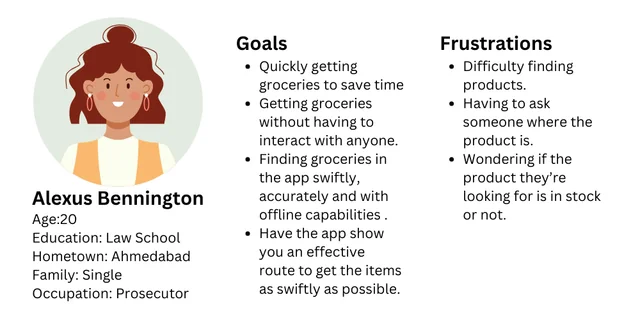
Persona template and key fields (copyable components)
A persona that gets used is short enough to read in under a minute and specific enough to settle an argument. The fields below cover what matters without turning into a biography.
- Name and one-line summary: a quick identity anchor, like "Maya, the time-pressed clinic manager."
- Primary goal: the single outcome this person is trying to reach when they use your product.
- Behaviors: patterns you actually observed, not assumptions about personality.
- Context of use: where, when, and under what constraints they interact with your product.
- Top tasks: the two or three things they need to accomplish most often.
- Quote: a real line from research that captures their mindset in their own words.
- Success metrics: what "this worked for them" looks like, in terms your team can measure.
Skip demographic details unlikely to influence behavior, as attributes like age or income seldom explain behaviors such as abandoning a checkout flow, and including them invites stereotyping without adding design-relevant signal.
A quick sketch: “Maya, 34, manages patient scheduling at a busy clinic. Her goal is to avoid double-bookings during peak hours. She checks the schedule from her phone between patients and gets frustrated when she has to tap through more than two screens. Her quote: ‘I don’t have time to hunt for the one open slot.’ Success looks like rebooking a canceled appointment in under thirty seconds.”
Validation, testing, and GenAI: how to check your personas and avoid bias
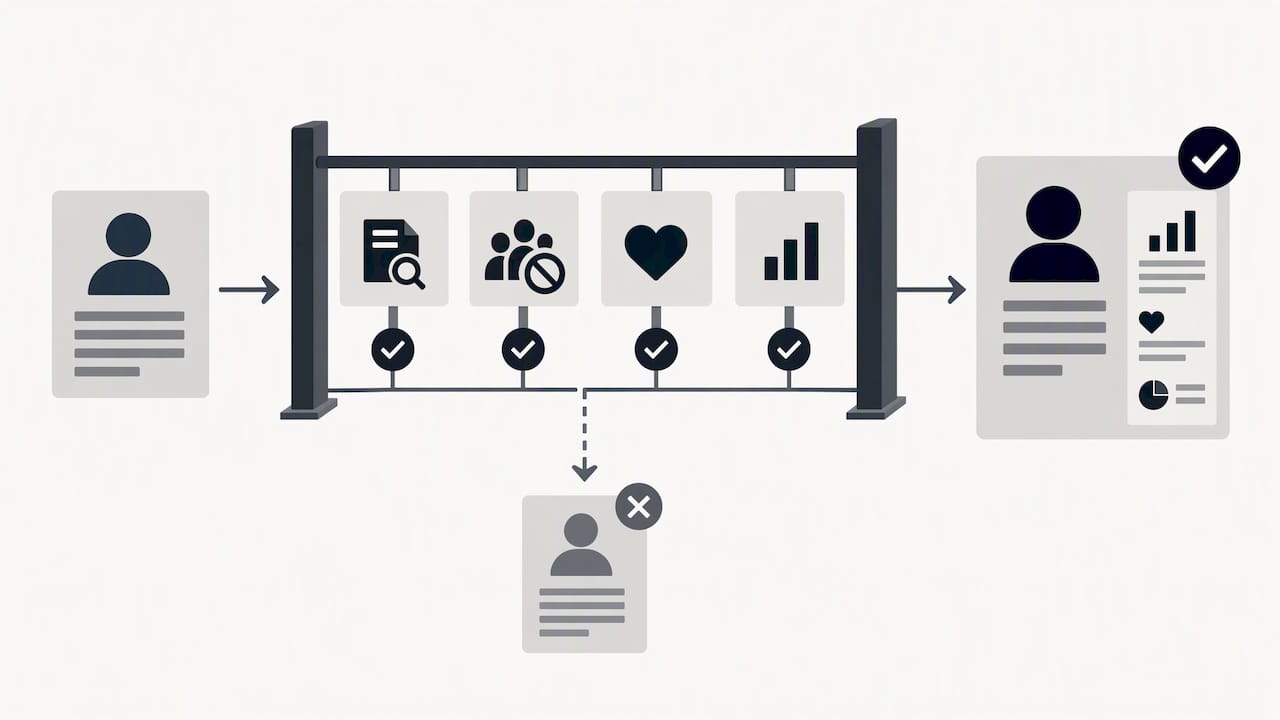
Triangulation is the single habit that separates a durable persona from a guess dressed up in a template. Cross-check your qualitative notes against at least one other source before you call a persona finished.
- Confirm prevalence with a short survey asking a broader sample whether the persona's defining behavior matches their own.
- Run a task-identification trial to see whether team members can correctly match a scenario to the right persona.
- Use existing analytics or an A/B test, where available, as a quantitative check on the qualitative story.
GenAI tools can speed up drafting and enrichment, but the evidence suggests caution is warranted. A 2026 scoping review of 81 articles on generative AI persona development found that a significant portion of the studies lacked formal validation and the majority relied on GPT-family models, which raises real concerns about bias and circular evaluation. A notable share of generative AI persona studies skipped formal validation entirely, which is a strong argument for keeping a documented human review step rather than trusting a model’s output at face value.
Separate research adds a sharper warning: AI-generated personas can read as clearer and more internally consistent, but they also show a higher tendency toward stereotyping than personas built from direct human research. The fix is not to avoid AI, but to use it for structure and drafting while a human checks for realism, stereotyping, and missing emotional nuance, and never to evaluate AI output using the same model that produced it.
How to get teams to use and keep personas useful
A persona that lives only in a slide deck is wasted research. Getting it into daily use takes a bit of deliberate effort.
- Make personas visible where work actually happens, as pull-up cards, storyboard anchors, or printouts near a design review table.
- Embed them in rituals that already exist: design reviews, acceptance criteria, and new-hire onboarding.
- Assign an owner and a lightweight review cadence, maybe quarterly, so the persona does not quietly go stale.
Pro Tip: Keep a simple decision-check log: whenever a persona settles a debate in a meeting, jot down what was decided. It is the fastest way to prove the persona earns its keep.
Raw Studio: how we run persona development
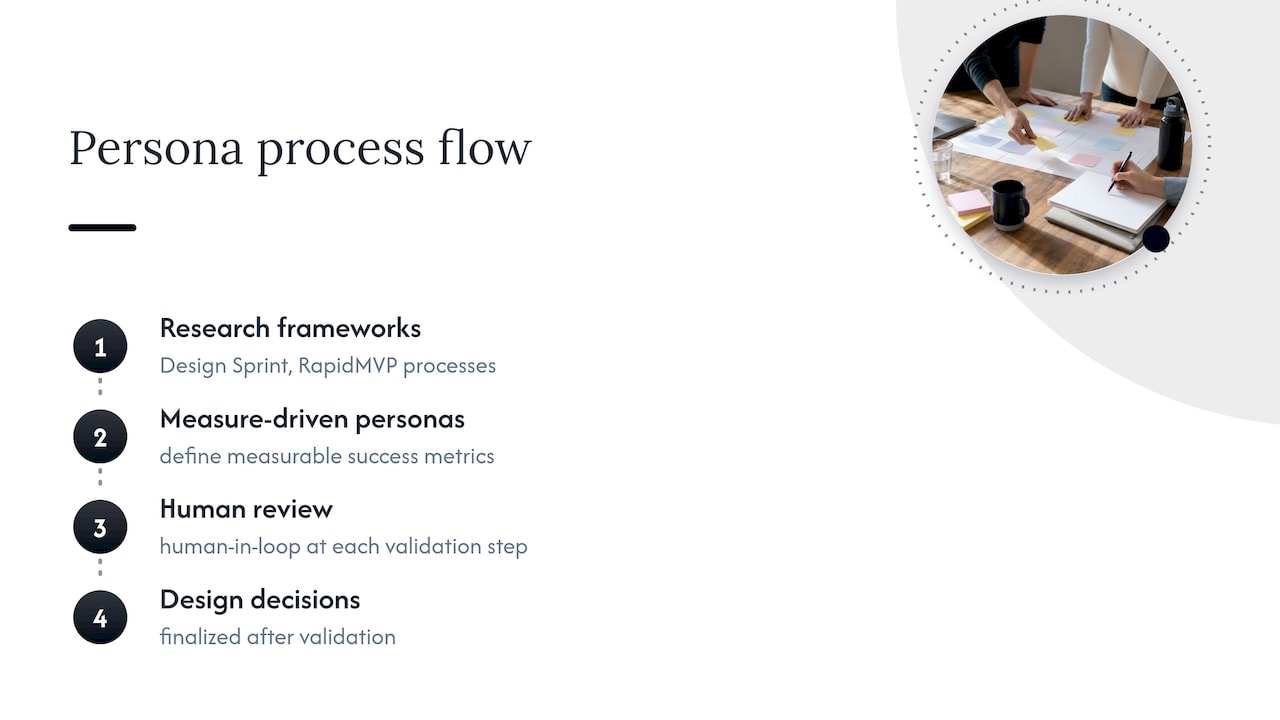
We build personas inside research-driven frameworks like our Design Sprint and RapidMVP process, pairing them with measurable success metrics rather than treating them as a one-off deliverable. In a mobile app UX research engagement for James Smith Academy, we grounded persona work in direct user research and kept a human-in-the-loop review at every validation step before design decisions were finalized.
Author perspective: balancing personas with analytics
Personas earn their keep in the early, ambiguous moments of a project, when a team needs to agree on who matters before anyone can agree on what to build. Analytics are the better tool once you are optimizing a funnel or measuring whether a change actually worked. The practical rule we have landed on: let personas drive decisions, and let analytics measure the effects of those decisions. Treating either one as sufficient on its own tends to produce either beautiful stories with no evidence or mountains of data with no direction.
How Raw Studio can help: services linked to persona development
Research that holds up under scrutiny is the foundation everything else gets built on, and that is where we focus first. Our user research work feeds directly into UX design decisions, RapidMVP prototyping, and full Design Sprint engagements, so personas never sit disconnected from what gets shipped.