.svg)
.svg)


Get three things right before anything else: a clear position, a messaging and visual system that matches it, and the operational habits that keep both from drifting as you hire. Then protect what you've built. This week, write a one-page positioning statement and run a quick name check with ASIC and IP Australia's TM Checker before you fall in love with a logo.
Why positioning comes before anything visual
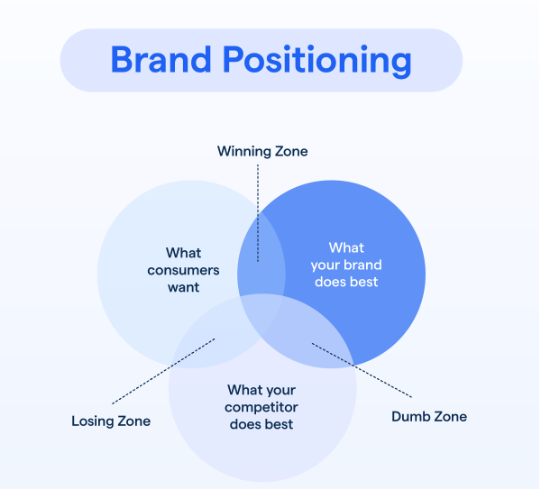
Most founders want a logo and a color palette before they've settled who they're for and why that person should pick them over the obvious alternative. That's backwards. A founder-focused brand playbook treats positioning as the first of four layers, with messaging and visuals only making sense once it's set, and operational systems arriving later to stop everything drifting once the team grows. Design without a position is just decoration, and decoration doesn't survive contact with a sales call.
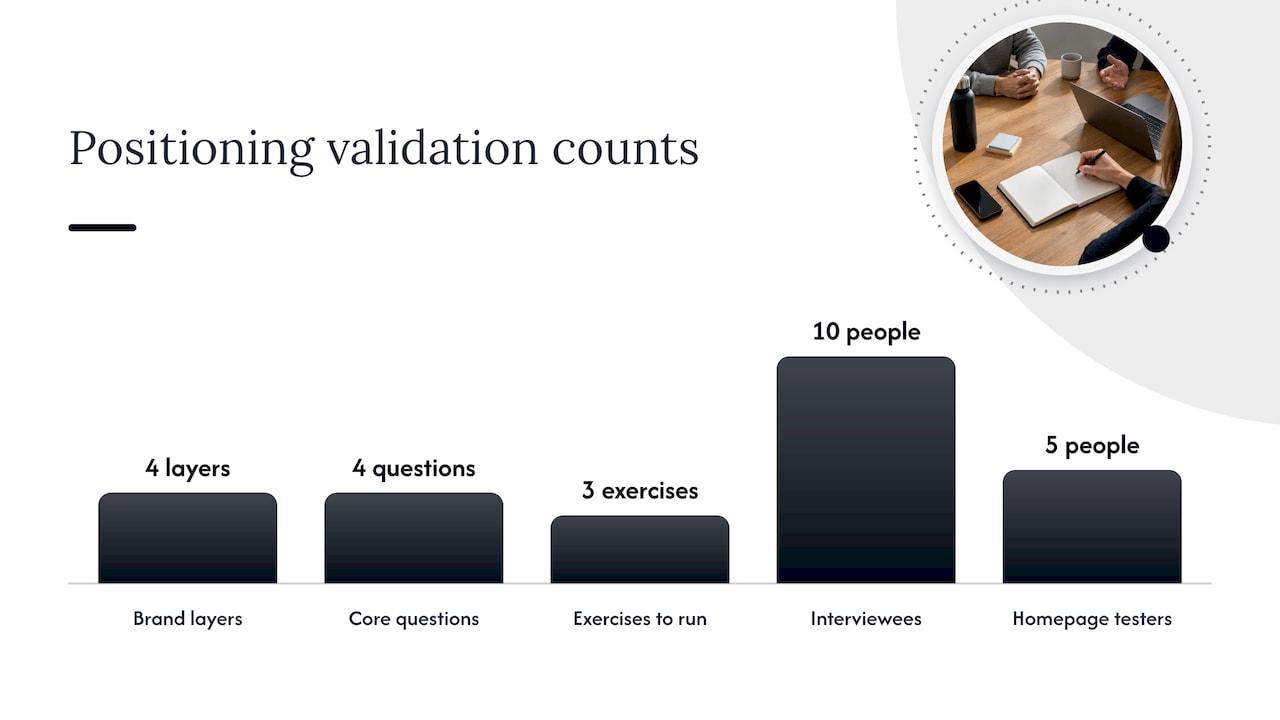
Four questions force the clarity you need:
- Who is the first customer you're building for, specifically, not "small businesses" but a named role at a named kind of company?
- What's the alternative they use today, whether that's a competitor, a spreadsheet, or doing nothing?
- What's genuinely different about your approach, not your adjectives?
- What's the proof that the difference matters, a number, a result, a behavior change?
Three exercises turn that into something testable. List every alternative your first customer currently uses, including manual workarounds. Run ten short interviews asking what they tried before and why it fell short. Then show your homepage to five strangers for ten seconds and ask what you do: if they can't say it back, the positioning isn't landing yet.
Pick one channel, one metric such as demo requests or trial signups, and run the position for two weeks before committing budget to design. Positioning that isn't validated against a real channel is a guess dressed up as a strategy.
Pro Tip: Write your positioning statement in one sentence a customer could say back to you unprompted. If it needs a paragraph, it isn't done yet.
Turning your position into words and visuals people remember
Once the position holds up, translate it into language before you touch a mood board. A messaging hierarchy gives you a core promise, three supporting pillars, and proof points under each, so every piece of copy traces back to the same idea instead of reinventing itself per channel.
- Write the one-line promise: what you do, for whom, and why it matters, in a sentence a stranger could repeat.
- List three claims that support that promise, each backed by a proof point (a number, a workflow, a customer outcome).
- Turn those into short copy blocks for the homepage, a pitch deck slide, and an elevator answer, so the wording stays consistent everywhere it appears.
- Define the visual primitives next: one typeface pairing, a small color rule set, a photography or illustration direction, and consistent spacing, not a 40-page brand book.
- Ship a minimum asset list: logo lockup, one color palette, a homepage template, and a pitch deck, and stop there until revenue funds more.
Early-stage founders lose weeks to logo revisions that a messaging hierarchy would have made unnecessary. The visual system should behave like a small set of reusable building blocks; treating design as compounding primitives keeps the brand recognizable even as individual assets change week to week.
Keeping the brand consistent while the team grows
A brand that looks coherent at five people usually falls apart at fifteen, not because anyone stopped caring but because nobody owns the system. The fix is boring and effective: one shared asset library, one component library for design, and a lightweight approval step before anything ships publicly.
- Keep a single source of truth for logos, color values, and templates, so nobody is hunting through old Slack messages for the right file.
- Run a quarterly brand audit against a short scorecard: unaided recall in your segment, branded search trend, and the quality of inbound demo requests.
- Use a three-step content review: check it against the messaging hierarchy, check it against the visual primitives, then approve.
- Hire a brand producer or design ops lead once you're shipping faster than one person can review; their job is owning the system, not making things prettier.
The single highest-leverage hire for consistency at scale isn't a senior designer, it's someone who owns the operational system itself: the approvals, the audits, the templates.
Pro Tip: Before you hire a design team, hire the review checklist. A good process outlasts any one designer's taste.
Protecting your brand name, logo, and domains early
Registering a business name with ASIC confirms you can legally trade under that name, but it doesn't stop a competitor from using a similar one for a different purpose; that protection comes from a trade mark. IP Australia draws this distinction directly, and it's the single most common gap founders discover too late.
- Search ASIC's business name register and run a trade mark search before you commit to a name in writing anywhere public.
- Check that your domain and key social handles are available under the same or a close variant of the name.
- If you're unsure whether your mark will clear examination, use TM Headstart before filing formally.
- Bring in an IP attorney once there's real ambiguity, a close competitor name, or money on the line.
Registering a trade mark takes at least seven months and starts at a minimum fee of $250 per class, according to IP Australia's own timeframes and fees page, which is longer than most founders expect when they're moving fast on everything else. TM Headstart, a pre-application service, costs a minimum of $330 and returns an examiner assessment within five business days, catching costly naming mistakes before you've spent on formal filing.
An 8-week brand playbook you can run alongside product work
You don't need a quarter and a big retainer to get a workable brand in place. Here's a sequence that fits around shipping product and talking to customers.
- Weeks 1 to 2: nail positioning. Run the interviews, write the one-page statement, test it on real traffic.
- Weeks 3 to 4: build the messaging hierarchy and draft the one-line promise plus three supporting claims.
- Weeks 5 to 6: define the visual primitives and ship the minimum asset list for launch.
- Weeks 7 to 8: set up the approval workflow, run the ASIC and trade mark checks, and put the quarterly scorecard in place.
- Deliverable for weeks 1 to 2: a validated one-sentence position with real conversion or demo data behind it.
- Deliverable for weeks 3 to 4: a messaging doc the whole team can copy from without rewriting.
- Deliverable for weeks 5 to 6: a homepage, deck, and logo lockup that all read as one brand.
- Deliverable for weeks 7 to 8: a name that's cleared searches and a scorecard someone actually checks quarterly.
Budget a few hours a week for the founder, plus occasional design help for weeks 5 through 6 if nobody in-house can build the visual primitives.
What client work keeps teaching us about brand strategy
The founders who waste the most money are the ones who approve a logo before they've tested a position, then rebuild everything six months later once the market tells them who they're actually for. Positioning that's validated early prevents that entire cycle of design spend. Running a Design Sprint or a RapidMVP process forces that validation to happen in days rather than months, because you're testing the promise against real users before committing to the full visual system.
How Raw Studio can help you move faster on brand
If you'd rather have a team run this playbook alongside you, consider working with an agency specializing in branding grounded in a research and testing rhythm like the one described above, delivered through a Design Sprint or RapidMVP to get a validated position and a working visual system quickly, rather than spending a quarter in internal back-and-forth.
Discuss your project with Raw Studio.
A first engagement usually starts with the positioning and messaging work from Brand Elevation, then moves into the visual system and launch assets through Branding or a full Design Sprint. If you want to start on your own first, our free branding checklist walks through the same steps. When you're ready for a second set of hands, check pricing and engagement options.
Does registering a business name protect my brand?
Registering a business name with a national regulator like ASIC confirms you can trade under that name, but it does not on its own stop others from using a similar mark. Trade mark registration is the separate step that provides that protection, and IP Australia recommends running both business name and trade mark searches before you commit publicly to a name.
Discuss Your Brand Strategy
Email Raw Studio to discuss data-driven branding, user experience, or conversion challenges for your business. Email Raw Studio.