.svg)
.svg)

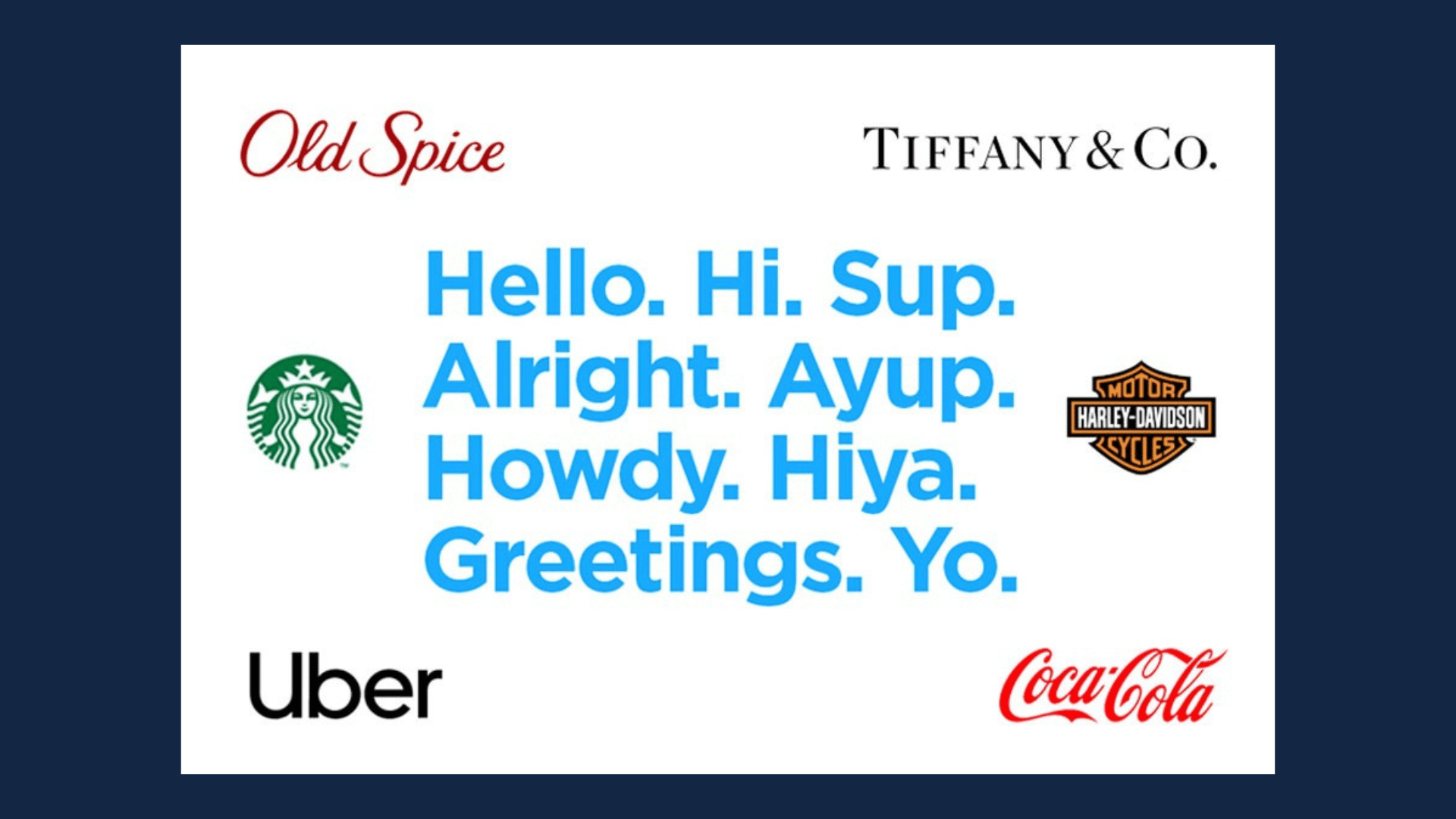

Brand tone of voice is how we sound when we talk to people: the words we pick, the rhythm we use, the attitude that comes through. The approach that works best is to fix a stable voice and then flex the tone depending on context, a method Microsoft's style guide backs up and one we use ourselves at Raw Studio. Below, you'll find a practical framework plus real examples you can borrow from today.
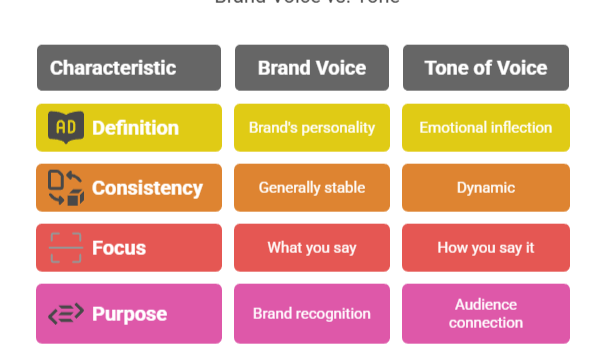
Brand voice vs. tone vs. personality: what's actually different
People mix these three up constantly, and that confusion is usually why tone guidelines fail before they even launch.
Voice is who we are, the personality that stays the same no matter what we're writing. Tone is how that personality shows up in a specific moment, shaped by the reader's mood and the situation. Personality is the human traits we'd use to describe the brand if it were a person at a dinner party: witty, blunt, nurturing, precise.
A few quick examples make the split clearer:
- A brand with a playful voice still turns serious when writing a refund policy or a security breach notice.
- A brand with a warm, nurturing personality might sound calm in an app notification and energetic in a social post.
- Two brands can share the same tone (friendly) while having completely different voices (one casual and slangy, one polished and warm).
Getting this distinction right matters because it's what lets a hundred different writers sound like one brand. Mailchimp's style guide documents this well: voice stays constant while tone shifts with what the reader needs in that moment.
A four-dimension framework for mapping your tone
Most tone decisions get stuck in the realm of gut feeling. "Make it friendlier" is not a brief anyone can act on. A simple framework fixes that by giving teams shared language and a way to score choices instead of arguing about them.
Here is a practical four-dimension workshop framework for this guide, not a universal scoring standard. Warmth and humour are grouped for convenience; record them separately when the distinction matters to your audience:
- Formality: Where do we sit between "casual chat" and "formal report"? Legal copy sits near formal; a push notification can sit near casual.
- Warmth and humor: How much lightness or empathy shows up in the writing, and how often do we risk a joke?
- Clarity and complexity: Do we favor short, plain sentences or do we allow technical depth for an expert audience?
- Energy and enthusiasm: Is the writing measured and calm, or does it push excitement and urgency?
Score each dimension on a simple one-to-five scale for your brand overall, then score it again for specific use cases: a support ticket reply, an error message, a product launch email. The gaps between those scores are where tone adapts while voice stays put.
Once scored, turn each use case into a short descriptor a writer can hold in their head, something like "warm but efficient" for support, or "confident and direct" for sales pages.
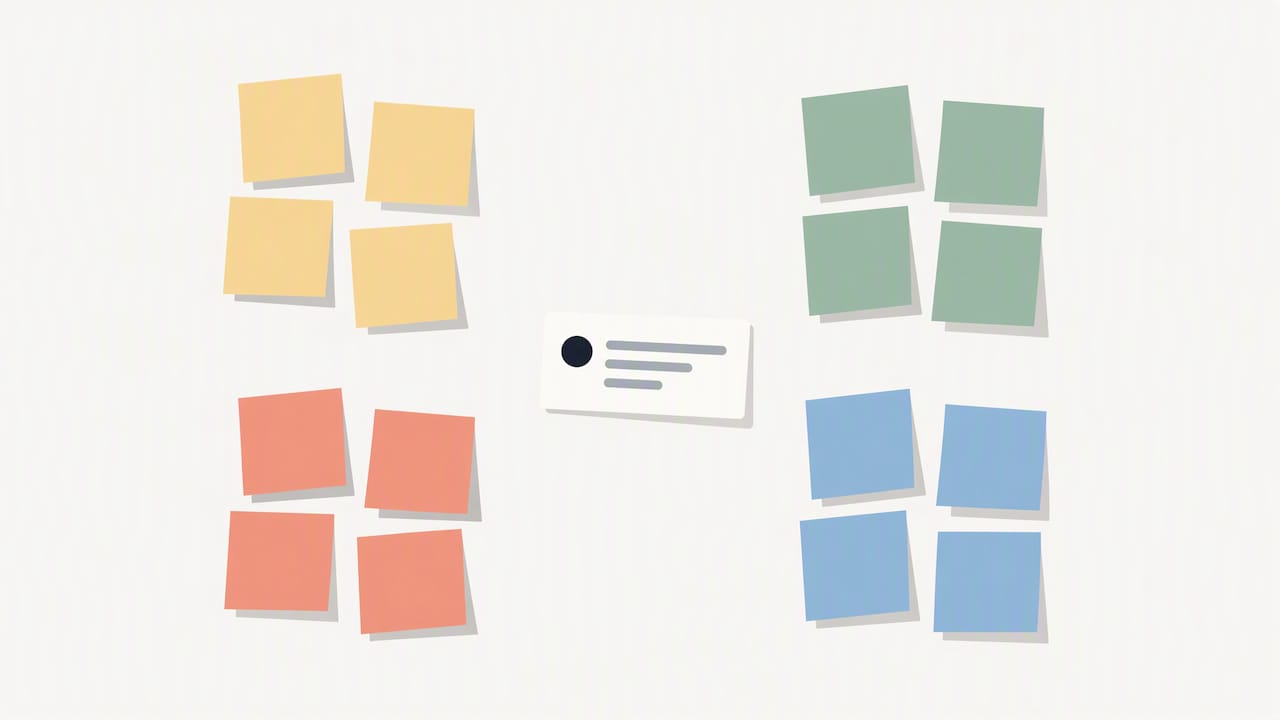
Pro tip:Run this exercise live in a workshop with sticky notes on a wall, one color per dimension. Watching the team physically disagree on where a notification should sit surfaces more insight than any written brief.
Why consistent tone of voice matters for trust
Consistent communication helps readers recognise a brand and understand what to expect. Treat the cited communication research as context for a trust hypothesis, not proof that a particular tone will increase revenue. Test comprehension, confidence, and relevant business outcomes with your own audience.
Consistent, well-matched tone correlates with stronger trust and advocacy over time, according to that research on brand communication, because readers come to expect a certain experience and feel safer when it holds steady across touchpoints.
The same research distinguishes two paths to that trust: informational communication, which is clear and factual, builds what researchers call cognitive trust, while emotional communication builds relational trust. Both matter, but they do different jobs. A banking app's error message should lean informational. A loyalty email can lean emotional. Knowing which one a given moment calls for keeps tone from working against the business goal it's supposed to support.
Tone of voice examples by style, with real copy
The following sample lines are illustrative copy written to demonstrate four broad styles. They are not attributed quotations from named brands. Adapt any promises, policy terms, or standards references to what your organisation can actually substantiate.
Conversational and relatable, built to make a brand feel like a friend rather than a vendor:
- "Oops, that didn't work. Let's try again." (error message, not "An error has occurred.")
- "You've got this. We'll handle the boring parts." (onboarding copy for a finance app)
This style works when the goal is lowering a reader's guard, especially in categories people find intimidating, like money or health.
Bold and disruptive, designed to signal a brand is breaking from category norms:
- "Insurance that doesn't make you want to scream." (headline for an insurtech brand)
- "We killed the 9-to-5. You're welcome." (recruiting copy for a remote-first company)
This style targets differentiation. It works when a market is crowded with sameness and a brand needs to be noticed first and liked second.
Formal and authoritative, used where trust depends on precision:
- "This policy covers accidental damage for up to 24 months from the date of purchase."
- "Our audit methodology follows ISO 27001 controls for data handling."
This style trades personality for credibility, which is the right trade in legal, medical, and financial content.
Friendly and service-focused, aimed at support and retention moments:
- "Thanks for flagging this. We're on it, and we'll follow up by end of day."
- "Happy to help! Here's how to fix that in two steps."
This style exists to make a reader feel heard, which is often what actually drives renewal more than any feature update does.
Six steps to define or refresh your brand's tone of voice
Defining tone doesn't need months. Here's a sequence that fits inside a single focused sprint:
- Audit existing copy across the site, app, emails, and support replies to spot where tone contradicts itself.
- Anchor tone to brand values and to what the audience actually needs from you in their worst and best moments.
- Map use cases on the four-dimension framework and write a one-line descriptor for each.
- Build micro-guidelines: short dos and don'ts with real phrase examples, not abstract adjectives.
- Test the new copy on real users or in a rapid sprint format, then revise based on what confuses or delights them.
- Assign ownership: name who approves new tone decisions, set a review cadence, and keep a living playbook.
Pro tip:Write your micro-guidelines as "say this, not that" pairs. A writer scanning a guideline for five seconds needs the contrast, not the theory behind it.
A Design Sprint format compresses this entire sequence into days rather than weeks, because you're testing real copy against real reactions instead of debating preferences in a meeting room.
Applying one voice across web, product, email, and support
The same brand voice has to flex believably across very different spaces, each with its own constraints.
- Website copy has room to build personality; headlines and hero sections are where bold tone choices pay off most.
- Product UI demands brevity: an error message with jokes in the wrong moment reads as tone-deaf, not charming.
- Email allows warmth and narrative, especially in lifecycle sequences where the reader already trusts you.
- Social rewards quick wit and timeliness but needs tighter guardrails around humor that could misfire publicly.
- Support replies should prioritize clarity and empathy over personality, since the reader is usually already frustrated.
Keep a shared content brief template with the tone descriptor for each channel built in, so writers don't have to reinvent the mapping every time. Our own notes on UX writing cover more of these channel-specific swaps in detail.
How to measure and govern tone over time
Tone decisions stay useful only if someone keeps checking they still work.
- Track engagement lifts on copy variants, plus language patterns in CSAT and NPS comments, as quantitative signals.
- Run periodic copy audits across channels to catch drift before it becomes inconsistent.
- Test tone changes with real users before a full rollout, the same way you'd test a feature.
- Set a review cadence (quarterly works for most teams) with a named owner who approves exceptions.
Review tone alongside comprehension, customer feedback, and outcomes. Comments in CSAT and NPS responses are qualitative evidence; score trends or controlled copy comparisons provide different information. Avoid attributing a business change to tone without accounting for other changes.
How Raw Studio turns tone decisions into tested outcomes
We run tone work the same way we run any design problem: fast, grounded in real user reactions, and validated before it ships. A design sprint format compresses the audit-to-test sequence from this piece into days, and MVP approaches let us put new copy in front of real users before committing to it across every channel.
That matters because tone decisions made in a conference room rarely survive contact with actual readers. We'd rather test a headline against real reactions than debate adjectives. Our work on brand strategy and UX design shows how closely tone and experience design depend on each other once you start treating both as testable, not just creative.
Tone of voice as a conversion lever, not just a style choice
Tone can affect how clearly readers understand the next step and how they perceive the brand. Confusing checkout, pricing, or signup copy can introduce friction, but hesitation does not always mean a lost sale. Test the wording and relevant outcomes before attributing a conversion change specifically to tone.
A confusing or mismatched tone adds friction at exactly the moments that matter most: checkout copy, pricing pages, signup flows. A reader who feels unsure of a brand's intent hesitates, and hesitation at a conversion point usually means a lost sale. Clear, well-matched tone removes that friction by making the next step feel obvious and the brand feel trustworthy enough to act on.
Support language may influence perceived helpfulness and clarity. Examine customer comments and support outcomes alongside retention data, while recognising that product quality, response times, and other factors also affect results. Plain language is a useful design principle, not a guarantee of lower support costs.
Google's developer style guide makes a related point for global audiences: conversational, respectful, and simple language avoids cultural friction that could otherwise cost you a conversion in a market you never saw coming. Treating tone as a usability lever, not just a branding nicety, is what connects this work to the metrics a business actually tracks.

When personality should win, and when it should get out of the way
Clarity should win every time the content is regulated, safety-related, or legally binding. No amount of charm is worth a misread insurance clause. Personality earns its keep when you're building long-term recognition and differentiation, where a flat, interchangeable voice costs you memorability. The simplest governance check: if a reader could get hurt by misunderstanding you, write for clarity first.
Get your brand tone of voice built and tested with Raw Studio
If you've read this far, you already know tone work takes more than a few adjectives in a slide deck. We build brand voice and tone guidelines the same way we build products: through research, a focused Design Sprint, and testing with real users before anything ships wide.
Our Branding and UX Design services cover everything from voice definition to the phrase-level guidelines your team needs day to day, and our clients have seen measurable gains like a doubling of conversion rates after we rebuilt their messaging and experience together. If you want a faster starting point, grab our free branding checklist or look at our pricing to book a discovery call and get your tone defined properly.