


Pick Mixpanel if you want fast answers from a team that is not full of analysts. Pick Amplitude if you have a dedicated analyst, a mature product and a serious retention or experimentation program. Pick Heap if nobody will ever find the time to instrument events. Whichever you choose, the tool is the smaller decision: a tracking plan that matches the questions your design and growth work needs to answer decides whether any of them pays off.
This guide compares the three on what a startup founder, product lead or marketing owner needs to decide: how they capture data, how deep funnels and retention go, setup effort, cost in 2026 and what to check before you commit.
What each tool does differently
The real split is not features, it is when you decide what to measure. According to tooldb.org's 2026 comparison, Mixpanel and Amplitude want you to name events before you ship, while Heap captures everything and lets you define events later.
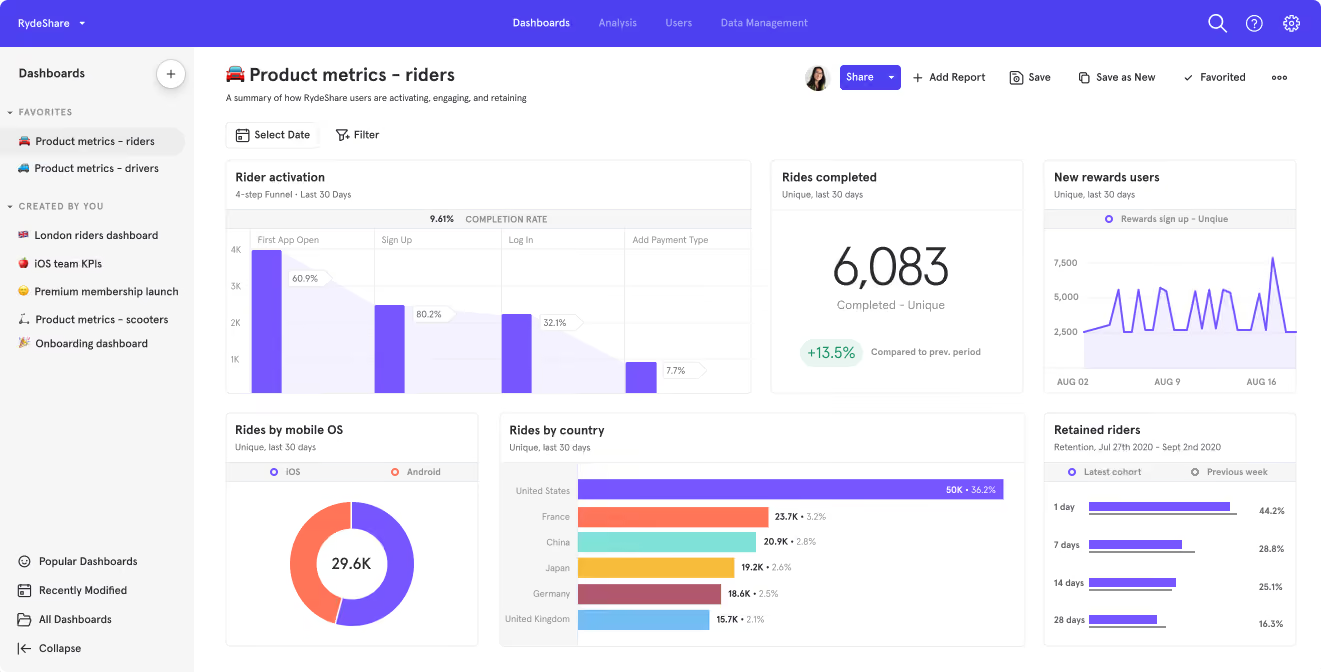
Mixpanel is built on an event-based data model. Its own documentation lists Insights, Funnels, Flows, Retention, Cohorts, Experiments and Feature Flags as the core reports. You decide that "Signed Up" or "Added to Cart" is an event, and then you analyze it quickly.
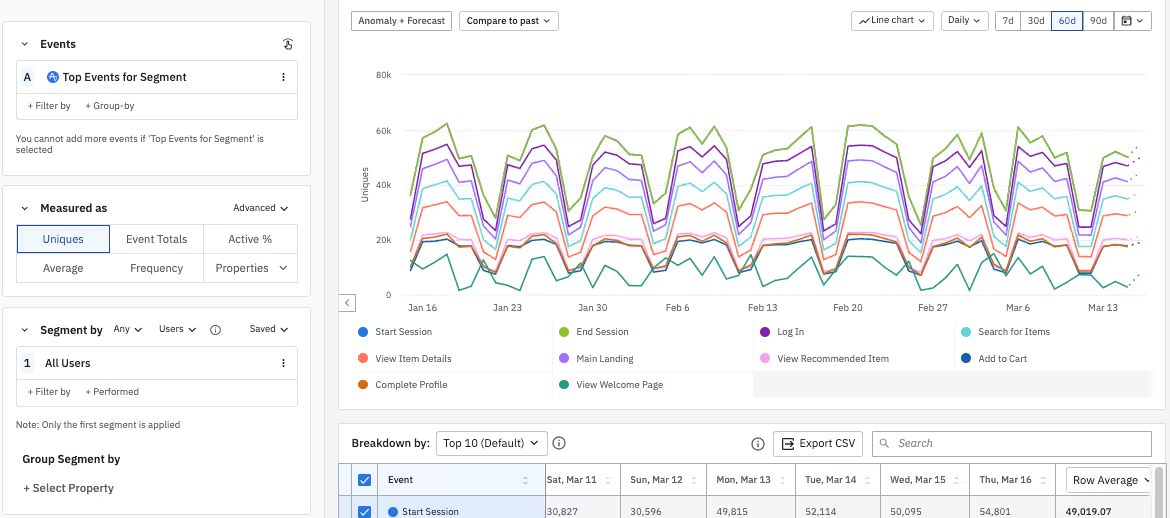
Amplitude describes itself as a platform that combines product analytics, session replay, experimentation, guides and surveys. It is the broadest of the three, and it is built to act as a governed data foundation for a larger organization.
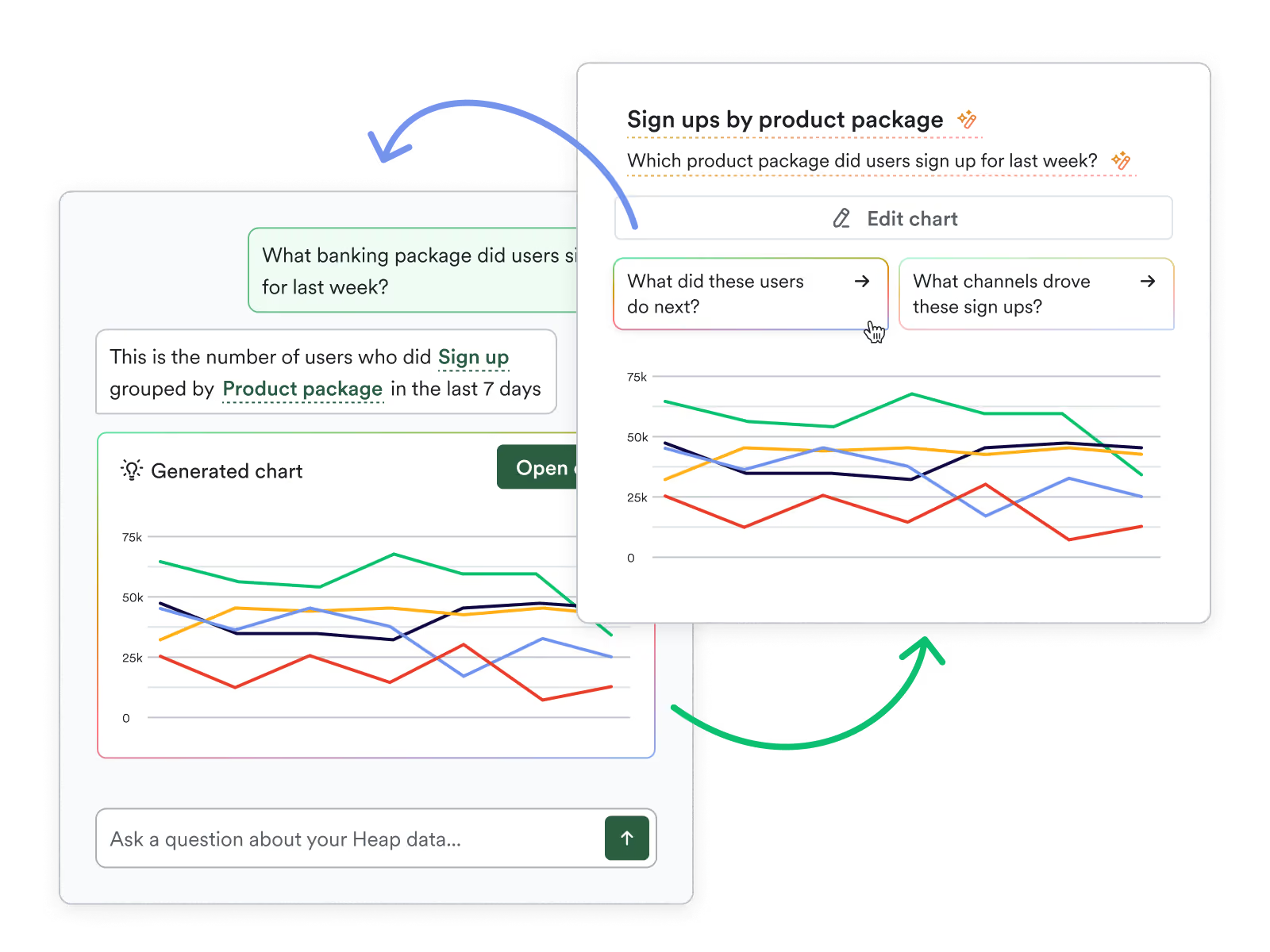
Heap records clicks, pageviews and form submissions by default. That means you can ask "what did people do last quarter?" without a new release. It is now part of Contentsquare's wider digital experience stack, according to Amplitude's tool roundup.
One reviewer's framing is worth keeping. Morgan Blake at SaaSleuth calls the tracking-first versus autocapture-first split the most important difference most teams ignore. If you have engineering time for instrumentation and want clean data, Mixpanel or Amplitude fit. If you will never get to instrumenting, Heap fits.
Funnels, retention and cohorts compared
These are the reports most startups and growth teams open first. Here is how the three differ in practice.
The ratings above draw on makeitnice.de's 2026 analysis and Mitzu's funnel-tool comparison. The same makeitnice.de piece calls Amplitude's cohort builder the feature that sets it apart for retention and engagement work. It credits Mixpanel with the cleanest query builder of the group.
What that means for you:
- If you mostly ask "where do people drop out of signup or checkout?" all three do the job. Mixpanel gets you there with the least friction.
- If you ask "which users from which channel are still active after 90 days?" Amplitude's cohort retention is built for exactly that.
- If you ask "what happened before we thought to track it?" only Heap answers without a redeploy.
A useful sanity check before any trial: write down the five questions you need answered in the next quarter. If three are simple funnels, you do not need the heaviest tool.
Ease of use and setup
Tooldb.org describes Mixpanel as the fastest to a first insight, Heap as the easiest to install and Amplitude as powerful but heavier. Amplitude rewards training and an analytics engineer who owns the taxonomy.
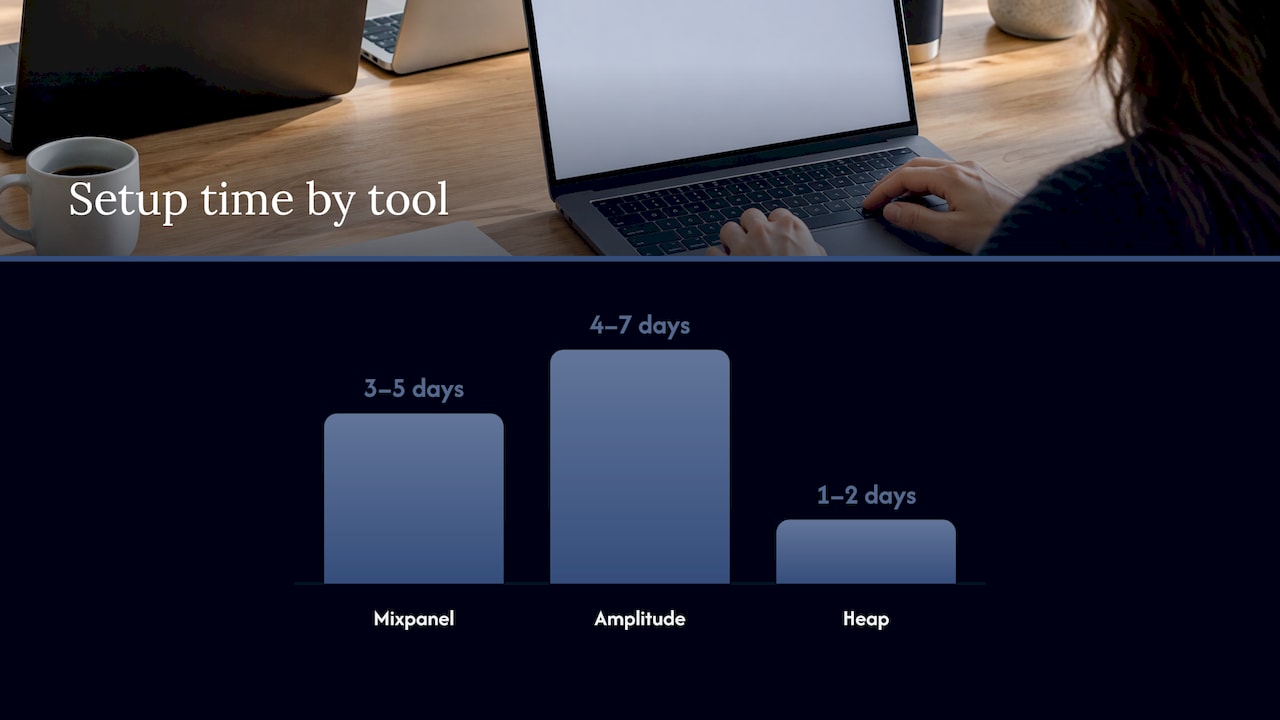
Mitzu rates setup as moderate for both Mixpanel and Amplitude, because they need SDK and event work, and easy for Heap. A B2B software comparison lists typical setup times of 3 to 5 days for Mixpanel, 4 to 7 for Amplitude and 1 to 2 for Heap. Treat those as a rough guide, because your own product's complexity will move them.
The common failure is not installation. It is a messy event list a year later. Heap's retroactive definitions take practice to keep clean, and Amplitude and Mixpanel both reward naming rules from day one. A serious setup needs an event taxonomy with naming rules, identity resolution, account-level tracking for B2B products and a single core activation metric, as Startupik's 2026 comparison puts it.
Pricing in 2026
Prices here are in US dollars, since both vendors list in USD, and Australian businesses should confirm current terms because regional pricing and taxes can differ, as StackScored's snapshot points out.
Amplitude. Its pricing page lists a free plan with 2 million events per month, no credit card and unlimited seats. Growth and Enterprise use event-based pricing. The free limit used to be counted in monthly tracked users, which is why older guides quote a different number. ValueAddVC's August 2026 guide also notes a startup program offering $100K in credits to qualifying companies.
Mixpanel. It charges per event. StackFYI's 2026 guide reports 1 million events a month free, then about $0.28 per 1,000 additional events. Session replay, heatmaps, experiments and feature flags arrived in 2025 and some sit in add-ons or higher tiers. At that rate, a busy product at 10 million events lands near $2,520 a month, so forecast volume first and track only meaningful events.
Heap. The free tier is sized by sessions, about 10,000 a month, and paid plans are quoted on session volume. ValueAddVC puts typical Growth contracts at roughly $30K to $60K a year.
The pattern: Mixpanel is usually cheaper for a small team doing basic funnels, Amplitude's value shows up when you use experimentation and cohorts heavily, and Heap's cost rises with the sheer volume auto-capture stores.

Which one fits your stage
Stage matters more than any feature list. ProductQuant's Jake McMahon maps the tools to company stage:
- Series A, product manager wants fast funnel iteration without SQL: Mixpanel.
- Series B and later, a dedicated analyst, many concurrent experiments: Amplitude.
- Limited engineering bandwidth, need to ship now: Heap.
He also warns that teams without a dedicated analyst often pay for Amplitude and use it for basic funnels that Mixpanel would handle for far less.
If you are validating a brand-new idea, there is an earlier question. Quackback's framework suggests that with very few users, charts are not meaningful yet, and weekly interviews and qualitative feedback tell you more. Behavioral analytics starts earning its keep once you have a few thousand users and can no longer judge engagement from memory.
What to settle before you install anything
A short checklist saves a painful migration later.
- Name your activation metric. One event that signals a user has reached value. Everything else is built around it.
- Write the tracking plan. Event names, properties and an owner. Duplicate and inconsistent events are what make dashboards untrustworthy.
- Track critical events server-side. Volument's implementation checklist suggests server-side tracking for signups and payments and client-side tracking for UX events, noting that 20 to 30% of client-side events can be blocked by ad blockers.
- Keep personal data out of event properties. Use hashed user IDs, check the vendor's data processing agreement and its data-residency options, and set automatic retention deletion.
- Plan for privacy features you will need. Per Searchlab's 2026 comparison, Amplitude and Heap are SOC 2 Type II certified, and Mixpanel offers consent and deletion tools. Heap's auto-capture needs exclusions configured for form inputs and sensitive pages.
- Decide the warehouse strategy. If you use Snowflake, BigQuery, Redshift or Databricks, check each tool's sync before you commit.
For Australian companies, ask your legal adviser how the Privacy Act applies to the data you collect and where it is stored. That is a legal question, not a tool-selection one.
The part no comparison covers: turning data into design
Amplitude, Mixpanel and Heap tell you where people drop off. None of them tells you why, or what to change. A funnel that loses 60% of visitors at pricing is a symptom. The fix could be page structure, copy, trust signals, form length or a mismatch between promise and product.
That is the gap between analytics and conversion. It takes user research, UX judgment and the ability to ship a changed page, then measure it again. We cover the tooling side in our guide to the best product analytics tools and the testing side in our conversion rate optimisation tools guide. If you are weighing whether Google's own tools are enough, our list of Google Analytics alternatives is a good companion read.
Work with Raw Studio
Raw Studio is a digital creative agency based in Sydney. We offer UX and UI design, conversion rate optimisation, user research, web development and a Data Intelligence offer, for startups through to established companies. Our approach is built on research, design sprints and frameworks like RapidMVP.
If you already have analytics running and want to know what to fix, our Full UX/CRO Audit starts from $2,500 one-off. If you want ongoing design capacity, the Design Team (Platinum) plan is $8,400 per month. Both are listed on our pricing page.
Not sure where your biggest leak is? Start with our free UX audit.
Our perspective
Founders ask us which analytics tool to buy as if it were the strategy. It is not. The tool is the instrument, and the strategy is the question you ask it.
Our view is simple. Choose the tool your team will open every week. For many teams that is Mixpanel, for analyst-led teams it is Amplitude, and for teams with no engineering time it is Heap. Then spend your energy on what comes next: reading the funnel, running user research to find out why people leave, and redesigning the step that loses them.
That is the work we like most. Research, a design sprint to test a fix quickly, then a measured change to the live experience. When numbers and people-centered design talk to each other, conversion improves because the product becomes easier to understand, not because a dashboard got prettier.
Whichever tool you pick, give it a clear tracking plan and a design partner who will act on what it shows you.
Sources
- tooldb.org: Mixpanel vs Amplitude vs Heap
- Mixpanel Introduction
- Amplitude
- Amplitude Pricing
- Amplitude: 10 Best Product Analytics Tools for 2026
- SaaSleuth: Mixpanel vs Amplitude vs Heap
- makeitnice.de: Best Product Analytics Tools 2026
- Mitzu: Best Funnel Analysis Tools 2026
- B2B-Software.net: Product Analytics Platforms for B2B SaaS
- Startupik: Heap vs Amplitude vs Mixpanel
- StackScored: Product Analytics Pricing
- ValueAddVC: Product Analytics Cost 2026
- StackFYI: Amplitude vs Mixpanel vs PostHog 2026
- TechBag: Mixpanel
- ProductQuant: Best Product Analytics Tools for Series A/B SaaS
- Quackback: Customer Insights Tools
- Volument: Product Analytics Implementation Strategy
- Searchlab: The 10 Best Analytics Tools in 2026
Recommended
- Best Product Analytics Tools in 2026
- 10 Best Google Analytics Alternatives in 2026 for Better UX, UI, and Growth Decisions