.svg)
.svg)


A rebrand is a coordinated change to your positioning, visual identity, and customer experience, not a logo swap. It works best when a real business shift (new market, merger, reputation problem, or legal conflict) demands it. Before committing budget, run a brand audit and a stakeholder alignment check to confirm the gap you're solving actually requires a full rebrand.
What is rebranding and how it differs from a refresh
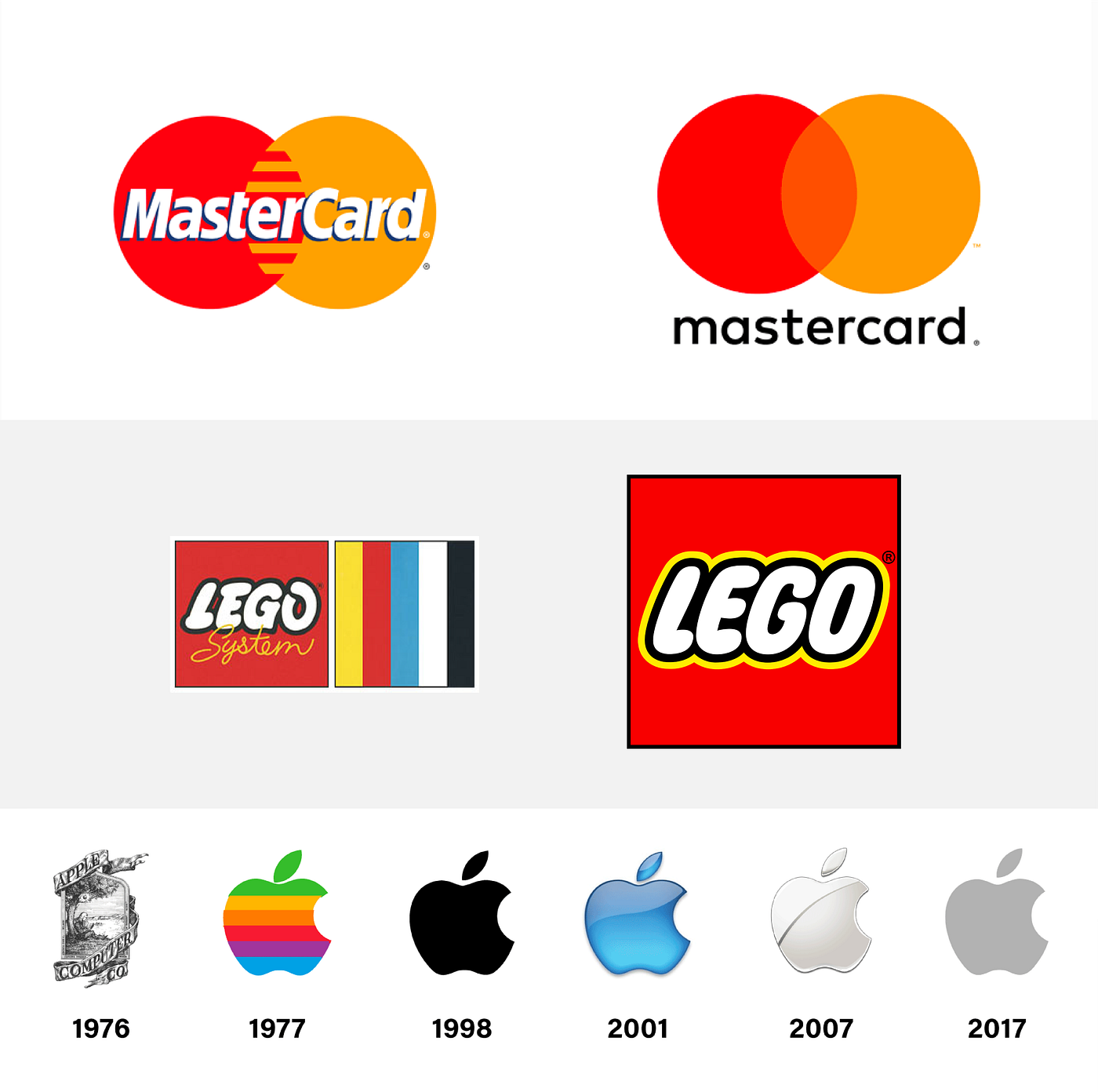
Rebranding and refreshing get used as if they mean the same thing, and that confusion causes a lot of wasted budget. A rebrand touches positioning, strategy, and often the name itself: the promise you make to customers changes, not just the font you make it in. A refresh updates the look (colors, typography, photography style) while the underlying strategy stays put. A visual update is narrower still, often just a logo tweak or a palette shift to keep things current.
Each move pursues a different goal. Rebrands tend to show up around:
- A strategic pivot, such as moving from services to a product-led model.
- Mergers or acquisitions that force two identities into one.
- Market mismatch, where the brand no longer reflects who buys from you.
- Legal exposure, where a name or mark risks trademark conflict.
The common misconception is that rebranding is primarily a design exercise. It's a business decision with design as one of several outputs. Teams that treat it as "new logo, new website" without revisiting positioning usually end up repeating the exercise within a few years, because the underlying mismatch between what the business does and what the brand says never got fixed. We've found the opposite mistake is just as expensive: running a full strategic rebrand when a refresh would have solved the actual problem, which is worth ruling out early.
When should you rebrand? Key signals and a quick decision checklist
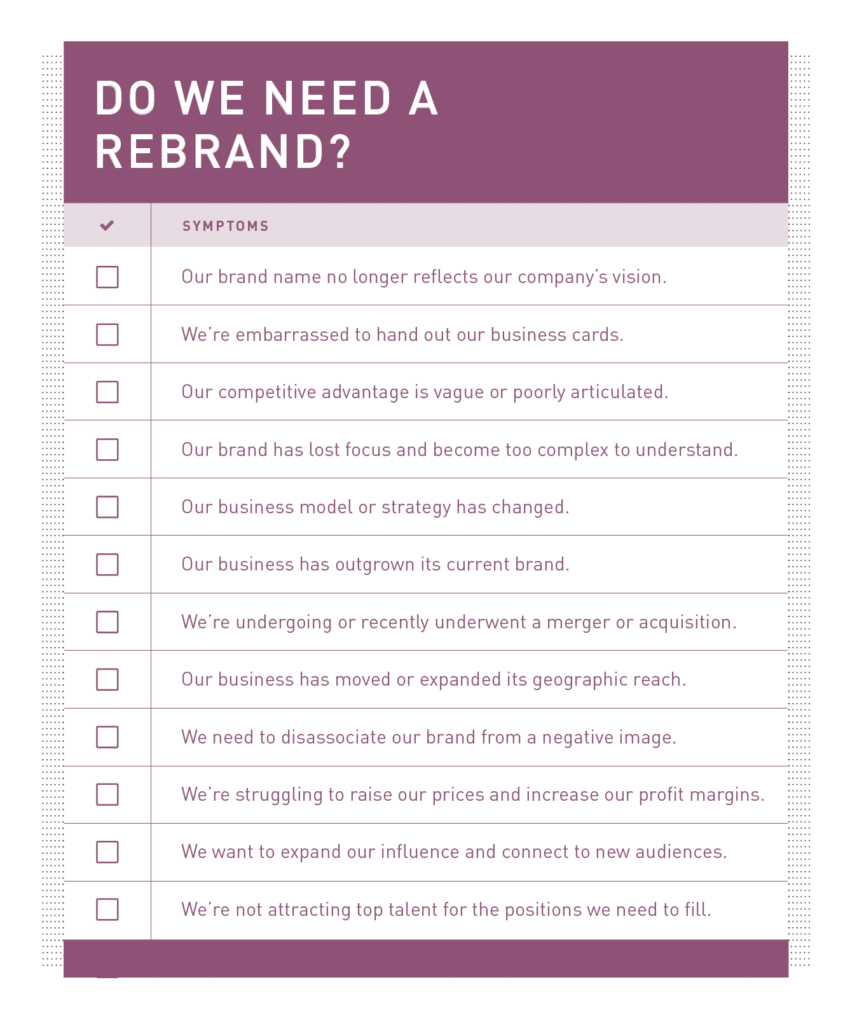
Deciding to rebrand starts with naming the trigger honestly. Vague dissatisfaction ("our brand feels dated") rarely justifies the cost and disruption; a specific business or legal driver usually does.
- Business triggers: a strategy change, a merger, a new product line, or expansion into a market your current brand doesn't fit.
- Market and customer signals: perception research or sales conversations reveal a gap between how you're seen and how you want to be seen.
- Legal and IP triggers: a trademark dispute or conflict risk, where IP Australia's first-response guidance notes that rebranding can be a lower-risk, practical alternative to litigation.
- Urgency signals: active cease-and-desist correspondence, an upcoming funding round, or a merger closing date that forces a decision window.
A short do and don't list keeps the decision grounded:
- Do run a brand audit before scoping creative work.
- Do involve legal counsel early if there's any IP ambiguity.
- Don't rebrand to fix an internal culture problem; that needs a different intervention.
- Don't let a single stakeholder's taste drive a decision that belongs to the whole business.
Step-by-step rebranding process: practical playbook and checklist
A rebrand moves through seven stages, and skipping or compressing any of them tends to resurface as rework later. Here's the order that holds up in practice.
- Discovery. Run a brand audit covering current messaging, visual assets, competitor positioning, and customer perception. Interview stakeholders across sales, product, and support, not just marketing. Pair this with customer research: surveys, win/loss interviews, and a review of support tickets for language patterns customers actually use.
- Strategy. Lock positioning before touching design. This includes brand architecture (one brand or several), a naming brief if the name is changing, and formal approval gates so strategy doesn't get relitigated mid-creative. Our practitioner's naming process for generating and narrowing name candidates is a useful reference if naming is in scope.
- Creative. Build the visual system, messaging framework, and design system deliverables (logo lockups, color and type specs, component libraries for digital products). This is where brand work for digital products earns its keep, since a system built only for print collateral tends to break the first time it hits a responsive interface.
- Implementation. Inventory every asset carrying the old brand: templates, signage, email signatures, app store listings, packaging. Map touchpoints to owners and build a production plan with realistic timing for each category.
- Digital migration. Decide on domain and URL structure changes, set up 301 redirects, and plan the Search Console Change of Address process if the domain itself is moving.
- Launch. Brief employees internally before any external announcement. Choose a phased or simultaneous rollout depending on scale, and prepare comms templates for customers, partners, and press.
- Post-launch. Track KPIs, fix misbranded assets as they surface, and set up governance so brand standards don't drift again within a year.
The checklist version, for teams who want a working list rather than a narrative:
- Confirm the business reason for rebranding in one sentence everyone agrees on.
- Complete a full asset and touchpoint inventory before creative starts.
- Set approval gates between strategy, creative, and production.
- Brief legal and IT before any public announcement.
- Build a 180-day monitoring plan and budget to maintain permanent redirects generally for at least one year if URLs change.
- Schedule internal training before the external launch date.
Pro Tip:Freeze the brand strategy document before creative review begins. Reopening positioning debates during design rounds is the single biggest cause of rebrand timelines slipping.
A few of these stages deserve more detail because they're where most projects lose time.
Discovery research methods worth running in combination: structured stakeholder interviews (15 to 30 minutes each, same question set), a competitive audit of direct and adjacent players, and at least one round of customer interviews focused on how people currently describe you unprompted. The gap between internal language and customer language is often the most useful finding in the entire discovery phase.
Naming brief contents, if a name change is part of scope: the strategic rationale, linguistic and trademark constraints, a shortlist process with clear criteria, and a legal screening step before any name goes to stakeholders for a vote. Falling in love with a name before checking trademark availability is a common and avoidable setback.
Touchpoint mapping works best as a simple spreadsheet: asset name, owner, current state, target state, and a production deadline. Digital assets (website, app, email templates) usually move fastest; physical assets (signage, packaging, printed collateral) take longer and cost more to replace, so they often get phased.
Launch sequencing matters more than most teams expect. Internal rollout should happen before any customer or press announcement, with enough lead time for staff to answer basic questions without being caught off guard. For the external side, digital channels can usually launch together since they're low-cost to update, while physical collateral is phased in as existing stock depletes.
Stakeholder alignment and internal rollout to secure employee buy-in
A rebrand succeeds or fails largely on whether your own people believe in it. Research on internal branding ties employee identification with the new brand directly to post-rebrand operational outcomes, and the mechanism is straightforward: staff who don't understand or buy into the new positioning keep describing the business the old way, which confuses customers regardless of how good the new website looks.
Governance needs clear roles before launch, not during it:
- A decision owner (usually a CMO or founder) who can break deadlocks.
- A working group spanning marketing, product, legal, and operations.
- Defined checkpoints where the working group signs off before work proceeds.
Internal communications should start well before the public launch, not the week of it:
- A kickoff session explaining the business reason for the change, not just the new look.
- Role-specific training for customer-facing teams, especially support and sales.
- A pilot period where a small team uses new materials and flags gaps before full rollout.
Pro Tip:Run a dry-run internal launch two to three weeks before the public one. It surfaces messaging gaps while there's still time to fix them.
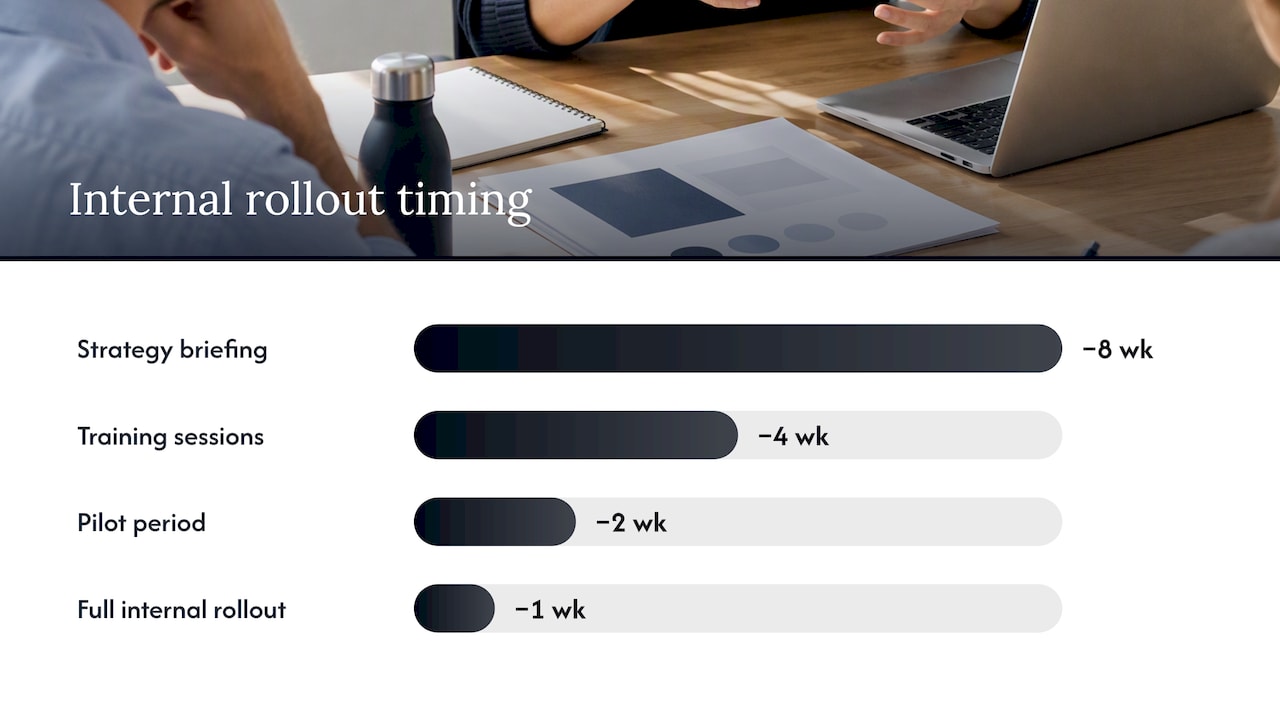
A reasonable cadence: strategy briefing at minus eight weeks, training sessions at minus four weeks, a pilot at minus two weeks, and full internal rollout one week ahead of the public announcement.
Legal, naming, and IP steps to handle during a rebrand
Legal work tends to get scheduled last and rushed, which is backward given how much it can delay a launch date. Trademark screening should happen before a name or visual mark gets presented to stakeholders, not after everyone has already fallen in love with it. IP Australia's guidance frames rebranding itself as a legitimate, often lower-risk way to resolve a trademark conflict compared to prolonged litigation, which is worth knowing if the rebrand is being driven by a dispute rather than a strategy shift.
If an Australian company is changing its registered company name, the ASIC process is separate from a visual rebrand or a change to a trading name:
- The company's members must pass a special resolution approving the new name.
- Lodge Form 205 Notification of resolution with a copy of the special resolution and pay the applicable fee within 14 days of the resolution being passed.
- A name can be reserved ahead of the formal filing if you want certainty before announcing publicly.
Separately, check whether a business name registration is needed if you're trading under a name different from your registered company name; this interacts with your existing ABN and needs updating alongside the ASIC filing, not as an afterthought weeks later.
Bring IP counsel in at the discovery stage if there's any ambiguity about trademark availability, not once creative is finished. A clearance search before the naming shortlist is finalized is far cheaper than a rebrand you have to partially undo after launch because a mark conflicts with an existing registration.
Digital migration and SEO checklist for site moves during a rebrand
If your domain or URL structure changes as part of the rebrand, this is the stage most likely to quietly cost you organic traffic if it's rushed. Start by assessing risk honestly: are URLs changing, is content changing at the same time, and is the platform changing too? Each added variable makes it harder to diagnose a ranking drop if one happens.
- Set up 301 redirects from every old URL to its corresponding new one before anything goes live publicly.
- Add correct canonical tags on the new site so search engines know which version is authoritative.
- Submit a Change of Address request in Google Search Console once redirects are confirmed working, which forwards search signals for 180 days.
- Keep ownership of the old domain rather than letting it lapse; losing it can break the redirect chain search engines rely on.
Site migrations that separate platform changes from URL structure changes tend to recover faster, because there's only one variable to troubleshoot if rankings dip. Moving the platform first on existing URLs, letting it stabilize, then changing structure afterward is the safer sequence when timelines allow it.
After migration, monitor Search Console's Page indexing and performance reports weekly for the first month. If organic traffic drops sharply, investigate redirects, crawl access, accidental noindex tags, canonicals, content changes, and analytics configuration before drawing conclusions about a penalty. Search visibility can fluctuate during a move.
Implementation timeline, budget items and rollout models
Choosing between a big-bang launch and a phased rollout depends mostly on scale and risk tolerance. A big-bang launch, where everything changes on one date, creates a strong moment of impact but leaves no room to fix mistakes quietly. A phased rollout spreads risk and cost over weeks or months but can create a confusing period where old and new brands coexist.
- Big-bang suits smaller organizations with fewer touchpoints to update simultaneously.
- Phased rollouts suit larger organizations where physical assets like signage and packaging can't realistically be replaced overnight.
- Digital channels (website, social profiles, email templates) are usually cheap enough to launch together regardless of the physical rollout plan.
- Budget categories to plan for separately: strategy and research, creative development, production of physical assets, digital build, and internal training.
| Rebrand scale | Typical timeline | Rollout model |
|---|---|---|
| Small business | 2 to 4 months | Big-bang |
| Mid-sized company | 4 to 8 months | Hybrid: digital big-bang, physical phased |
| Enterprise or multi-brand | 8 months | Fully phased |
A simple prioritization method for touchpoints: rank each asset by customer visibility and replacement cost, then tackle high-visibility, low-cost items first (website, email signatures) while scheduling high-cost physical items (vehicle wraps, signage) around existing replacement cycles to avoid wasting unused stock.
Measuring success: KPIs, monitoring cadence and remediation steps
A rebrand isn't finished at launch; it's finished once you've confirmed the new identity is actually performing the way the strategy promised. Three categories of metrics matter.
- Brand metrics: awareness, preference, and either NPS or CSAT tracked against a pre-launch baseline.
- Digital metrics: organic traffic, keyword rankings, conversion rates, and inbound referral links.
- Operational checks: misbranded assets still circulating, broken links from the migration, and a spike in support queries about the change.
A 30/90/180-day checklist keeps monitoring disciplined instead of reactive:
- Day 30: confirm redirects are working, check for broken links, review early support ticket themes.
- Day 90: compare organic traffic and rankings against pre-launch baseline, survey a sample of customers on brand recall.
- Day 180: review migration and brand metrics against the business case; keep redirects active beyond this checkpoint and check remaining traffic to old URLs.
If traffic or rankings drop sharply at any checkpoint, treat it as a remediation trigger: audit redirects first, then check for duplicate or orphaned content before assuming a deeper problem.
How Raw Studio runs rebrands: frameworks and a free checklist
We use frameworks like Design Sprint and RapidMVP to compress the discovery-to-validation gap that slows most rebrands down. Instead of spending months on strategy decks before testing anything with real users, we move positioning and early design concepts into testable form within days, which means stakeholders are reacting to something tangible rather than abstract.
A few ways this shows up in a typical engagement:
- We pair brand strategy work with early UX prototyping so positioning gets stress-tested against real interfaces, not just mood boards.
- Data intelligence work runs alongside creative, so decisions about messaging and design are grounded in what users actually do.
- Our free branding checklist template gives you a self-serve starting point for the discovery phase before any engagement begins.
Author perspective: practical cautions and common pitfalls
The mistakes I see repeat across rebrands are rarely creative ones. They're sequencing failures. Teams rush legal checks because trademark clearance feels like paperwork rather than risk, then discover a conflict after the new name is already on the website. Teams move platform and domain at the same time to "get it all done at once," then can't tell which change caused a ranking drop. And teams finish a beautiful new brand book without ever training the support team, so customers hear two different stories depending on who they call.
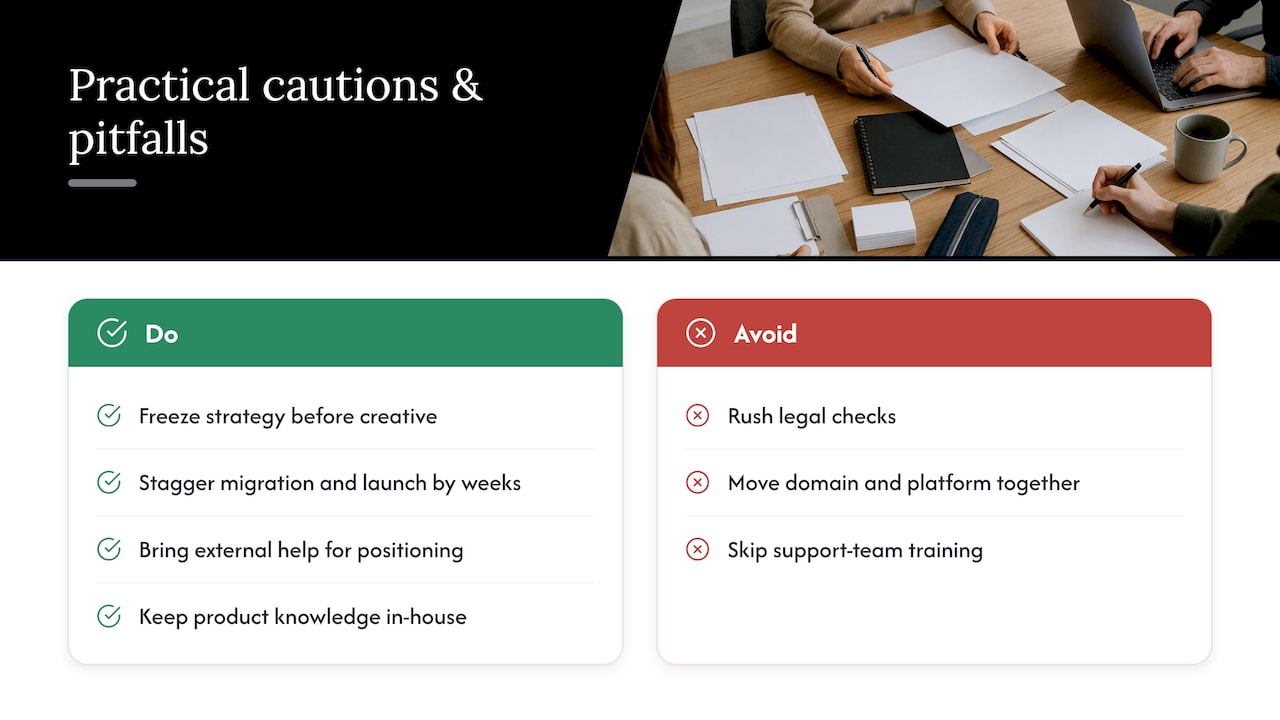
Bringing in outside help makes sense when you need an outside read on positioning or lack in-house capacity for structured user research; keeping control in-house makes sense for anything touching proprietary product knowledge that outsiders can't shortcut.
Two things I tell every client: freeze strategy before creative starts, and never let the technical migration and the brand launch share a single "big day" if you can help it. Stagger them by a few weeks and you'll sleep better.
How Raw Studio can help and the next step
If you're staring down a rebrand and want support mapped directly onto the stages above: strategy and positioning, UX and UI design carrying the system into real interfaces, technical build and migration, and conversion rate optimisation to monitor performance once live.
A typical engagement gives you a dedicated team, clear deliverables at each gate, and timelines scoped to your rebrand's size rather than a one-size template. For ongoing support beyond a single project, our Design Team (Platinum) retainer keeps a team embedded with you past launch.
- Browse our services to see which phases of the playbook you need support with.
- Get in touch through our pricing page to scope your project and timeline.