




For most Australian businesses, Shopify is the best ecommerce platform. It hosts your store, handles checkout and security, and has the strongest local ecosystem. WooCommerce suits teams that already run WordPress and want full control. BigCommerce suits larger catalogues and B2B. Square Online suits shops that also sell in person. Wix and Squarespace suit small, design-led catalogues. Below is how they compare on cost, fees, shipping and fit, so you can pick without a month of tab-hopping.
How we compared these platforms
A feature list rarely settles the decision. What matters to an Australian merchant is a shorter list of questions, and Stripe's platform-selection guidance covers most of them: how far you can customise the storefront, what SEO controls you get, how variants and bundles work, whether you can manage inventory across locations, which integrations exist, and how well checkout performs on mobile.
On top of that, we added three Australian filters:
- Local fit. Does it support Australian dollars, Australia Post and the payment methods local shoppers expect?
- True monthly cost. Plan price plus processing fees, hosting and extensions.
- Who carries the technical load. Who looks after updates, security and uptime?
Your sales model changes the weighting. Stripe notes that B2C stores need fast checkout, mobile performance and promotions, while B2B stores need wholesale pricing, account-specific catalogues, quotes and purchase-order support. Subscription stores need billing-cycle and self-service controls. Decide which of those you are before you read the comparisons.
The platforms at a glance
Prices below are the published entry points checked in 2026. Shopify's figures come from WebToolGuide's review, the other local figures from MerchantCompare's comparison, and BigCommerce's from its own pricing page.
Shopify: the strongest all-rounder
Shopify is the most used platform in Australia by a wide margin. AfterShip's Australian statistics put it at 142.05K stores, or 41.65% of the total. Other trackers use different methods and land on different shares, but they all put Shopify first. Eightx's May 2026 landscape report counts 152,323 active Australian Shopify stores and describes the country as a Shopify-dominant market.
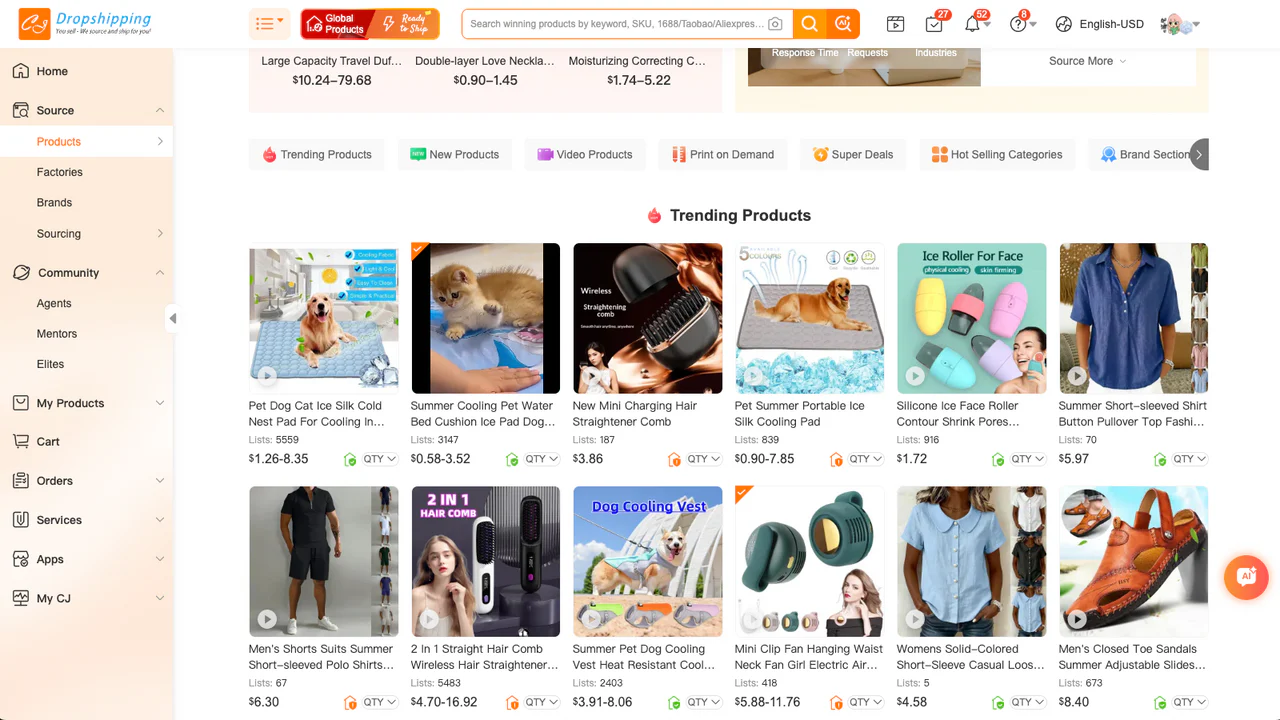
That popularity is useful in practice. You get a deep app store, a large pool of developers and agencies, and plenty of tutorials written for Australian conditions. Hosting, checkout, security and core commerce infrastructure are included in the plan, so nobody on your team patches servers. On shipping, Finmark Solutions notes that Shopify has a native Australia Post app and supports Australian currency natively.
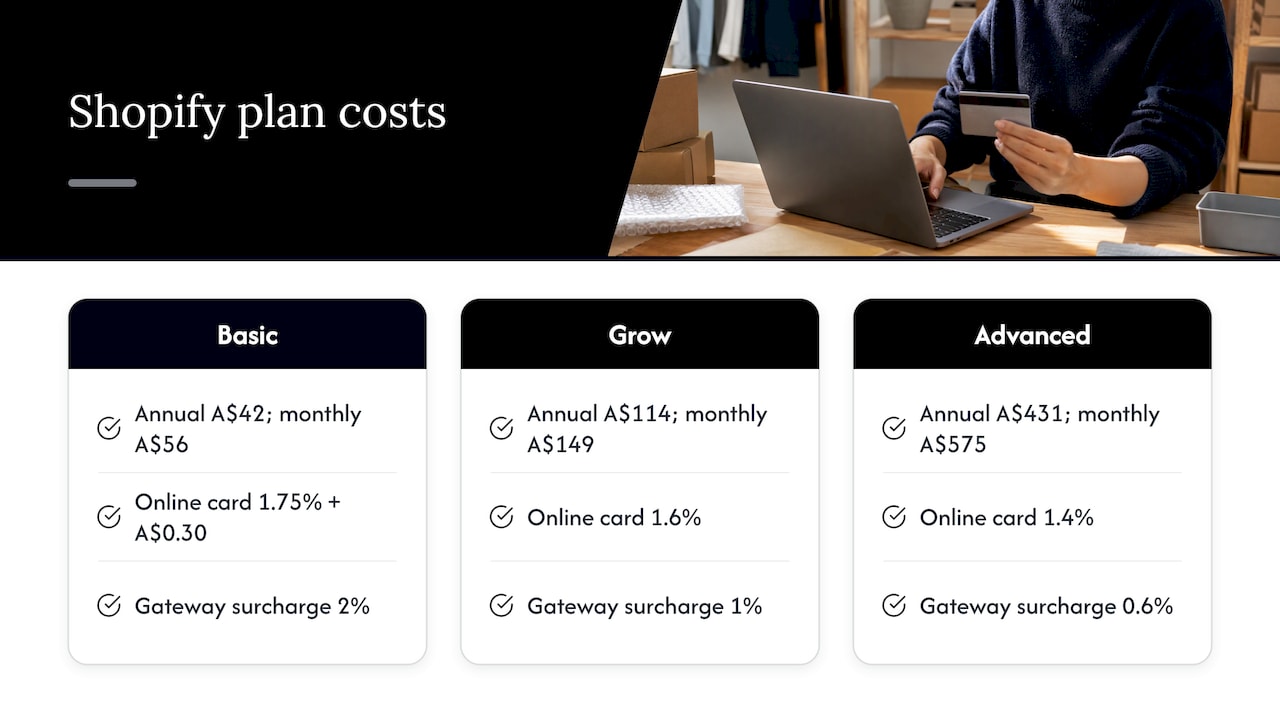
Costs to expect. Per WebToolGuide, Basic is A$42 a month billed annually or A$56 month to month. Grow is A$114 annually or A$149 monthly, and Advanced is A$431 annually or A$575 monthly. Shopify Payments online card rates start at 1.75% + A$0.30 on Basic, 1.6% on Grow and 1.4% on Advanced. Use a third-party gateway and you pay an extra 2%, 1% or 0.6% respectively. If you run on Basic with an outside gateway, that fee adds up faster than most people expect.
Best for: brands that expect online to become a core sales channel, dropshippers, and anyone who wants to launch quickly and scale without replatforming.
If you are choosing between Shopify and the main open-source alternative, we wrote a separate Shopify vs WooCommerce comparison for Australia.
WooCommerce: maximum control, more responsibility
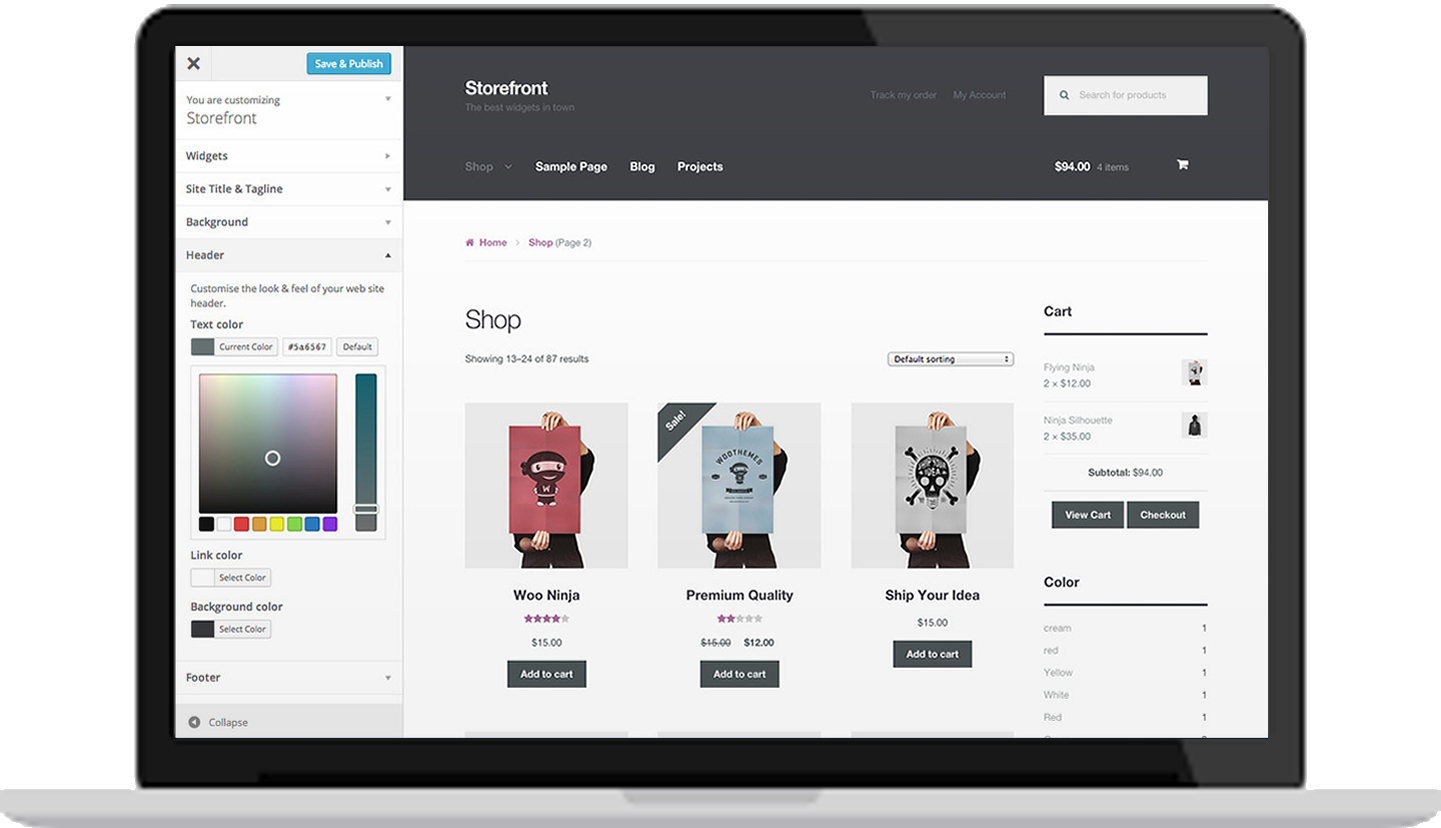
WooCommerce is the free, open-source commerce plugin for WordPress. Its pricing page says there are no platform fees or revenue share. You choose your own payment processor, hosting (roughly $25 to $350 a month for most stores) and extensions ($29 to $299 a year each). WooPayments card processing is around 2.50% to 2.90% + 30¢ per transaction. It supports unlimited product variants and unlimited markets with no extra fees.
Where it shines is content and SEO. If your business already lives on WordPress, with a blog, guides and landing pages that drive traffic, adding a store keeps everything in one place. Shoplazza's comparison positions WooCommerce for content- and SEO-led businesses.
The trade-off is ownership. Plugins, themes, updates, backups, payment integrations and compatibility all sit with you or your developer. That is a fair deal when you have technical resources and want to shape every detail. It is a good reason to budget for a development partner if you do not.
Best for: WordPress-first businesses, content-led brands, and teams with in-house or agency development support.
BigCommerce: catalogues, B2B and multi-store
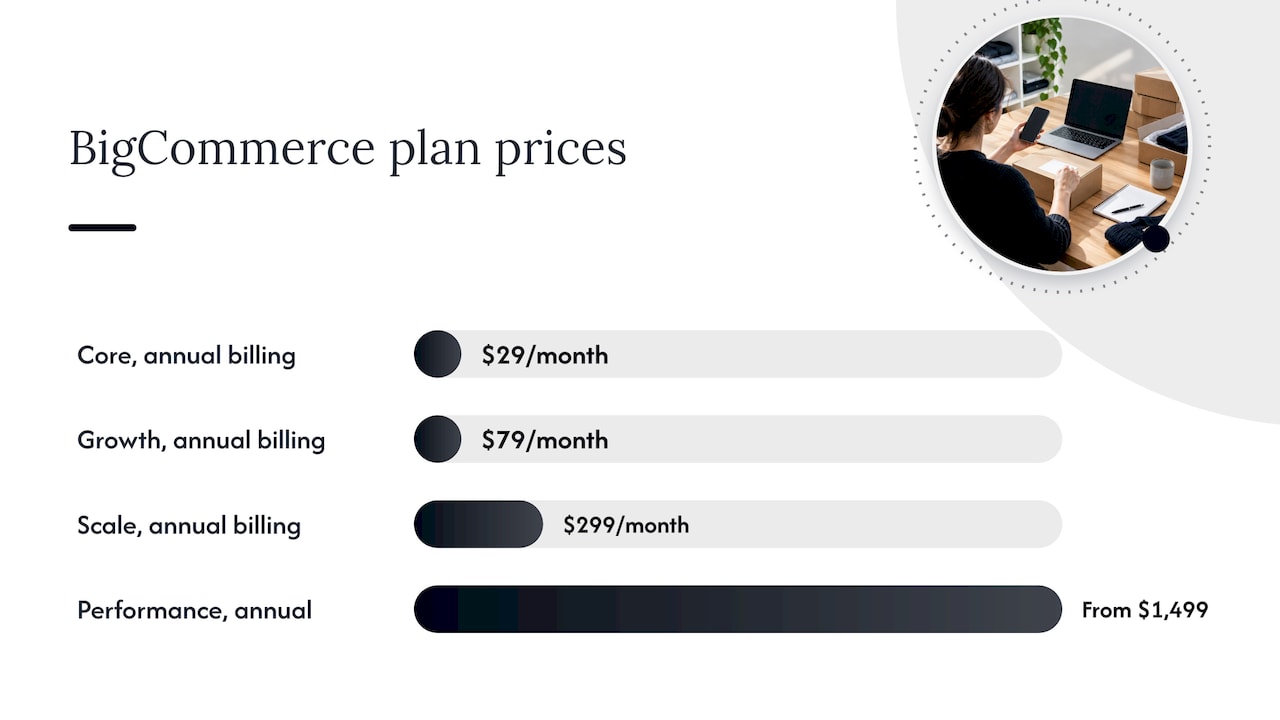
BigCommerce prices in US dollars, which matters for budgeting. According to its Australian pricing page:
- Core: $29/month billed annually, up to $30K trailing-twelve-month sales
- Growth: $79/month billed annually, up to $100K
- Scale: $299/month billed annually, with a 0.9% fee above the sales cap
- Performance: custom priced from $1,499/month billed annually, with a dedicated Customer Success Manager
All plans include zero fees with embedded payment providers and 24/7 support. Sales thresholds mean your plan can change as you grow, so factor that in. MerchantCompare highlights BigCommerce's B2B features on higher plans, and Shoplazza places it with wholesalers and B2B sellers. Finmark describes it as less plug-and-play for local shipping than Shopify, so plan some setup time for Australia Post and courier rules.
Best for: established catalogues, wholesale or B2B models, and multi-store operations.
Square Online: when the shop floor matters
If you already take payments in person with Square, Square Online is the natural extension. MerchantCompare lists it as free to start, with 2.2% processing on Free and Plus plans and 1.9% on Premium, and flags Square POS, pickup, local delivery and shipping as its omnichannel strengths. It does not support dropshipping.
MobileTransaction's review recommends Shopify for online retail and Square for all-round value, noting Shopify's stronger inventory and customisation and Square's simpler point of sale. The useful distinction is depth online versus simplicity in store. A café, salon or boutique with a modest web catalogue will be happy on Square. A brand whose revenue is mostly online will outgrow it sooner.
Best for: physical retail, hospitality and service businesses adding online ordering.

Wix and Squarespace: simple builds for small catalogues
Wix and Squarespace are the easiest route to a good-looking store when you want to build and maintain it yourself. Per MerchantCompare, Wix Core is A$42 with 1.9% + A$0.30 processing, and dropshipping works through apps. Squarespace Basic is A$17 with a 3% platform fee, and its stores are design-focused. Finmark's indicative monthly ranges are A$21 to A$199 for Wix and A$16 to A$52 for Squarespace.
Both suit a small product range, a clear brand and an owner who wants to edit pages without a developer. As the catalogue, variants and integrations multiply, many merchants move to Shopify or WooCommerce. Choosing with that path in mind saves a painful migration later.
Best for: makers, small boutiques and design-led brands with compact catalogues.
Real cost: a worked example
Plan prices are the visible part. Take a small Australian store taking card payments on a standard plan:
- Shopify Basic: A$42 a month billed annually, plus 1.75% + A$0.30 per online card sale through Shopify Payments, plus apps you add.
- WooCommerce: no platform fee, but hosting from A$35+ a month per MerchantCompare, extensions at $29 to $299 a year each, and processing of roughly 2.50% to 2.90% + 30¢ through WooPayments.
- BigCommerce Core: US$29 a month billed annually, no platform fee on embedded payment providers, and a currency conversion to keep in mind.
The lesson: compare total cost at your expected sales volume, not the headline plan price. A low plan with a high platform fee can cost more than a mid-tier plan once you pass a few thousand dollars a month.
Dropshipping, shipping and local payments
For dropshippers, MerchantCompare lists support on Shopify through DSers, on WooCommerce through plugins and on Wix through apps. Wise's Australian dropshipping guide advises checking warehouse location, product range, platform integration, subscription fees, returns and support, and notes that Australian warehouses can shorten domestic delivery times. It lists Dropshipzone, a Melbourne-founded supplier with Shopify integration and no minimum order quantities, subject to an ABN or ACN.
On payments, Australians expect buy-now-pay-later. Eightx reports Afterpay on 26.3% of Australian Shopify stores, the most BNPL-saturated Shopify market it tracks. If you are weighing payment providers, our Stripe vs Adyen comparison for Australia goes deeper.
Once the store is live, product visibility becomes the next lever. Choosing among Google Shopping feed apps is a sensible step for Shopify merchants who want their catalogue in front of shoppers beyond their own site.
Which platform should you choose?
- You want to launch fast and grow: Shopify.
- You run WordPress and publish a lot of content: WooCommerce.
- You sell wholesale or manage a large, complex catalogue: BigCommerce.
- You already use Square in a physical shop: Square Online.
- You are a solo maker who wants to build it yourself: Wix or Squarespace.
- You run subscriptions: pick the platform first, then design the experience carefully. Our guide to subscription UX for ecommerce brands shows where plan selection and dashboards win or lose repeat buyers.
No platform fixes a confusing product page. Two stores on the same platform can convert very differently, because layout, copy, trust signals and checkout friction all sit on top of the engine. That is where design earns its place, and where the build cost often lands. For budgeting, see our breakdown of website design cost in Australia.
Our perspective
We spend our days on the layer above the platform: how someone lands on a product page, decides, and checks out. Over and over we see that the platform choice matters less than people fear, and the experience built on it matters more than they expect.
Our advice is to choose the platform that fits your team and your sales model, then invest in the design. A purposeful, research-led store on Shopify, WooCommerce or BigCommerce will beat a neglected one on any of them. That is why we start with user research and testing before we draw a single screen, and why frameworks like our Design Sprint and Rapid MVP exist: to validate an idea before you commit to a full build.
If you are launching, think about what shoppers need to feel confident buying from you. If you are established, look at where visitors drop off. Either way, the best ecommerce platform is the one you will actually shape around your customers.
Get the store experience right
Picking a platform is step one. Raw Studio is a Sydney digital agency that designs and builds ecommerce experiences, from branding and UX/UI through to web development and conversion work. Our Everdure case study shows how we approach a product-led online store.
If your store is already live, our Full UX/CRO Audit starts from $2,500 one-off and looks at where shoppers hesitate. If you want ongoing support, the Design Team (Platinum) plan is $8,400 per month. See everything on our pricing page, explore our conversion rate optimisation service, or look at web development if you are ready to build.