.svg)
.svg)



Most e-commerce businesses operate within a narrow band of performance. Industry-wide, conversion rates typically hover between 2% and 3%. That means out of 100 visitors, only two or three actually complete a purchase. For many businesses, pushing that number to even 4% is considered a major win.
Amazon operates on a completely different level.
Estimates consistently place Amazon’s conversion rate between 10% and 15%, with even higher numbers for Prime users. In some cases, returning customers convert at rates exceeding 20%. That is not just an incremental improvement. It is a fundamentally different system of user experience.

This gap is not explained by brand recognition alone. While trust plays a role, the real driver is how Amazon designs its experience to remove friction at every step. The company does not rely on persuasion tactics as much as it relies on eliminating barriers.
This is an important distinction. Many businesses try to increase conversion by adding urgency, discounts, or aggressive messaging. Amazon takes the opposite approach. It reduces the number of reasons a user might hesitate.
This case study breaks down the five core UX principles Amazon uses to achieve its high conversion rates, along with smaller details that compound their effectiveness. Then we will look at why these decisions work and how they can be applied in a practical way.
The 5 Core UX Principles
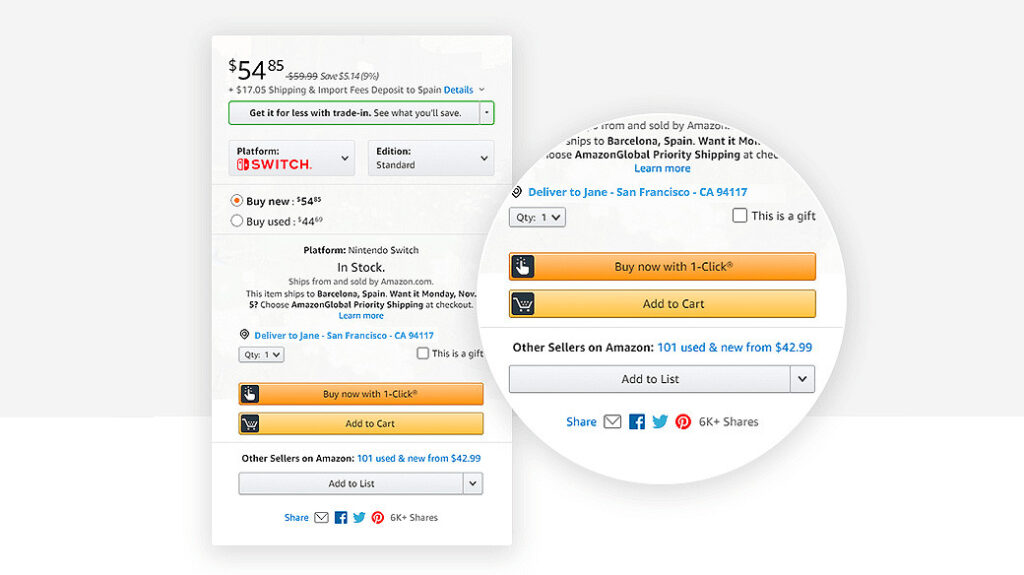
1. One-Click Checkout: Removing the Final Barrier
One of Amazon’s most well-known innovations is its one-click checkout system. While it may seem like a simple feature, its impact is significant.
In a typical checkout flow, users go through multiple steps:
- Add to cart
- View cart
- Enter shipping details
- Enter payment information
- Review order
- Confirm purchase
Each step introduces friction. Every additional click is a moment where doubt can creep in. Users may reconsider, get distracted, or abandon the process altogether.
Amazon compresses this entire sequence into a single action.
Once a user has saved their payment and shipping information, purchasing becomes almost instantaneous. The “Buy Now” button removes the need for deliberation. It transforms the act of buying from a process into a reflex.
This works because it aligns with how people behave online. Most purchases are not deeply analytical decisions. They are driven by momentum. When that momentum is uninterrupted, conversion increases naturally.
Amazon’s one-click system does not convince users to buy. It simply makes it easier for users who already want to buy.
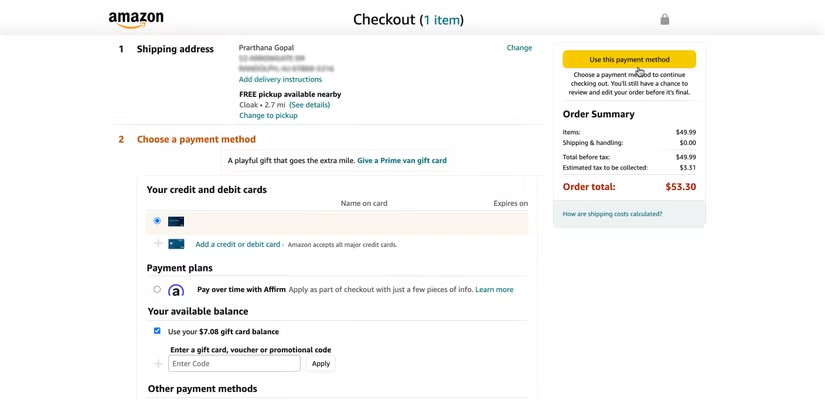
2. Saved Payment and Shipping Information: Eliminating Repetition
Repetition is one of the biggest sources of user frustration in e-commerce.
Entering the same information repeatedly, such as addresses and payment details, feels unnecessary and time-consuming. It creates a subtle but powerful resistance.
Amazon removes this friction by storing user data and making it instantly accessible.
When a returning customer visits Amazon, much of the work is already done:
- Shipping addresses are pre-saved
- Payment methods are stored
- Preferences are remembered
This reduces cognitive load. Users do not have to think about what to input or how to input it. They can focus entirely on the product they want.
There is also a psychological effect. When a system remembers you, it feels personalized and efficient. It reinforces trust and familiarity.
More importantly, it shortens the path to purchase. The fewer steps required, the fewer opportunities for abandonment.
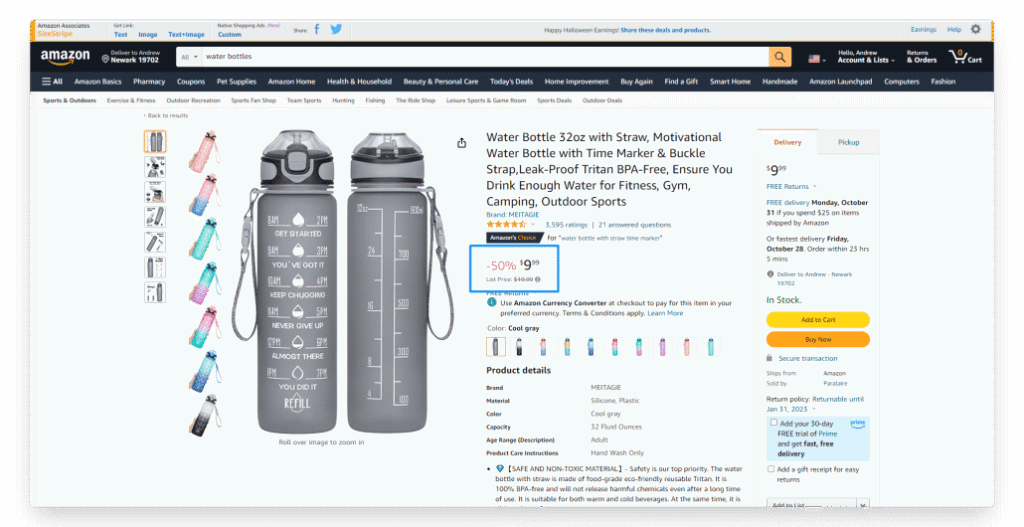
3. Transparent Pricing: Removing Uncertainty
Unexpected costs are one of the leading causes of cart abandonment. When users see a price change at checkout, it creates friction and distrust.
Amazon addresses this by being upfront about pricing:
- Clear product pricing
- Shipping costs shown early
- Taxes calculated transparently
- Delivery dates displayed clearly
This reduces uncertainty.
When users know exactly what they will pay and when they will receive their product, they can make decisions with confidence. There are no surprises at the final step.
Transparency also builds trust over time. Users learn that what they see is what they get. This consistency lowers hesitation in future purchases.
Instead of using hidden fees to maximize short-term revenue, Amazon prioritizes long-term conversion and retention.
4. Fast Page Loads: Respecting User Attention
Speed is often underestimated in discussions about UX, but it is one of the most critical factors in conversion.
Amazon has invested heavily in optimizing page load times. Even small delays can have measurable effects on revenue. Studies have shown that even a 100-millisecond delay can reduce conversion rates.
Fast loading pages do two things:
- They maintain user momentum
- They signal reliability
When a page loads instantly, users stay engaged. There is no break in their browsing flow. This continuity is essential for keeping attention focused.
On the other hand, slow pages introduce friction. Users become impatient, distracted, or frustrated. This increases the likelihood of abandonment.
Amazon treats speed as a core part of the user experience, not a technical afterthought. It is built into the system at every level.
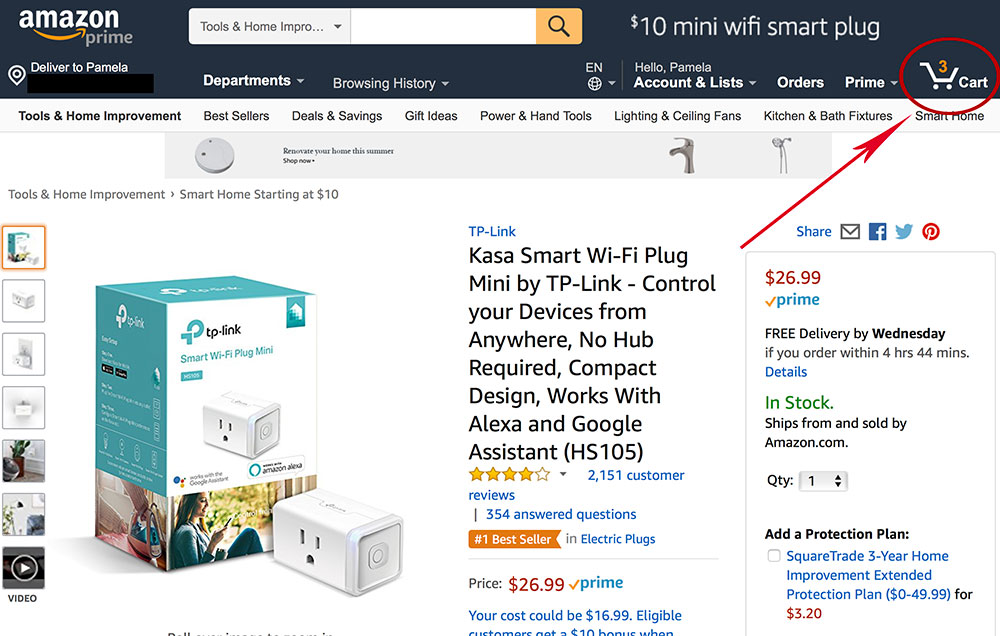
5. Persistent Cart: Reducing Lost Intent
Many users do not complete a purchase in a single session. They browse, compare options, and return later.
Amazon’s persistent cart ensures that items remain saved across sessions and devices.
This has several advantages:
- Users can pick up where they left off
- Intent is preserved over time
- Re-engagement becomes easier
The cart acts as a memory of the user’s interest. Instead of starting from scratch, users can resume their journey effortlessly.
This is especially important in a multi-device world. A user might browse on mobile and complete the purchase on desktop. The persistent cart connects these experiences seamlessly.
By maintaining continuity, Amazon reduces the friction associated with returning to a purchase.
The Micro Details That Quietly Drive Conversion
Beyond the major principles, Amazon excels in small details that often go unnoticed but have a strong cumulative effect.
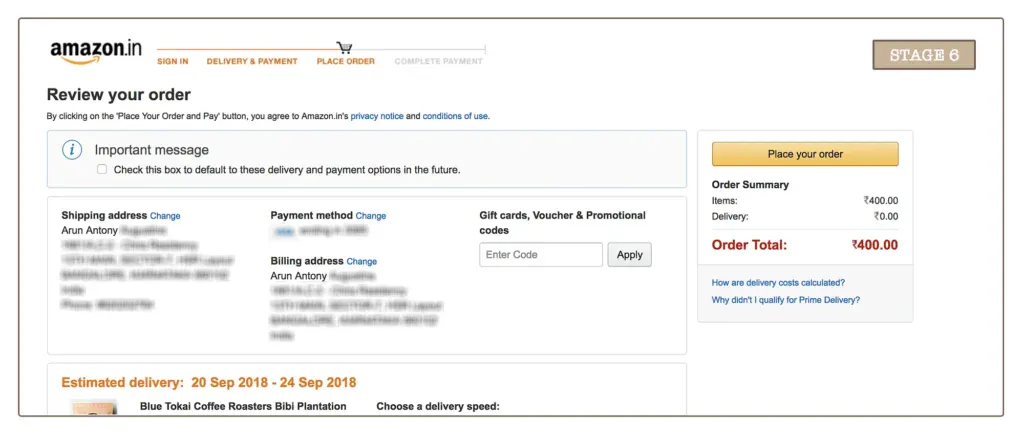
aDuring checkout, users are guided by clear progress indicators. Instead of wondering how long the process will take, they can see exactly where they are and what remains. This sense of direction reduces anxiety and encourages completion.
At the same time, trust is reinforced at every step. Reviews, ratings, secure payment indicators, and return policies are not hidden away. They are integrated directly into the decision-making process, helping users feel confident without needing to search for reassurance.
Amazon also designs its system to prevent mistakes rather than react to them. Inputs are validated in real time, suggestions are offered when needed, and instructions are clear. The result is a smoother experience where users rarely encounter obstacles.
Individually, these details seem small. Together, they remove friction in ways that compound.
Why It Works: Removing the Need to Think
At its core, Amazon’s approach is simple. It reduces decision friction.
Every step in a typical buying journey introduces questions. Users wonder whether the product is right, whether the price is fair, or whether the process is worth the effort. Each of these decisions adds resistance.
Amazon systematically removes or simplifies those moments. The process becomes less about deciding and more about acting.
This does not mean users are being pushed. It means their path is clear. When someone already intends to buy, there is nothing slowing them down.
That is why the system works.
How to Apply This Without Amazon’s Resources
You do not need Amazon’s scale to apply these ideas. What matters is not the size of the system, but the way it is designed.
Start by looking at your own funnel from the user’s perspective. Pay attention to where people hesitate or drop off. Those moments usually point to friction.
Reducing steps is often the fastest win. If your checkout or signup process feels longer than necessary, there is a good chance it is hurting conversion. Even small simplifications can make a difference.
It is also important to look at decision overload. If users are forced to think too much, they are more likely to pause. Simplifying choices, clarifying pricing, and guiding attention can help move them forward.
Finally, remove repetition wherever possible. If users have already provided information, find ways to reuse it. The less effort required, the smoother the experience becomes.
Final Thoughts
Amazon’s conversion rate is not the result of a single feature. It is the outcome of a system built around one idea: remove friction.
Every improvement, whether large or small, contributes to making the experience easier, faster, and clearer.
When those elements come together, conversion is no longer something you have to force. It becomes the natural result of a well-designed experience.
Want to Improve Your Own Conversion?
If your funnel is not converting the way it should, the problem is usually not traffic. It is friction hidden in the experience.
Fixing even a few key issues can unlock significant growth.
You will walk away with a clearer understanding of where users are dropping off and what to improve next.