

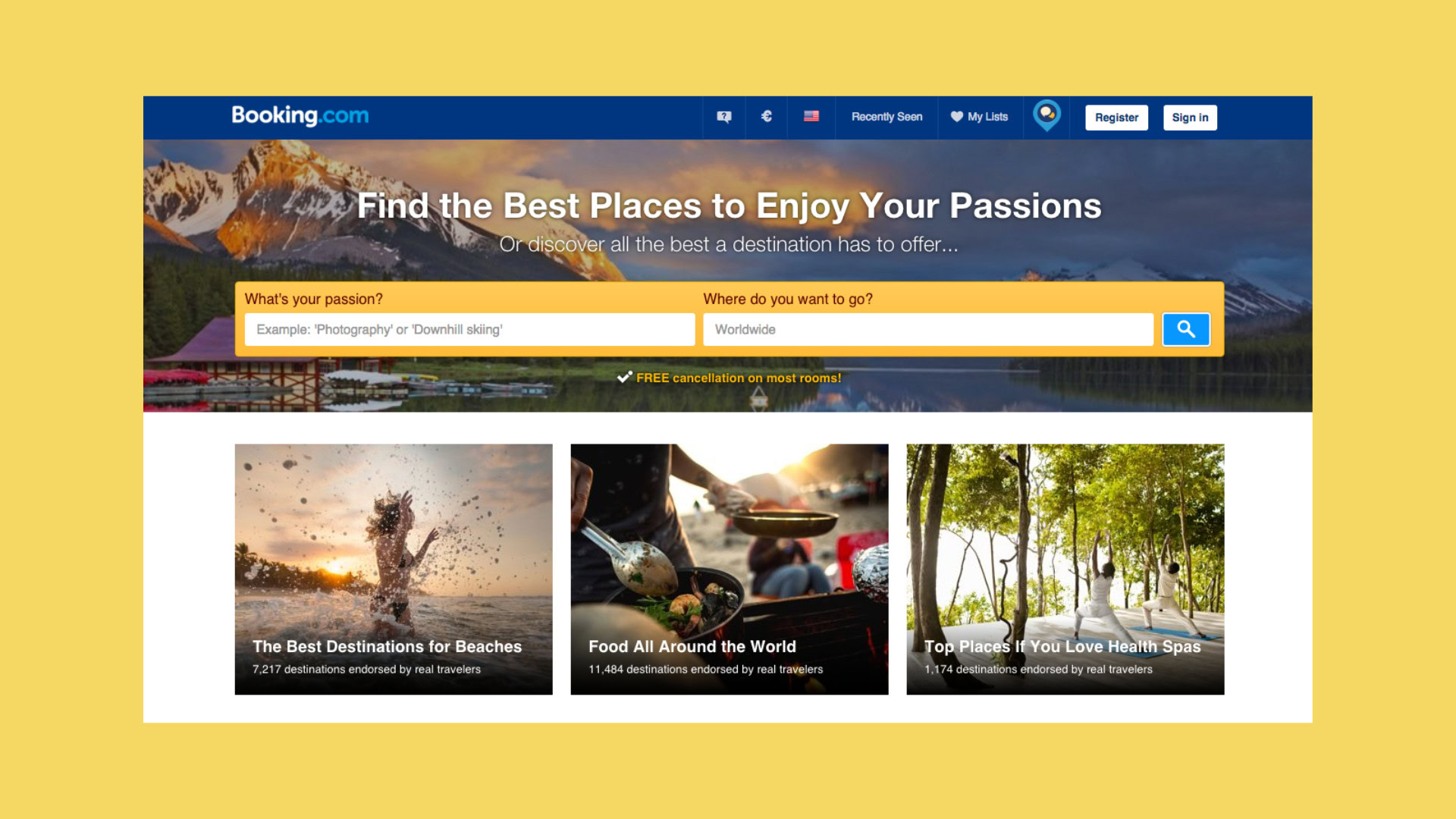
How Booking.com Increased Website Conversion by an Estimated 20% to 30% Using 4 Psychological Triggers

When people talk about website conversion, they usually focus on design tweaks, pricing strategies, or traffic sources. However, what often drives the biggest gains is a deeper understanding of human behavior. Booking.com is one of the strongest examples of this in practice. Instead of simply presenting options, it actively shapes how users make decisions.
Estimates from conversion optimization research suggest that platforms using behavioral triggers effectively can increase conversions by 20% to 30% or more, and Booking.com is widely considered one of the leaders in applying these methods at scale. The company runs continuous experiments across its interface, refining even the smallest pieces of text to influence user behavior.
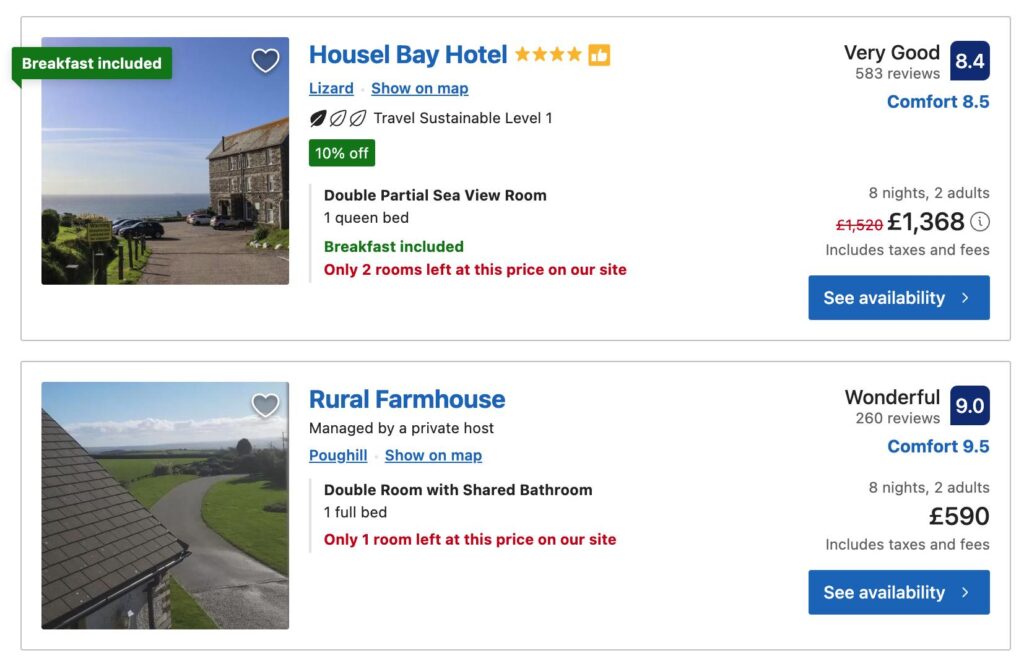
What makes Booking.com particularly effective is not a single tactic, but a system. As users browse, subtle signals begin to appear. These signals gradually shift the experience from relaxed browsing to focused decision-making. By the time a user reaches the booking stage, the environment feels dynamic, competitive, and time-sensitive.
This case study explores how that system works and why it consistently improves conversion performance.
Table of Contents
The context: Why travel decisions are easy to delay
Booking travel online involves uncertainty. Users cannot physically inspect what they are buying, and the decision often involves multiple variables such as price, location, timing, and reviews.
Because of this, hesitation is common. Users compare multiple options, open several tabs, and postpone decisions. From a business standpoint, this creates a significant drop-off in website conversion.
Booking.com addresses this challenge by reducing hesitation rather than adding more information. It presents existing information in a way that encourages users to act with confidence.
Scarcity: Increasing perceived value and lifting conversion rates
Scarcity is one of the most visible elements on Booking.com. Messages such as “Only 1 room left” or “Limited availability for your dates” appear throughout the user journey.
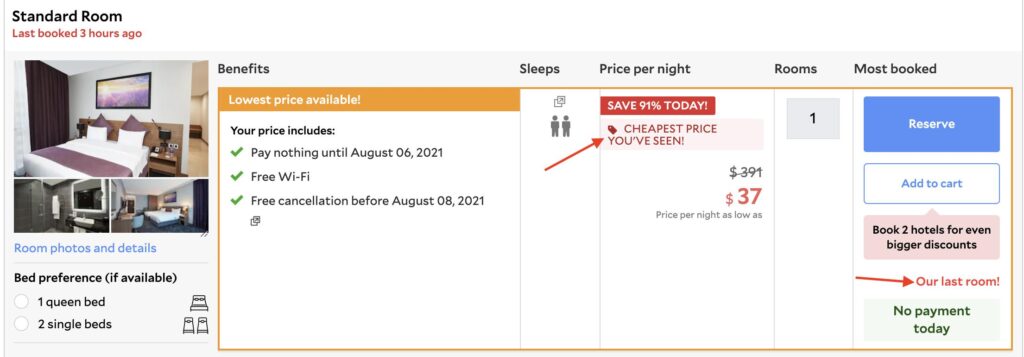
These cues are effective because they increase perceived value. When availability is limited, users are more likely to act quickly to avoid missing out. Behavioral studies have shown that scarcity alone can increase purchase intent significantly, often leading to measurable lifts in conversion rates.
On Booking.com, scarcity is contextual. It is tied to the user’s selected dates and preferences, which makes it feel relevant rather than generic. This increases its credibility and impact.
Instead of asking whether a hotel is worth booking, users begin to think about the risk of losing it. That shift is what drives action.
Social proof: Building trust and improving decision confidence
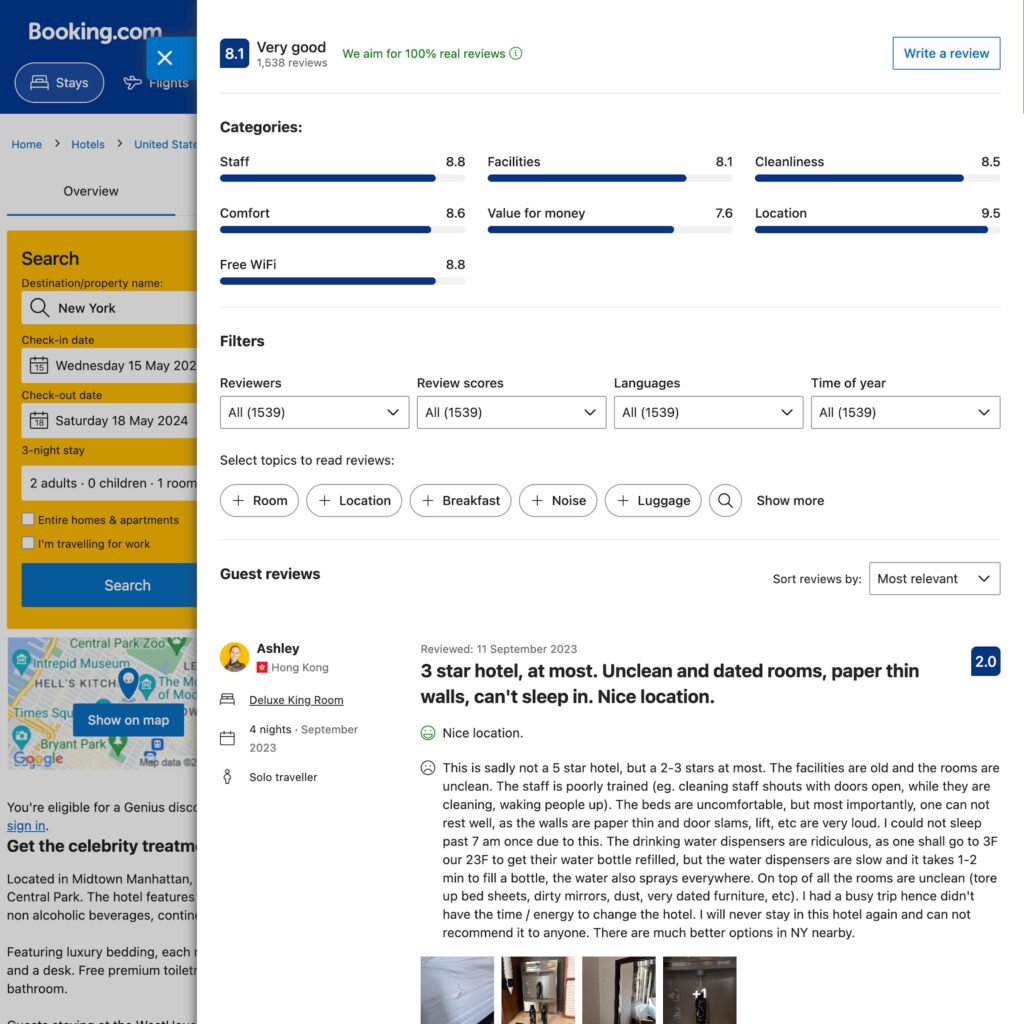
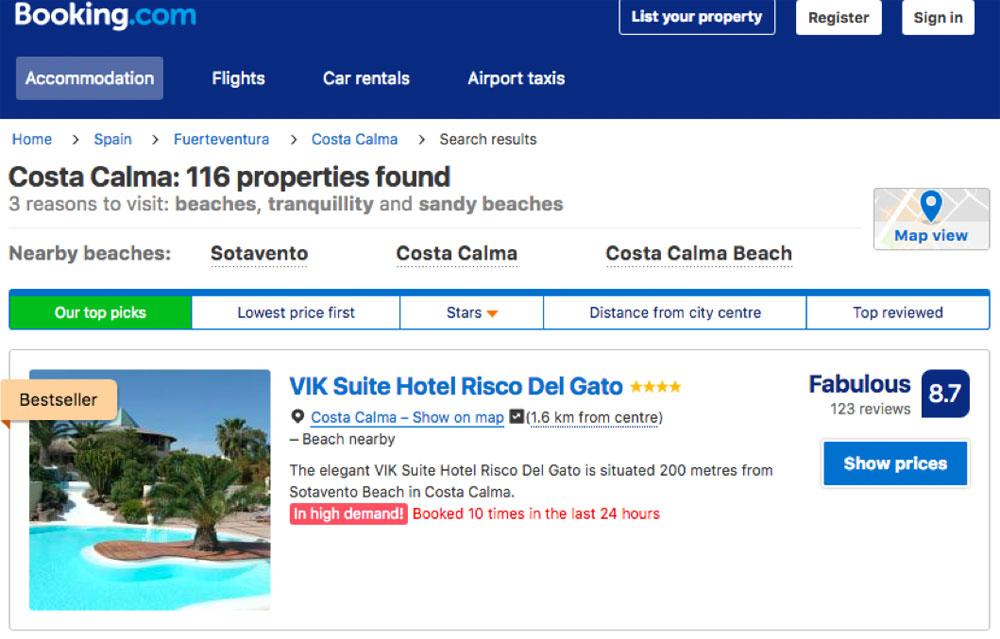
Social proof plays a critical role in reducing uncertainty. Booking.com integrates multiple forms of validation, including review scores, booking frequency, and the number of users currently viewing a property.
Research shows that strong social proof can increase conversion rates by up to 15% or more, particularly in industries where trust is essential. Travel is one of those industries.
By showing that others are actively choosing a hotel, Booking.com makes the decision feel safer. Users no longer feel like they are taking a risk alone. Instead, they feel guided by collective behavior.
This reassurance complements scarcity. While scarcity creates urgency, social proof provides confidence, making it easier for users to move forward.
Real-time activity: Adding pressure through live demand signals
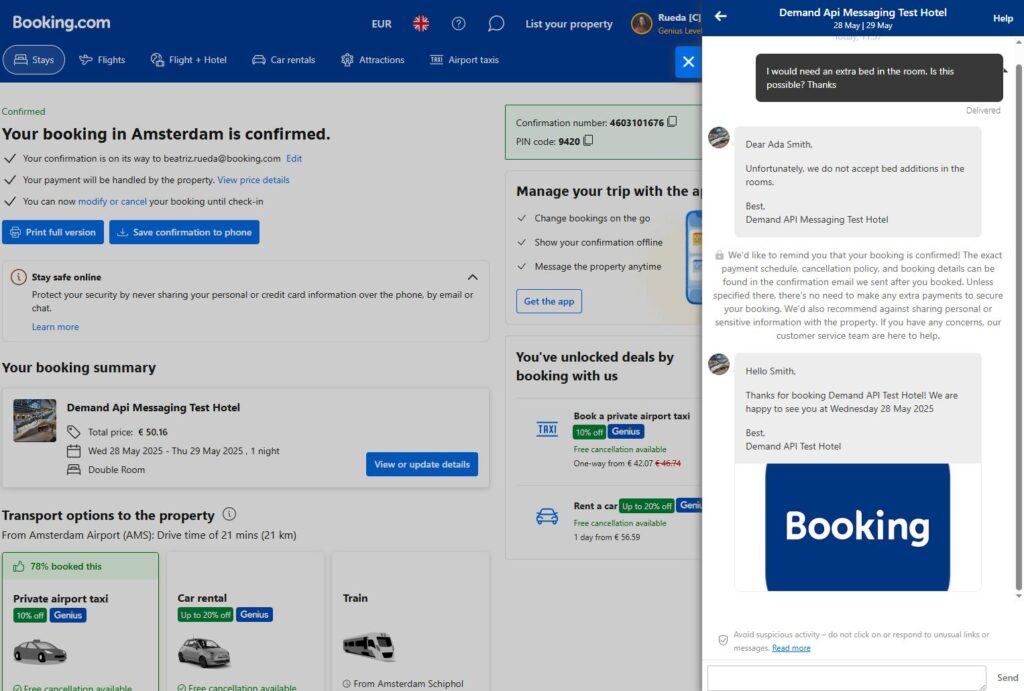
Real-time activity is where Booking.com adds another layer of influence. Messages such as “Latest booking: 5 minutes ago” or “Someone just booked this property” make the platform feel active.
This changes the user experience. Instead of browsing at their own pace, users begin to feel that they are part of a live environment where demand is constantly changing.
Behavioral research suggests that perceived competition increases the likelihood of faster decisions. When users believe others are acting simultaneously, they are more likely to act quickly themselves.
Urgency messaging: Compressing decision time and boosting conversions
Urgency messaging is the final push. Booking.com frequently uses cues such as “Last chance” or “Price may increase” to encourage immediate action.
These messages reduce the time users spend thinking. They introduce a clear consequence for waiting, which makes delaying the decision feel risky.
From a psychological perspective, urgency leverages loss aversion. People are more motivated to avoid losing something than to gain something new. By framing the booking as something that could be lost, urgency messaging increases the likelihood of conversion.
When combined with scarcity and social proof, urgency becomes even more powerful. The user sees that the option is limited, validated by others, and time-sensitive. This combination creates a strong incentive to act.
Why it works: A system that compounds results
What makes Booking.com effective is not any single trigger, but how they work together.
Scarcity increases perceived value. Social proof builds trust. Real-time activity introduces competition. Urgency accelerates decisions.
Together, these elements create a system that can lift website conversion rates by double-digit percentages. Instead of relying on one tactic, Booking.com layers multiple signals to guide users through the decision process.
At the center of this system is a simple psychological driver. People want to avoid missing out. When the platform makes that risk clear, action follows naturally.
The risk: When conversion tactics reduce trust
Despite their effectiveness, these techniques must be used carefully. If users begin to feel that messages are exaggerated or misleading, trust can decline.
Overuse of scarcity or urgency can make the interface feel manipulative. When that happens, users may ignore the signals or question their accuracy.
In the long term, trust is more valuable than short-term conversion gains. Businesses that rely too heavily on aggressive tactics risk damaging their brand.
Practical takeaways: Applying the strategy responsibly
The key lesson from Booking.com is not just what to do, but how to do it well.
Scarcity should reflect real limitations. Social proof should be based on actual data. Urgency should be tied to genuine time constraints.
When these elements are used authentically, they help users make decisions with confidence. They reduce hesitation without creating doubt.
Conclusion: A scalable model for website conversion growth
Booking.com demonstrates that improving website conversion is not about adding more features. It is about understanding how people think and designing experiences that align with that behavior.
By combining psychological triggers in a structured way, the platform consistently turns browsing into booking. The estimated 20% to 30% lift in conversion performance is not the result of a single change, but of a system built on human behavior.
For businesses looking to grow, the takeaway is clear. When you design for how people decide, conversion becomes a natural outcome.
Want to increase your website conversion by 20% or more?
If you want results like this, it is not about copying tactics. It is about building a system tailored to your business.
At RAW.studio, we help you identify where your website is losing conversions and show you exactly how to fix it using proven behavioral strategies.
Get a UX & CRO Expert’s Eyes on Your Website. Book a free 30-minute UX Teardown and get actionable insights on what’s costing you conversions — no fluff, just fixes you can implement right away.
Book a Free UX Audit

Related posts
What Is a Design System? A Founder’s Guide to Scaling UI
Ask five people in the same company what a design system is and you may get five different answers. A […]
Why Multimodal UX Is Becoming the New Standard for Digital Products
Not long ago, “good UX” mostly meant getting buttons, screens, and flows right. Today, users interact with products while walking, […]
Personalized Shopping Experiences With Behavior UX
Personalization has moved from being a nice touch to becoming a core expectation in ecommerce. Shoppers want faster paths to […]
Creative product design that gets results
Take your company to the next level with world class user experience and interface design.
get a free strategy session
