


How Much Does UX/UI Design Cost in Australia? (2026 Pricing Guide)

If you have asked three design agencies for a quote and received three wildly different numbers, you are not alone. UX/UI design pricing in Australia spans from a few thousand dollars for a freelancer’s weekend sprint to well over $150,000 for a full product redesign, and without context that range is useless for budgeting.
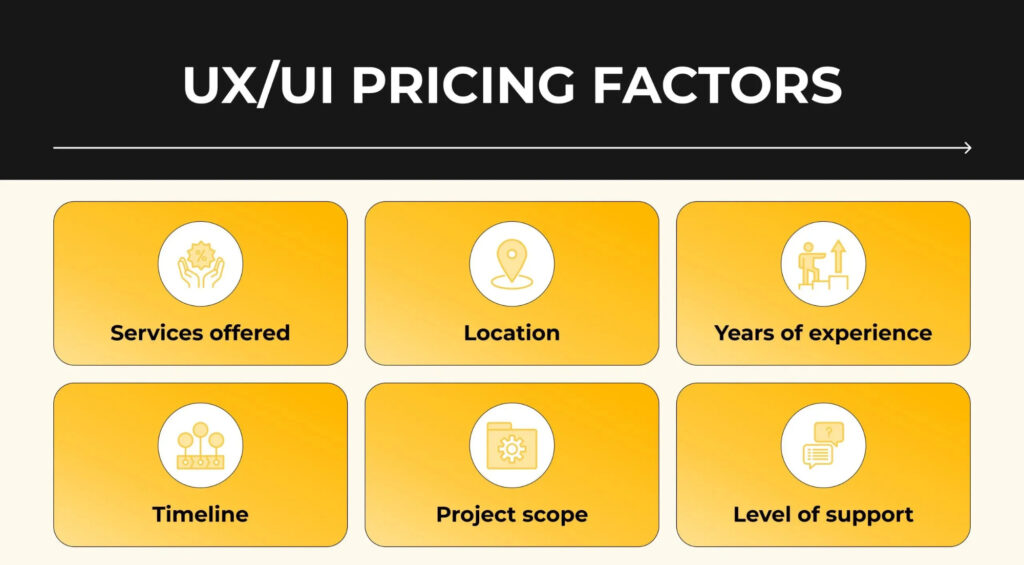
This guide breaks down what drives the cost, what typical 2026 AUD pricing looks like across freelancers, boutique studios and full agencies, and how to think about the number that actually matters: return on the investment.
Good UX/UI design is not a cost centre. When it is done well, it pays for itself in conversion lift, reduced support tickets, faster development and a product your team is not embarrassed to ship.
Table of Contents
The Main Pricing Models
Most Australian design providers price their work in one of four ways, and each suits a different stage of business.
Hourly Rate
Hourly billing suits small, undefined pieces of work such as a design audit, a handful of new screens, or ongoing support where scope changes week to week. It gives you flexibility but makes total cost hard to predict, and it can quietly reward slow work over efficient work if you are not tracking outcomes.
Fixed Project Fee
The most common model for a defined deliverable, such as a new website, a mobile app’s core flows, or a rebrand plus UI system. You agree on scope, deliverables and timeline upfront, then pay a fixed amount, often in milestones.
This is the easiest model to budget against and the one most founders should default to for a discrete project.
Monthly Retainer
A retainer secures ongoing design capacity, useful once a product is live and needs continuous iteration: new features, A/B test variants, CRO improvements and design system upkeep.
Retainers typically buy a set number of days or hours per month at a discounted blended rate compared to one-off project work.
Design Sprint or Productised Package
A design sprint is a time-boxed, fixed-scope engagement, commonly lasting three to five days, that tackles one specific problem. It might validate a new feature, test a concept before a full build, or map a redesign direction.
It is priced as a flat fee and is the lowest-risk way to get expert design thinking without committing to a large project.
Typical 2026 AUD Pricing by Provider Tier
These are general market ranges for the Australian design landscape in 2026, not a quote from any single provider. Actual pricing depends heavily on scope, so treat these as planning benchmarks.
Freelancer: Solo Designer, Junior to Mid-Level
Hourly: Roughly $80-$150 per hour
Small fixed project, such as a landing page, app screens or single flow: $2,000-$8,000
Full website or app UI with 10-20 screens: $8,000-$20,000
Freelancers are a reasonable option for narrow, well-defined work where you already have clear direction. What you often do not get is deep UX research, structured testing, or a second set of senior eyes checking the work before it ships.
This matters because effective research requires more than asking users whether they like a design. It needs clear objectives, carefully selected participants and questions that reveal actual behaviours and pain points. Raw Studio’s guide to conducting effective user interviews explains what a rigorous interview process should involve.
Boutique Studio: Small Team, Mixed Seniority
Hourly: Roughly $150-$220 per hour
Website UX/UI, from research through to high-fidelity design: $15,000-$45,000
Product or app design, with multiple flows and a design system: $30,000-$90,000
Monthly retainer: $8,000-$20,000 per month
Boutique studios sit in the sweet spot for most funded startups and scale-ups. You get a small team with complementary skills, including research, UX, UI and sometimes CRO, along with senior oversight and a proper process, at a fraction of holding-company agency overhead.
For businesses comparing providers, it is important to look beyond visual execution and understand what is included in their UX design services, from research and information architecture through to prototyping and usability testing.
Full-Service Agency: Larger Team, Senior Strategists and Broader Capability

Hourly: Roughly $220-$350 per hour
Website or product redesign with research, IA, UX, UI, prototyping and development handoff: $50,000-$150,000+
Enterprise platform or multi-product design system: $150,000-$400,000+
Monthly retainer: $20,000-$60,000+ per month
Full-service agencies suit companies with complex products, multiple stakeholders, brand and CRO work bundled in, or a need for a partner that can scale with the business over years rather than completing a single project.
A design sprint, regardless of provider tier, typically runs from $8,000-$25,000 for a focused three-to-five-day engagement with a small senior team.
What Actually Drives the Cost?
Two projects that look similar on the surface can differ in price by three to five times. The variables that matter most are outlined below.
Scope and Number of Screens
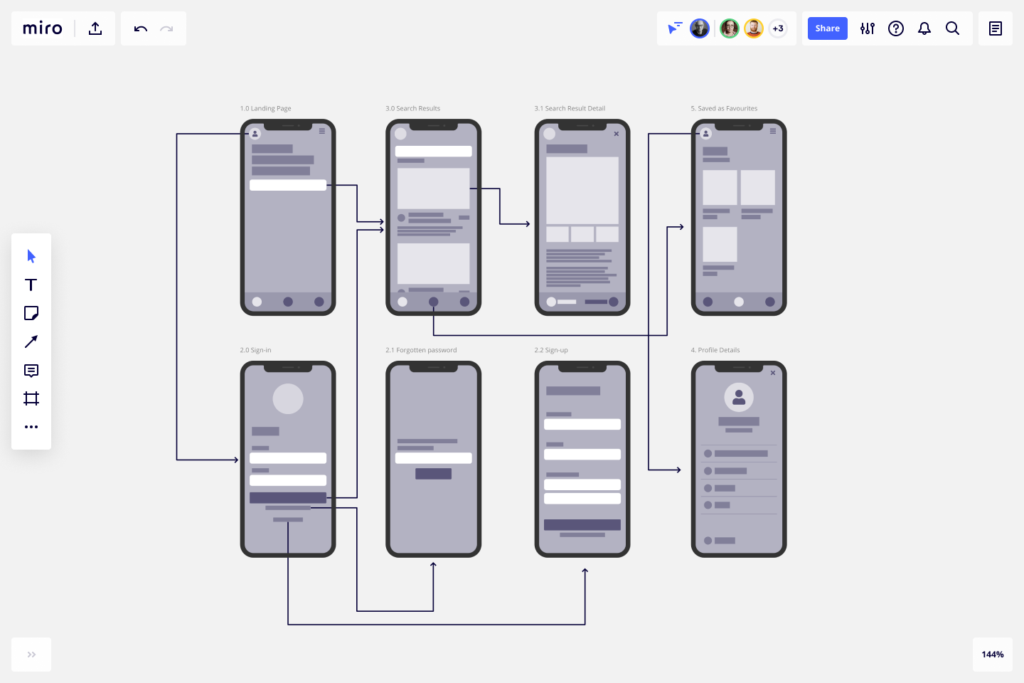
A five-screen mobile app flow is a different job from a 40-screen SaaS dashboard with permission states, empty states and edge cases.
Price scales with the number of unique states designers need to solve, not just the number of “pages.”
Research Depth
Skipping user research keeps costs down in the short term but is one of the biggest reasons redesigns fail to move the needle.
Proper discovery, interviews, competitor analysis and analytics review add cost, but they remove guesswork that would otherwise get baked into every screen that follows.
The goal is not simply to collect data. It is to turn research, behavioural analytics and usability findings into decisions that improve the product. This guide to using data to inform UX design explains how different forms of evidence can support the design process.
Number of Platforms
Designing for the web alone is cheaper than designing for the web, iOS and Android because each platform has its own interaction patterns, breakpoints and edge cases, even when the underlying system is shared.
Revisions and Stakeholder Complexity
Two rounds of feedback from one product owner are fast. Five rounds from a committee with conflicting opinions are not.
Agencies build revision allowances into fixed fees. Going beyond them is where scope creep and cost blowouts happen.
Seniority of the Team
A senior UX lead who has shipped a dozen fintech products will spot conversion and usability problems in an hour that a junior designer might miss entirely.
You are paying for pattern recognition as much as production time.
Timeline
Compressed timelines cost more because they require dedicated resourcing rather than capacity shared across other clients.
If the budget is tight, timeline flexibility is often the easiest lever to pull.
Where Cheap Becomes Expensive
The lowest quote is rarely the cheapest outcome once you account for what happens after delivery. Common patterns at the low end of the market include:
- Design delivered as static visuals with no interaction states, forcing developers to guess at hover, error, loading and empty states. This appears later as rework and rushed decisions made in code instead of design.
- No usability testing or research, meaning the first real signal of whether the design works comes from actual users after launch, when fixing it costs far more than catching it during design.
- No design system or component structure, so every new feature after launch must be designed from scratch instead of assembled from a reusable library.
- Underpricing to win the job, followed by fewer revision rounds, less senior involvement and a tighter brief than the project actually needs.
A structured UX audit can help expose these gaps before a business commits to a full redesign. It can reveal friction in critical flows, recurring usability issues and areas where the product is failing to support its commercial goals.
None of this means cheap options are always wrong. For a small, low-stakes piece of work, a freelancer at the lower end of the market is a sensible choice.
The risk appears when a business-critical product, where conversion, retention or trust is on the line, is built on the cheapest available design process.
Thinking About ROI, Not Just Cost
The right question is not “what does this cost?” but “what does this cost relative to what it returns?”
Good UX/UI design pays back through three main channels.
Conversion Lift
For an ecommerce or SaaS signup flow, even a modest improvement in conversion rate compounds across every visitor that follows.
A $40,000 redesign that lifts checkout conversion from 2% to 2.6% pays for itself many times over within a year on any meaningful traffic volume.
Conversion improvements often come from removing small points of friction rather than completely reinventing a product. For example, Raw Studio’s analysis of Uber’s friction-reducing UX changes demonstrates how simplifying a core flow, improving visibility and clarifying pricing can influence user action.
For SaaS businesses, it is also worth reviewing the UX mistakes that commonly damage conversion, including complicated signup forms, unclear pricing and weak onboarding.
Retention and Reduced Support Load
Confusing interfaces generate support tickets, churn and negative reviews.
Clear, well-tested UX reduces the ongoing cost of running the product, not just the cost of acquiring users.
Development Efficiency
Detailed, componentised design with clear states and a documented system means developers build faster and rework less.
Poor design specifications are one of the most common causes of scope creep on the engineering side, so the design fee is often recovered through saved development hours alone.
When evaluating a quote, ask what process sits behind the number. Does it include research, testing, a design system and development handoff support, or is the provider delivering visuals only?
How to Scope and Budget a Project
Start with the business outcome you need, not the number of screens you think you want designed.
A founder should walk into a scoping conversation with:
- The core user flows that matter most to revenue
- The platforms involved
- Any existing brand or design system the agency can build from
- A rough timeline tied to a business milestone, such as a funding round, launch date or peak trading season
From there, ask any prospective partner for a fixed-fee proposal with milestones, not just an hourly estimate, so the ceiling is known before work starts.
Request examples of similar-scope work and, where possible, the results that work produced.
You can also review the agency’s published pricing to understand how it structures audits, project engagements, ongoing design support and other packages before requesting a tailored quote.
When a Design Sprint Is the Smart First Step
If you are not certain a redesign is the right investment yet, or you want to validate a new product concept before committing engineering resources, a design sprint is the lowest-risk entry point.
It delivers a tested prototype and clear direction in days rather than months, for a fraction of a full project fee.
It is also a practical way to test whether a design partner is the right fit before signing up for a larger engagement.
A sprint is particularly useful when:
- You need to validate a product or feature before development
- Stakeholders disagree about the right direction
- The problem is understood but the solution is unclear
- You have a short deadline tied to a launch or funding milestone
- You want to test an agency relationship through a defined, paid engagement
Getting a Number You Can Actually Budget Against
UX/UI design pricing in Australia is wide because the work itself varies so much in depth, risk and business impact.
The most useful thing you can do before requesting quotes is get clear on your core flows, platforms and the business outcome you are chasing. Then ask for a fixed-scope proposal so you are comparing like with like.
At Raw Studio, we scope every engagement around the outcome it needs to drive, whether that is conversion, retention or a faster path to launch, and we are upfront about what different budget levels get you.
Visit our pricing page for a clearer sense of how we structure engagements, explore our UX design services, or consider a design sprint if you want to test a direction before committing to a full project.
Ready to discuss the specifics? Book a free strategy session, and we will help you scope a project that fits your budget and goals.
Get a UX & CRO Expert’s Eyes on Your Website. Book a free 30-minute UX Teardown and get actionable insights on what’s costing you conversions — no fluff, just fixes you can implement right away.
Book a Free UX Audit
Related posts

Why Multimodal UX Is Becoming the New Standard for Digital Products
Not long ago, “good UX” mostly meant getting buttons, screens, and flows right. Today, users interact with products while walking, […]
Successful Branding for Your Digital Product: Why & How?
If I say toothpaste, what comes to mind? Or if I say happy meal? If you said Colgate and McDonald’s, […]
Why the Traditional UX Process Holds Designers Back
If you’ve ever searched for “UX design process,” you’ve likely encountered the same tidy diagrams repeated across blogs, textbooks, and […]
Creative product design that gets results
Take your company to the next level with world class user experience and interface design.
get a free strategy session
