
How Uber Increased Ride Conversions by 14.5% with 3 Friction-Reducing UX Changes

Uber UX did not simply improve ride booking. It reshaped how people expect digital products to behave.
Today, booking a ride can take less than ten seconds. You open the app, confirm your pickup, tap once, and the process is already in motion. There is no negotiation, no uncertainty, and no friction that forces you to stop and think. The experience feels immediate and predictable, almost invisible.
That level of simplicity feels obvious now, but it represents a major shift from how transportation used to work.
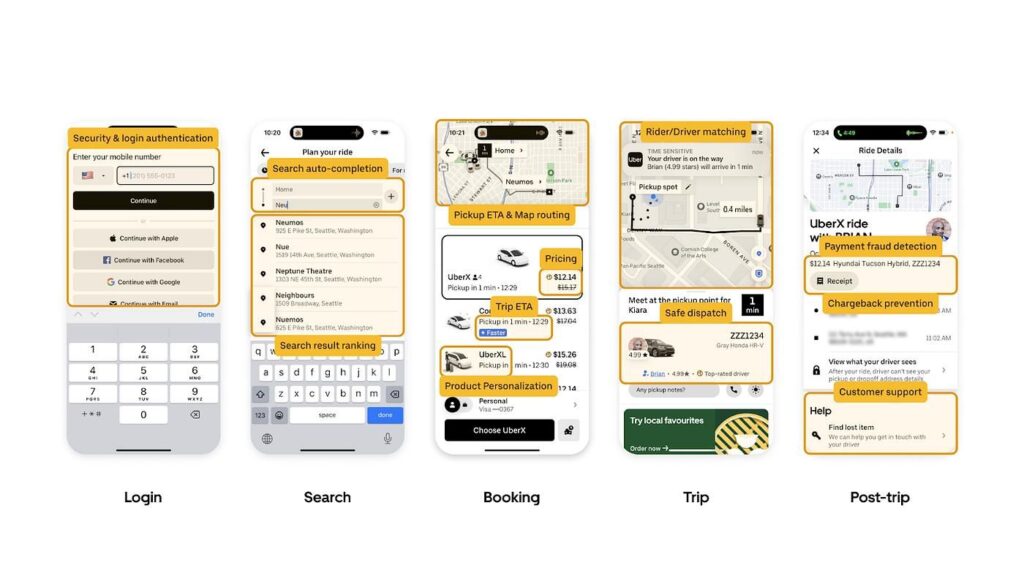
Before Uber, the act of getting a ride was filled with small but persistent obstacles. You had to call a taxi service, wait for someone to answer, explain your location, and hope that a driver would actually arrive. Even after booking, you were left with uncertainty. You did not know how long the wait would be, how much the ride would cost, or whether the experience would be smooth.
Uber UX did not just digitize this process. It removed the decisions, delays, and unknowns that made it frustrating.
This case study breaks down how Uber UX achieved that transformation through three key design changes, why those changes work from a behavioral perspective, and how you can apply the same principles to your own product.
Table of Contents
The real problem was not transportation, it was uncertainty
To understand the impact of Uber UX, it is important to recognize that transportation itself was never the core issue.
Cities already had taxis. People already had ways to get around. The problem existed in the experience surrounding the service.
Traditional taxi booking introduced friction at every stage. The user had to initiate contact through a phone call, which already required effort. Once connected, they needed to communicate their location clearly, which could be difficult depending on context. Then came the waiting period, where no information was available about the driver’s status or arrival time.
This created a chain of uncertainty.
Research in behavioral science consistently shows that uncertainty increases cognitive load and reduces willingness to act. When users cannot predict outcomes, they hesitate. When hesitation increases, conversion decreases.
According to studies referenced by Nielsen Norman Group, users prefer systems that provide clear feedback and predictable outcomes. When these elements are missing, trust declines quickly.
Uber UX targeted this exact problem.
It did not attempt to change transportation itself. Instead, it focused on removing uncertainty at every step of the journey.
The 3 UX Changes That Transformed the Experience
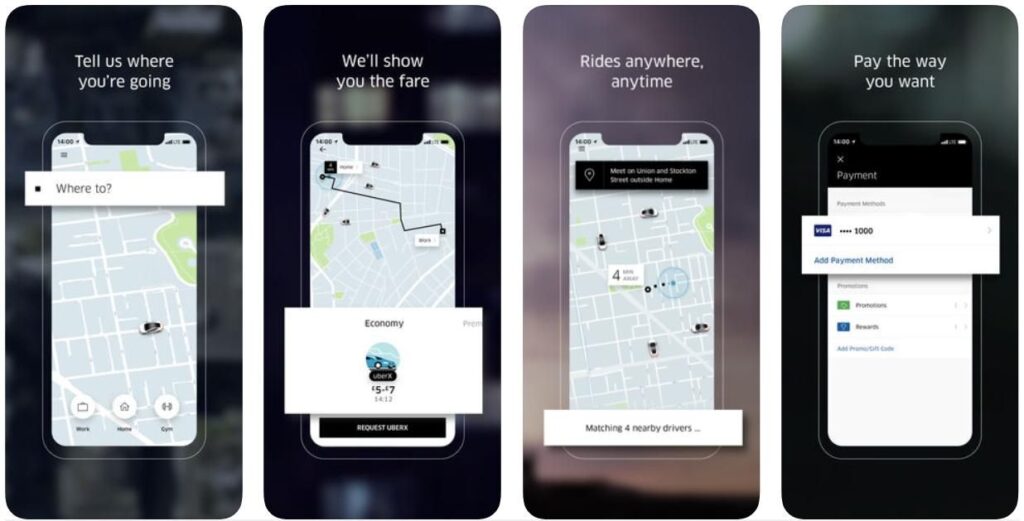
The first major innovation in Uber UX is the simplification of the booking process into a single, seamless action.
Instead of requiring users to go through multiple steps, Uber automatically detects the user’s location through GPS. The pickup point is already defined, and the interface presents ride options in a clear and structured way. The user’s role is reduced to confirming the action.
This design decision directly addresses decision fatigue.
Decision fatigue occurs when users are required to make too many choices in a short period of time. Research has shown that as the number of decisions increases, the likelihood of taking action decreases. Users become overwhelmed and may abandon the process entirely.
Uber UX removes unnecessary decisions completely.
The user does not need to call a dispatcher, explain their location, or verify availability. These steps are handled by the system. The experience becomes faster, not because it is rushed, but because it is streamlined.
Data from Google highlights the importance of speed in digital interactions. Even small delays can significantly impact user satisfaction and conversion rates. By reducing the booking process to a single interaction, Uber minimizes delay and maximizes engagement.
The result is an experience that feels effortless. The user moves from intent to action almost instantly.
Real-time driver tracking that replaces waiting with visibility
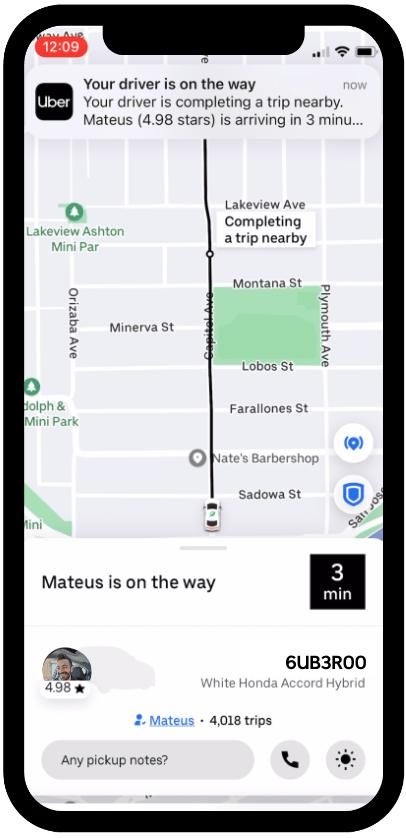
Once a ride is booked, Uber UX continues to remove friction by introducing real-time visibility into the process.
Users can see the exact location of their driver on a map, track their movement in real time, and receive accurate estimates of arrival time. This transforms the waiting experience entirely.
In traditional taxi systems, waiting was passive and uncertain. Users had no clear indication of when their ride would arrive. This lack of information created anxiety and frustration.
Uber replaces that uncertainty with transparency.
Research from Nielsen Norman Group emphasizes the importance of system status visibility. When users are informed about what is happening, they feel more in control and more confident in the system.
Real-time tracking achieves exactly that.
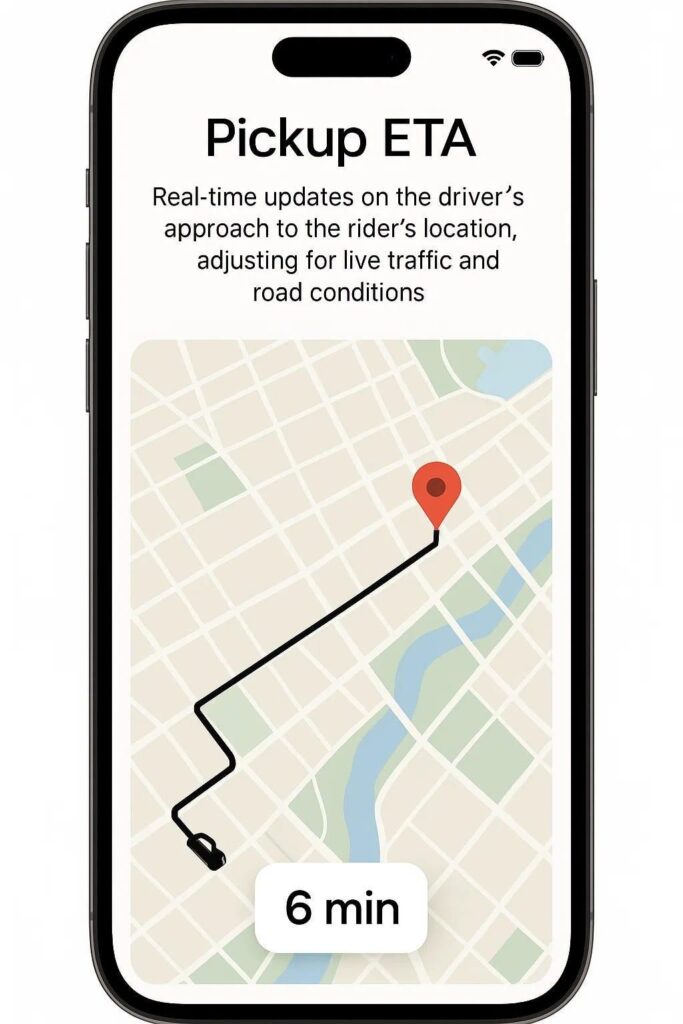
It turns waiting into an active experience. Instead of wondering whether the driver is on the way, users can see progress happening. The movement on the map provides reassurance, while the estimated time of arrival sets clear expectations.
This reduces anxiety and builds trust.
It also aligns with psychological principles such as the Goal Gradient Effect, where people feel more motivated and engaged as they perceive progress toward a goal. Watching the driver approach creates a sense of momentum, even during the waiting period.
Transparent pricing that removes hesitation before booking
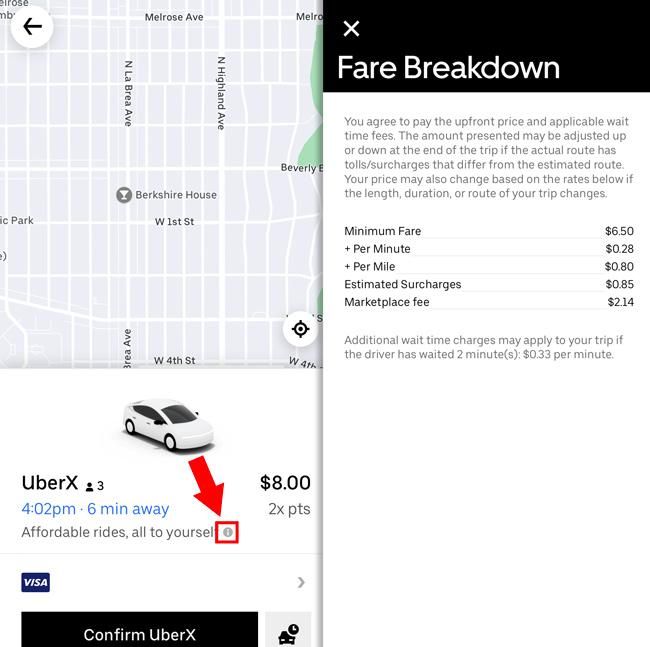
Pricing uncertainty has always been a major barrier in transportation services.
In traditional taxi systems, passengers often did not know how much a ride would cost until it was completed. This created hesitation before booking and dissatisfaction afterward.
Uber UX addresses this by introducing upfront pricing.
Before confirming a ride, users can see an estimated fare, including any surge pricing adjustments. This allows them to make an informed decision before committing.
This approach is supported by research from Baymard Institute, which identifies unexpected costs as one of the leading causes of abandonment in digital transactions. When users encounter uncertainty around pricing, they are far less likely to proceed.
By making pricing clear from the beginning, Uber removes this barrier.
Transparency builds trust. It also simplifies decision-making. Users are not weighing unknown variables. They are choosing between clear options.
This reduces hesitation and increases the likelihood of conversion.
Why Uber UX Works So Consistently
Speed and clarity reduce friction at every stage
The effectiveness of Uber UX can be traced back to two core principles: speed and clarity.
Speed ensures that users can move from intent to action without unnecessary delays. Clarity ensures that users understand what is happening at every step.
When these principles are combined, friction is minimized.
Uber meets this expectation by designing for speed at every level.
At the same time, clarity ensures that users do not feel lost. Every action has a clear outcome, and every step is easy to understand.
This combination creates a seamless experience.
It aligns with human behavior and expectations
Uber UX works because it aligns with how people naturally think and behave.
Users prefer simplicity over complexity. They want visibility into processes. They seek control and predictability.
Uber delivers on all of these expectations.
By reducing the number of steps, providing real-time updates, and making pricing transparent, the experience feels intuitive. Users do not need to learn how to use the app. They simply use it.
This alignment with human behavior is what makes the experience feel natural.
It turns a utility into a habit
One of the most powerful outcomes of Uber UX is habit formation.
Because the experience is fast, reliable, and consistent, users begin to rely on it as their default transportation option.
This is reinforced by consistency. Every time the app is opened, the experience remains the same. The same flow, the same clarity, and the same predictability.
Research in habit formation suggests that consistency and ease of use are key drivers of repeated behavior. When an action is easy to perform and delivers a reliable outcome, it becomes a habit.
Uber UX achieves this by removing variability from the experience.
How You Can Apply Uber UX to Your Own Product
Reduce the number of steps in your core flow
Every additional step in a user journey introduces friction. By simplifying the process and removing unnecessary actions, you can increase conversion rates significantly.
Focus on the essential actions required to achieve the user’s goal, and eliminate everything else.
Provide real-time feedback to reduce uncertainty
Users feel more comfortable when they know what is happening.
Whether it is a loading indicator, a progress bar, or real-time updates, visibility reduces anxiety and builds trust.
This is especially important in processes that involve waiting.
Make pricing clear from the beginning
Unclear pricing creates hesitation.
By being transparent early, you make it easier for users to make decisions and commit to your product.
Clarity in pricing is not just a feature. It is a strategic advantage.
Final thoughts
Uber UX did not succeed because it introduced a completely new concept.
It succeeded because it removed friction from an existing one.
By simplifying the booking process, providing real-time visibility, and making pricing transparent, Uber transformed a frustrating experience into one that feels effortless.
This is the key takeaway.
Users do not need more features. They need fewer obstacles.
When you remove those obstacles, speed increases, confidence grows, and conversion becomes a natural outcome.
Want to apply this to your own product?
Most products struggle not because they lack value, but because they introduce friction that prevents users from experiencing that value.
At RAW Studio, we help founders design experiences that remove friction and turn user intent into action.
If you want to simplify your product and improve conversion, you can start here:
Get a UX & CRO Expert’s Eyes on Your Website. Book a free 30-minute UX Teardown and get actionable insights on what’s costing you conversions — no fluff, just fixes you can implement right away.
Book a Free UX Audit

Related posts

How Amazon Uses 5 UX Principles to Achieve 10–15% Conversion Rates
Most e-commerce businesses operate within a narrow band of performance. Industry-wide, conversion rates typically hover between 2% and 3%. That […]
Why Mobile First Navigation Wins: Smarter Ecommerce Design for Higher Sales
A strong mobile first navigation system is one of the biggest drivers of product discovery in a mobile first ecommerce […]
Customer Journey Mapping That Actually Drives Decisions
Most companies have a customer journey map somewhere. Maybe it was created during a workshop eighteen months ago. It probably […]
Creative product design that gets results
Take your company to the next level with world class user experience and interface design.
get a free strategy session
