.svg)
.svg)

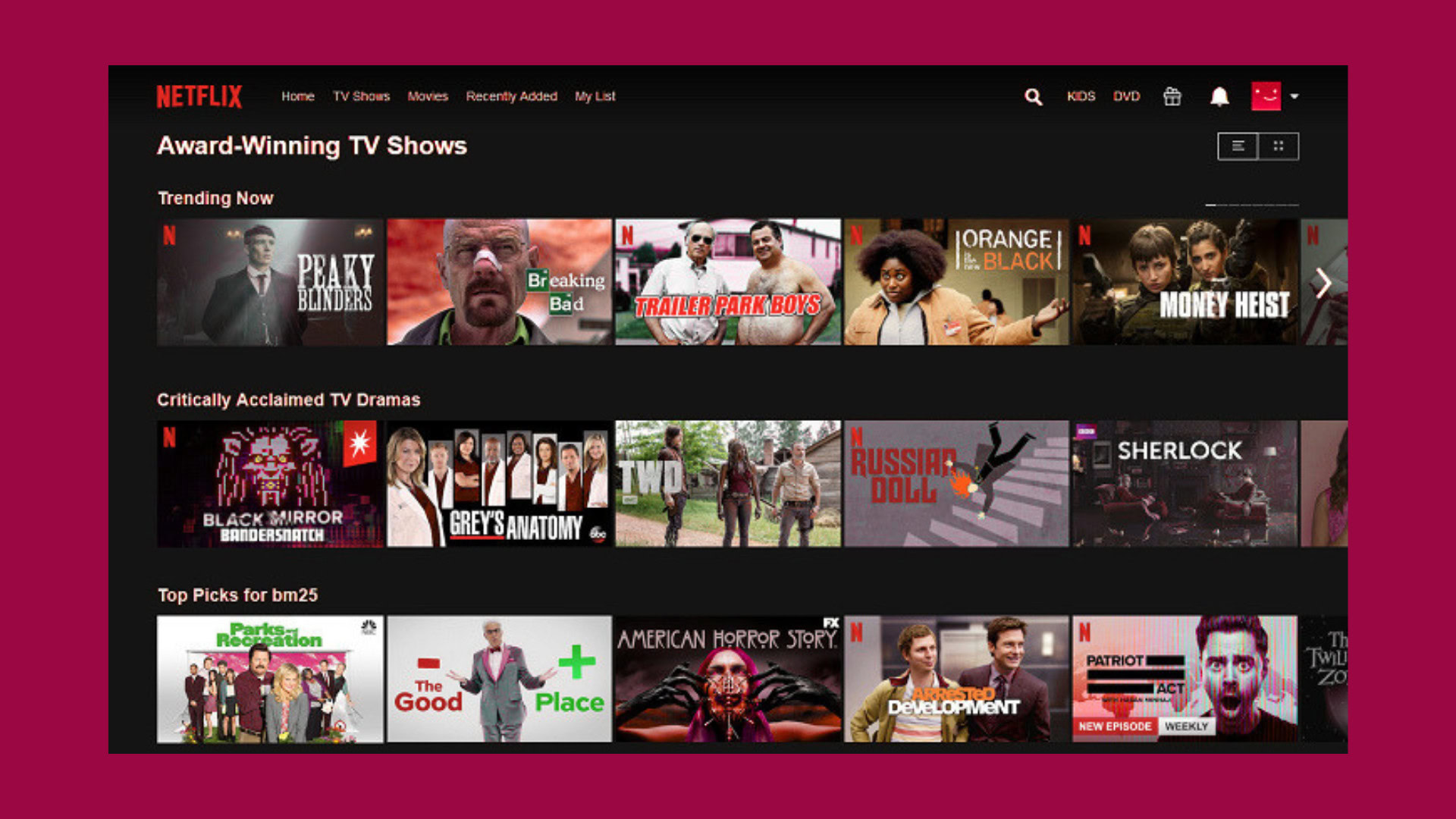

Most companies focus on getting new users. They spend heavily on ads, partnerships, and promotions to boost sign-ups. Netflix, however, takes a different approach.
Rather than just trying to attract new subscribers, Netflix puts its energy into what happens after someone joins. Their main goal is to keep users coming back, watching, and paying each month. This shift in thinking makes a big difference.
This is where conversion rate optimization gets more interesting. For Netflix, it is not just about getting someone to subscribe. It is about turning subscribers into loyal, active users. The longer people stick around, the more revenue they bring in, and the less Netflix needs to chase new sign-ups.
Netflix says its personalization systems have added over $1 billion in value each year. They have also seen big jumps in engagement and conversion, with users clicking and watching more often. These results are no accident, they come from careful, data-driven design.
Four main personalization tactics are at the heart of Netflix’s success, all working together smoothly.
The 4 Personalization Engines Driving Netflix Growth
1. Smart Recommendations
Netflix’s recommendation engine is the foundation of its personalization strategy. Most people think of it as the “Netflix algorithm,” but it does much more than just suggest shows.
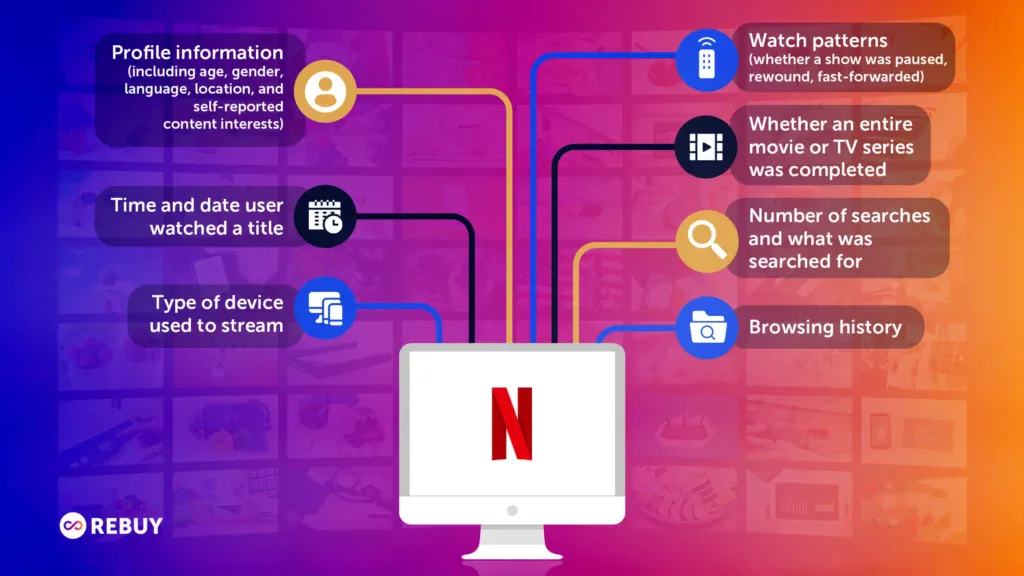
Netflix analyzes a wide range of signals:
- What you watch
- How long you watch
- What you abandon halfway
- What you rewatch
- What time of day you watch
- What devices you use
Netflix uses this data to build a detailed profile of what you like. Instead of putting you in broad categories, it sorts content into very specific micro-genres, such as “dark psychological thrillers with strong female leads” or “lighthearted romantic comedies set in Europe.”
The engine then matches users to content with a high probability of engagement.
From a conversion rate optimization perspective, this reduces friction dramatically. Instead of browsing endlessly, users are guided toward content they are likely to enjoy. That increases the chance they will click, watch, and stay subscribed.
The main idea is that recommendations are not just for helping people find new shows. They also remove uncertainty. When users feel sure they will like something, they are much more likely to watch.
2. Dynamic Homepage
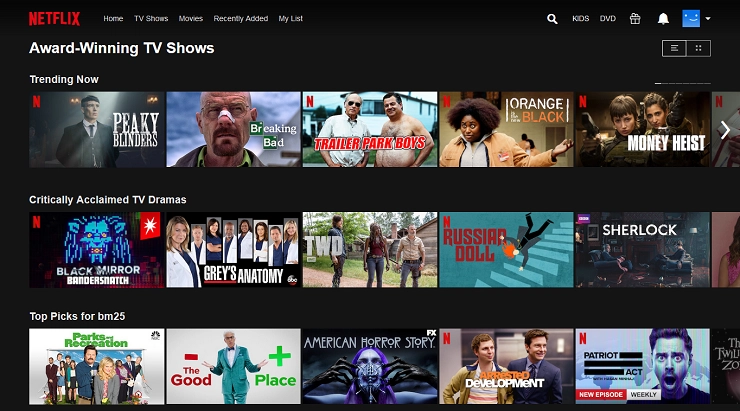
Every Netflix homepage is unique. Even if two people open the app at the same moment, their screens will look completely different.
Netflix dynamically rearranges:
- Content rows
- Categories
- Featured titles
- Order of recommendations
For example, if you tend to watch action movies, your homepage will surface action-heavy content first. If you lean toward documentaries, those will dominate your screen.
Even the rows themselves are personalized. One user might see “Trending Now,” while another sees “Because You Watched…” or “Top Picks for You,” with entirely different content inside each row.
This dynamic homepage acts as a real-time optimization layer. It is constantly adapting based on your latest behavior.
From a conversion rate optimization standpoint, this is powerful because it shortens the path to engagement. The faster a user finds something relevant, the more likely they are to start watching. That immediate engagement reinforces the habit of using Netflix regularly.
It also gently steers users toward high-value content like Netflix Originals, which helps keep people subscribed longer.
3. Personalized Thumbnails
This is one of Netflix’s most overlooked strategies.
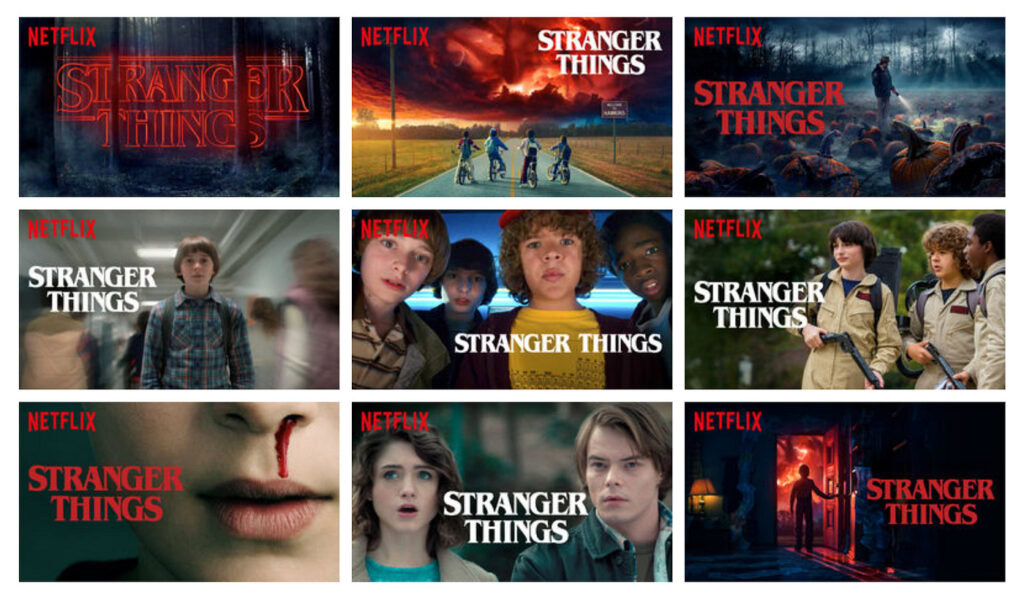
Most platforms show the same thumbnail image for a piece of content. Netflix does not. It generates multiple thumbnail variations and serves different ones to different users.
For example:
- If you often watch romantic movies, a thumbnail might highlight a romantic scene
- If you prefer action, the same title might show an explosion or fight sequence
- If you follow a specific actor, the thumbnail might prominently feature that actor
This works like large-scale visual A/B testing.
The goal is simple: increase the likelihood that a user clicks on a title.
In terms of conversion rate optimization, this is a direct lever. The thumbnail is the first impression. By aligning it with user preferences, Netflix increases click-through rates significantly.
This tactic works so well because users do not even notice the images are personalized. They just feel more interested in certain shows.
This small change compounds across millions of users, leading to massive gains in engagement.
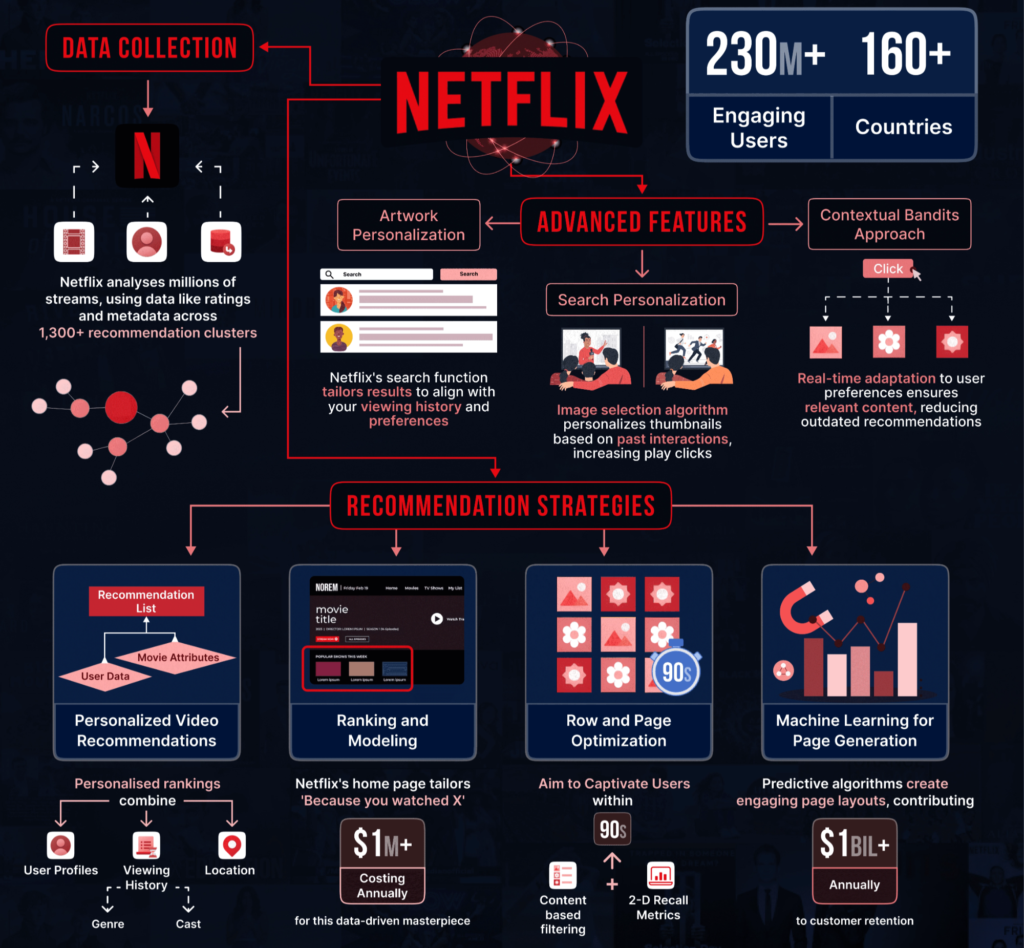
4. Behavioral Tracking
Netflix relies on behavioral data for everything it does.
They track not just what users do, but how they do it:
- Do you binge-watch or watch casually?
- Do you prefer short episodes or long movies?
- Do you pause frequently?
- Do you watch alone or with others?
This data feeds back into every personalization system.
For example:
- If you binge-watch, Netflix may auto-play the next episode more aggressively
- If you tend to drop shows early, it may prioritize content with strong early engagement
- If you watch late at night, it may suggest lighter or more relaxing content
Behavioral tracking allows Netflix to continuously refine its predictions and improve relevance.
From a conversion rate optimization angle, this creates a feedback loop. The more users engage, the better the system becomes, and the better the system becomes, the more users engage.
This compounding effect is what drives long-term retention and revenue growth.
The UX Decisions That Quietly Drive More Engagement
Netflix’s success is not only about strong algorithms. It is also about how they turn data into a great user experience.
Two key UX decisions make everything work.
1. Less Choice, More Action
Netflix might look like it has endless choices, but it actually limits what you see at any time.
Instead of overwhelming users with the full catalog, it curates a smaller, personalized selection.
This is intentional.
Too many choices can make people freeze and not pick anything. Netflix avoids this by narrowing down the options.
Each row contains a manageable number of options, and each option is pre-filtered for relevance.
This aligns perfectly with conversion rate optimization principles. Reducing cognitive load increases the likelihood of action. When users feel that the options are curated for them, decision-making becomes easier.
2. Content That Feels Made Just for You
Netflix does not just personalize what you see. It personalizes how it is presented.
This includes:
- Titles and descriptions
- Thumbnail images
- Content ordering
- Auto-play previews
For example, the same show could be described as a romance for one user and as a thriller for another, depending on their interests.
This custom approach makes the content feel more relevant to each person.
From a conversion rate optimization perspective, this is crucial. Users are not just choosing content. They are responding to how that content is framed.
By aligning presentation with user preferences, Netflix increases the chances of engagement without changing the underlying product.
The Psychology Behind Why This Strategy Works So Well
All these tactics are based on one key idea: making decisions easier for users.
Modern users are overwhelmed with choices. Whether it is streaming platforms, online stores, or social media, the sheer volume of options can be exhausting.
Netflix helps solve this by guiding users to what they will probably like.
Instead of asking, “What do you want to watch?” it effectively says, “Here is what you will probably enjoy.”
This makes it easier for users to decide what to watch.
When decision fatigue is low:
- Users engage more quickly
- They feel more satisfied with their choices
- They are more likely to return
This directly impacts retention, which is the primary driver of Netflix’s revenue.
From a conversion rate optimization standpoint, reducing friction is one of the most powerful levers. Every extra second of hesitation is a potential drop-off point. Netflix removes those points systematically.
Another reason this works is trust.
Over time, users begin to trust Netflix’s recommendations. When the platform consistently suggests content they enjoy, they rely on it more.
This trust further reduces friction. Users stop second-guessing and start clicking.
The combination of reduced fatigue and increased trust creates a highly engaging experience that keeps users coming back.
How You Can Apply Netflix’s Playbook to Your Business
The principles behind Netflix’s success can be applied to almost any business, even outside of streaming.
Here are three practical ways to implement similar strategies.
1. Make Your First Experience Feel Personal
First impressions matter.
Instead of giving every new user the same onboarding experience, tailor it based on their inputs and behavior.
For example:
- Ask a few preference questions upfront
- Use those answers to customize the initial experience
- Show relevant content or products immediately
This reduces the time it takes for users to see value.
From a conversion rate optimization perspective, this increases activation rates. When users quickly find something relevant, they are more likely to continue using the product.
2. Let Behavior Drive Your Recommendations
Do not rely solely on static categories or assumptions. Use real user behavior to drive recommendations.
Track actions such as:
- Clicks
- Time spent
- Purchases
- Navigation patterns
Then use that data to suggest relevant products, content, or features.
Even simple implementations can be effective:
- “Because you viewed this…”
- “Customers like you also bought…”
- “Recommended for you”
These small touches can significantly increase engagement and conversions.
3. Build an Interface That Adapts in Real Time
Your interface does not have to be static.
You can adjust:
- Content ordering
- Featured sections
- Calls to action
Based on user behavior and preferences.
For example:
- Show frequently used features more prominently
- Highlight content similar to past interactions
- Adjust messaging based on user segments
This creates a more personalized experience without requiring major design changes.
From a conversion rate optimization standpoint, dynamic UI reduces friction and increases relevance, both of which drive higher engagement.
Turn Personalization Into Your Competitive Advantage
Netflix’s success is not just about having great content. It is about making that content easy to discover, appealing to engage with, and effortless to consume.
By combining recommendation systems, dynamic interfaces, personalized visuals, and behavioral data, Netflix creates an experience that feels uniquely tailored to each user.
The result is higher retention, increased engagement, and billions in added revenue.
At its core, this is what conversion rate optimization should aim to achieve. Not just more clicks, but better experiences that lead to lasting relationships.
If you focus on reducing friction, increasing relevance, and building trust, you can apply these same principles to almost any product or service.
Want Help Applying This to Your Business?
If you want to improve your conversion rates and build a system like this for your product, you do not have to do it alone.
Get a free strategy session with RAW Studio:https://raw.studio/proposal/
We will break down your current funnel, identify where you are losing conversions, and show you exactly how to implement personalization strategies that drive real revenue.