
How Shopify UX Uses 4 Homepage Elements to Turn Visitors into Customers

Shopify UX is not just about clean design, it is a carefully engineered experience that transforms uncertainty into action and curiosity into commitment. While most ecommerce platforms compete on features, pricing, and integrations, Shopify has built its advantage on something far more durable: how the product feels to use from the very first interaction.
This matters more than it seems.
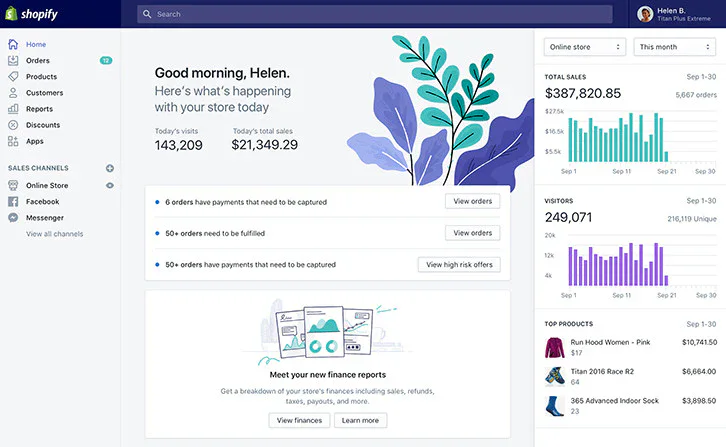
Research from Nielsen Norman Group shows that users form an opinion about a website in as little as 50 milliseconds. That first impression shapes whether they stay, explore, or leave. Another widely cited study from Google found that users prefer visually simple websites and perceive them as more trustworthy.
Shopify UX aligns perfectly with these findings. Instead of overwhelming visitors, it reduces cognitive load immediately. Instead of forcing users to figure things out, it gives them a clear path forward.
The result is not just a better experience. It is a measurable impact on conversion.
According to industry benchmarks published by Baymard Institute, the average ecommerce site loses up to 70 percent of users before conversion, often due to friction, confusion, or lack of clarity. Shopify’s approach directly targets these drop-off points before they occur.
This case study breaks down how Shopify UX uses four specific homepage elements to guide visitors toward becoming active users, and eventually, paying customers, and why this approach works so consistently.
Table of Contents
The real job of a homepage is not what most people think
A homepage is often treated as a place to explain everything. Businesses try to communicate every feature, every benefit, and every differentiator in a single view. The assumption is simple: more information leads to better understanding.
In practice, the opposite happens.
Cognitive psychology research introduces the concept of cognitive load, which refers to how much mental effort is required to process information. When users are presented with too many options or too much complexity, their ability to make decisions declines sharply.
This is supported by the well-known Hick’s Law, which states that the time it takes to make a decision increases with the number of choices available. In digital products, this translates directly into lower conversion rates.
Shopify UX is built around reducing this load from the very beginning.
Instead of treating the homepage as an information hub, Shopify treats it as a decision interface. The goal is not to explain everything. The goal is to answer two questions as quickly as possible: “Is this for me?” and “What should I do next?”
By focusing on these questions, Shopify creates a sense of clarity that allows users to move forward without hesitation.
The 4 UX Elements That Make Shopify So Effective
Clear value proposition that removes confusion instantly
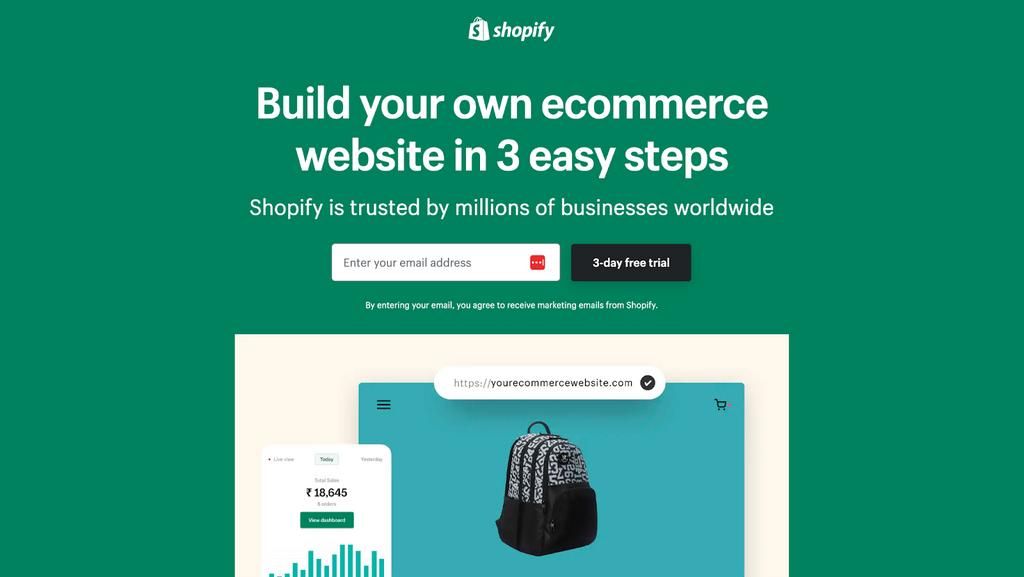
The first thing Shopify UX does exceptionally well is eliminate confusion.
The messaging on the homepage is simple, direct, and outcome-driven. Instead of describing technical capabilities, Shopify communicates a result that users already desire: starting and growing a business.
This aligns with research from CXL Institute, which shows that clear value propositions can increase conversion rates by up to 30 percent when they are specific, relevant, and easy to understand.
Shopify achieves this by focusing on aspiration rather than explanation. The user is not required to understand ecommerce infrastructure, payment gateways, or hosting. They are invited to imagine owning and running an online store.
This approach works because it reduces friction at the most critical moment, which is the first impression.
A study from Microsoft found that the average human attention span has dropped significantly in digital environments. While the exact number is debated, the implication is clear: users do not have the patience to decode complex messaging.
Shopify UX respects this reality. It communicates quickly, clearly, and confidently.
Strong call to action that creates momentum
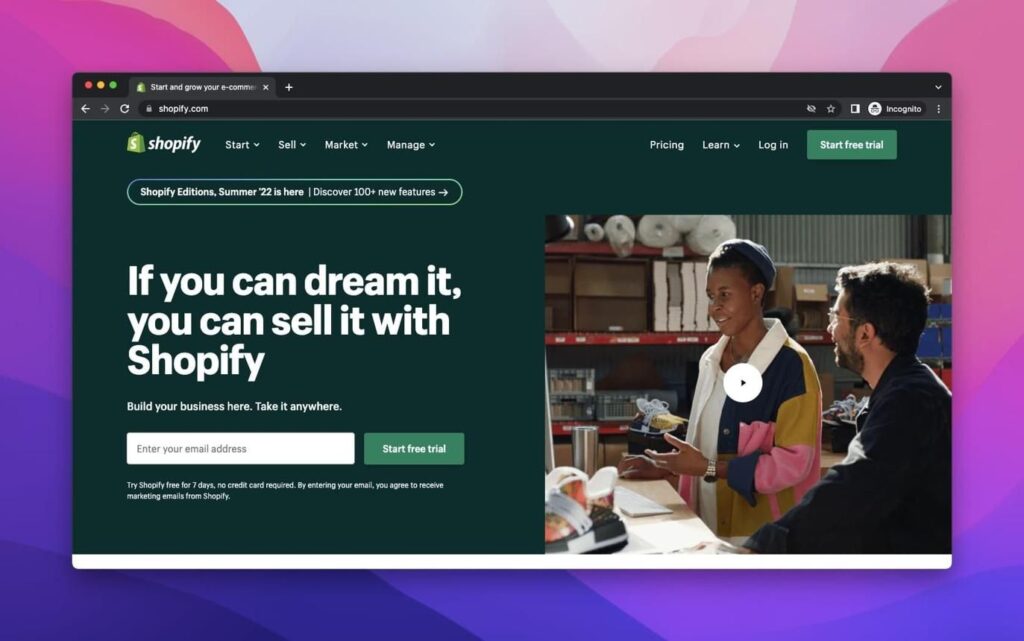
Once the value is clear, Shopify UX immediately guides users toward action.
The call to action is intentionally simple. Instead of pushing users into a commitment, it invites them to start. This small shift in language has a significant psychological impact.
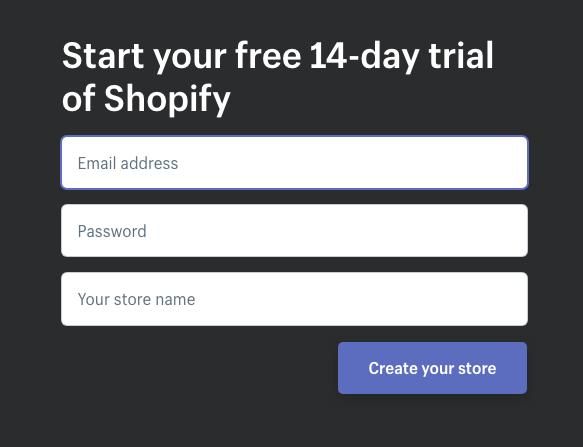
Behavioral research shows that users are more likely to take action when the perceived risk is low. By offering a free trial without requiring a credit card upfront, Shopify removes one of the biggest barriers to entry.
According to data from HubSpot, reducing form fields from four to three can increase conversions by up to 50 percent. Shopify applies this principle by keeping the signup process minimal and focused.
This creates momentum.
Momentum is critical because hesitation is the enemy of conversion. The longer users pause, the more likely they are to second-guess their decision. Shopify UX minimizes these pauses by making the next step feel obvious and effortless.
The experience feels less like a decision and more like a continuation.
Social proof that turns interest into belief
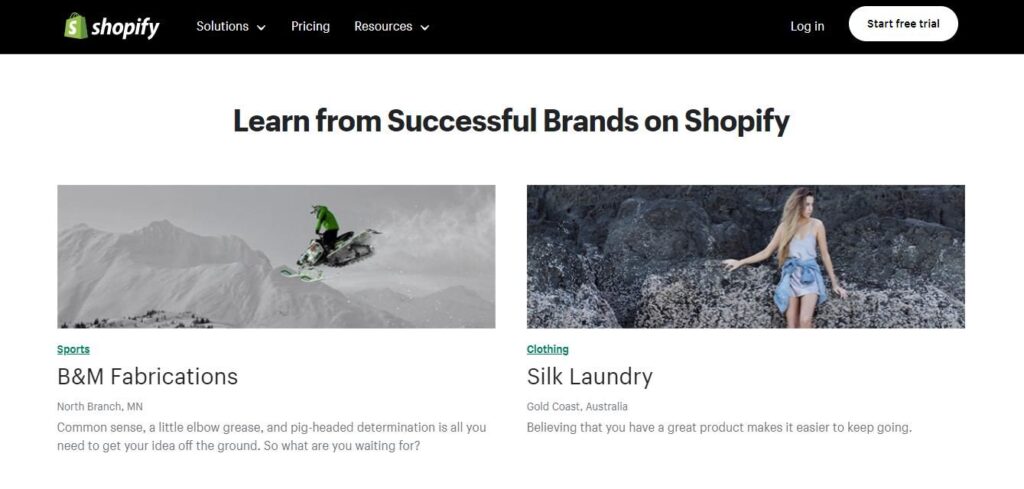
Even when users are interested and ready to act, doubt naturally appears.
This is where Shopify UX introduces social proof in a subtle but effective way.
By showcasing recognizable brands, real merchant success stories, and examples of thriving online stores, Shopify reinforces its credibility without relying on aggressive marketing.
This approach is supported by research from Spiegel Research Center, which found that displaying reviews can increase conversion rates by up to 270 percent, particularly for higher-priced or unfamiliar products.
Social proof works because it reduces uncertainty. It provides evidence that others have succeeded using the platform, making the outcome feel more achievable.
Shopify does not position itself as a tool that might work. It presents itself as a platform that already works for thousands of others.
This shift from possibility to probability is what drives user confidence.
Guided flow that removes overwhelm completely
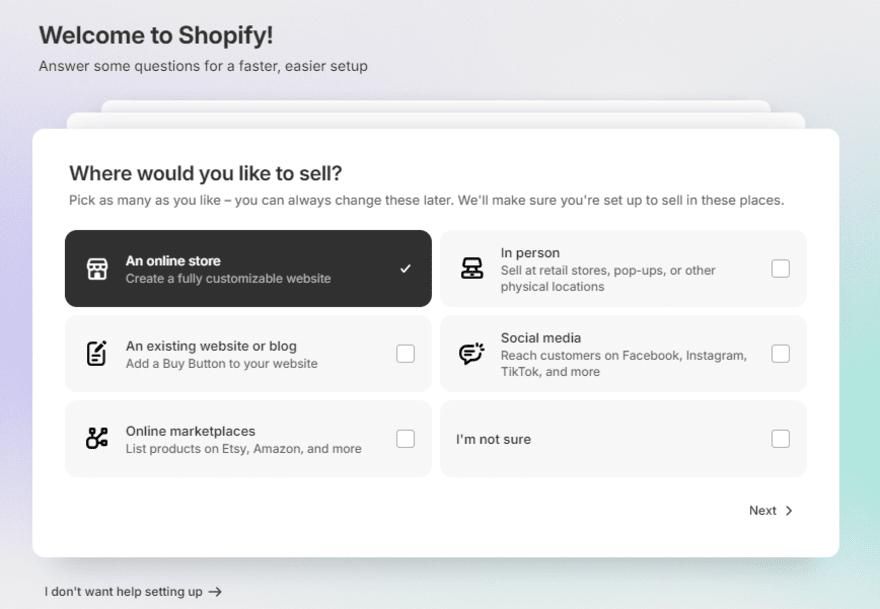
The most powerful aspect of Shopify UX is what happens after the initial click.
Many products succeed in attracting users but fail during onboarding. Users are left to figure things out on their own, leading to confusion, frustration, and eventual drop-off.
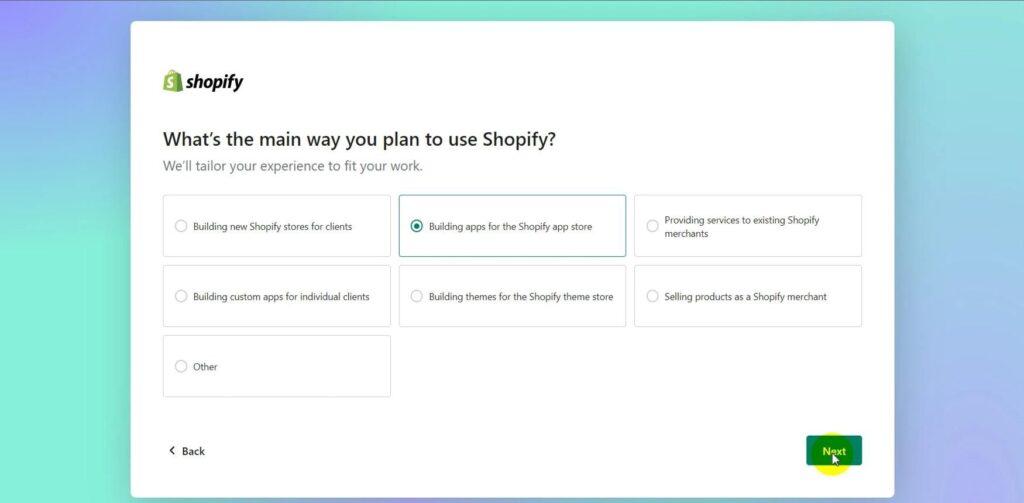
Shopify addresses this by creating a guided flow that breaks down the process into manageable steps.
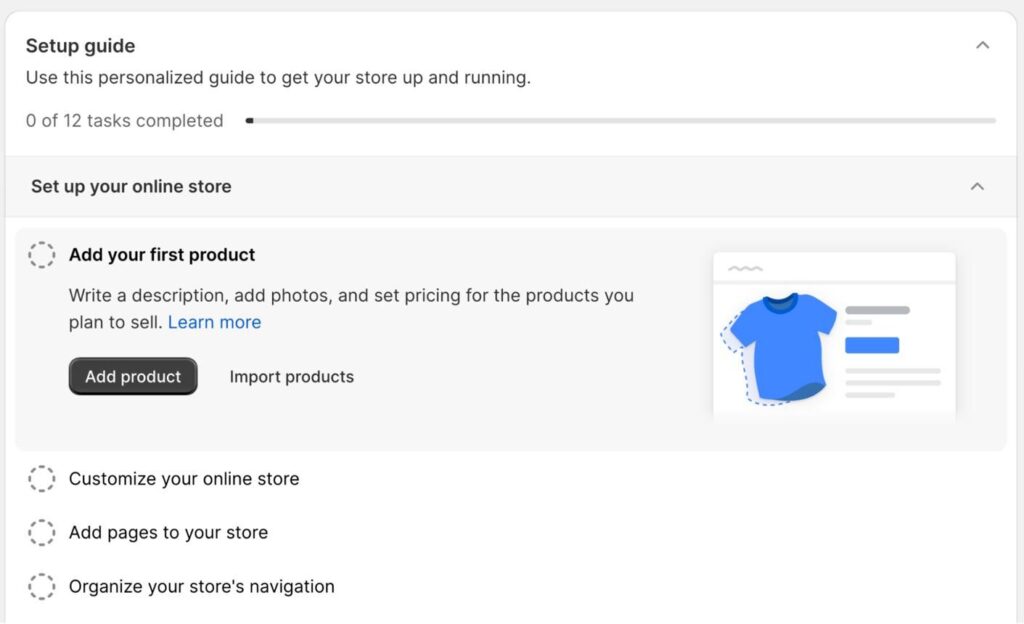
This aligns with research on progressive disclosure, a design principle that introduces information gradually to avoid overwhelming users. By revealing complexity only when necessary, Shopify keeps the experience focused and digestible.
Each step in the onboarding process is designed to create a small win. Users set up their store, add a product, and customize their design in a sequence that feels natural and achievable.
This is supported by the Goal Gradient Effect, a psychological principle suggesting that people are more motivated to complete a task as they perceive themselves getting closer to the goal.
Shopify UX leverages this by showing clear progress, which encourages users to continue.
The result is a smoother transition from signup to activation.
The 3-Step Funnel That Supports the Experience
From homepage to onboarding to activation
Shopify UX is not a collection of isolated elements. It is a cohesive system designed to move users through a structured journey.
The homepage creates intent by capturing attention and making the value clear. It removes uncertainty and encourages the first action.
The onboarding phase reduces friction by guiding users through the initial setup. It replaces confusion with clarity and transforms abstract ideas into tangible steps.
Activation is where users begin to experience real value. This is the moment they see their store take shape, which reinforces their decision to continue.
According to research from Amplitude, users who reach activation milestones early are significantly more likely to retain and convert into paying customers.
Shopify UX is optimized to reach this point as quickly as possible.
Why Shopify UX Works So Consistently
It reduces overwhelm instead of adding complexity
One of the biggest reasons Shopify UX works is its ability to simplify without losing depth.
While the platform itself is powerful, the interface presents only what is necessary at each stage. This keeps users focused and prevents decision fatigue.
This approach is backed by research from Harvard Business Review, which shows that reducing complexity in decision-making environments leads to higher engagement and better outcomes.
It builds confidence through progress
Every action in Shopify UX is designed to create a sense of progress.
Users are not just interacting with a platform. They are building something meaningful. Each completed step reinforces their confidence and encourages further action.
This creates a positive feedback loop where progress leads to motivation, and motivation leads to continued engagement.
It aligns with how people actually make decisions
At its core, Shopify UX is built around human behavior.
People make decisions based on emotion, intuition, and trust before they rely on logic. Shopify reflects this by prioritizing clarity, reducing friction, and reinforcing credibility through proof.
This alignment with human psychology is what makes the experience feel natural and effective.
How You Can Apply This to Your Own Product
Simplify your messaging
Clarity is the foundation of conversion. Focus on outcomes rather than features, and ensure that your value proposition can be understood instantly.
Guide users step-by-step
Design a clear path for users to follow. Remove unnecessary choices and provide direction at every stage of the journey.
Add real proof
Use testimonials, case studies, and real examples to build trust and reduce uncertainty.
Final thoughts
Shopify UX succeeds because it removes friction at every stage of the user journey. It transforms complexity into simplicity and hesitation into action.
This is not accidental. It is the result of a deep understanding of user behavior and a commitment to clarity.
When users know what to do, feel confident doing it, and see results quickly, conversion becomes a natural outcome.
Want to apply this to your own product?
Most products do not struggle with traffic. They struggle with clarity and conversion.
At RAW Studio, we help founders design experiences that turn visitors into users and users into customers.
If you want to improve your UX and unlock better conversion performance, you can start here:
Get a UX & CRO Expert’s Eyes on Your Website. Book a free 30-minute UX Teardown and get actionable insights on what’s costing you conversions — no fluff, just fixes you can implement right away.
Book a Free UX Audit

Related posts

Becoming a Better Product Designer in 2022 with Jacalin Ding
With nearly 100k apps being released every month, product design has really taken off in the last ten years or […]

Top 10 Website Design Agencies in Australia in 2026
Australia’s digital economy is expanding fast. As more companies go online, skilled website design agencies are becoming essential. A strong […]
Why Mobile First Navigation Wins: Smarter Ecommerce Design for Higher Sales
A strong mobile first navigation system is one of the biggest drivers of product discovery in a mobile first ecommerce […]
Creative product design that gets results
Take your company to the next level with world class user experience and interface design.
get a free strategy session
