.svg)
.svg)

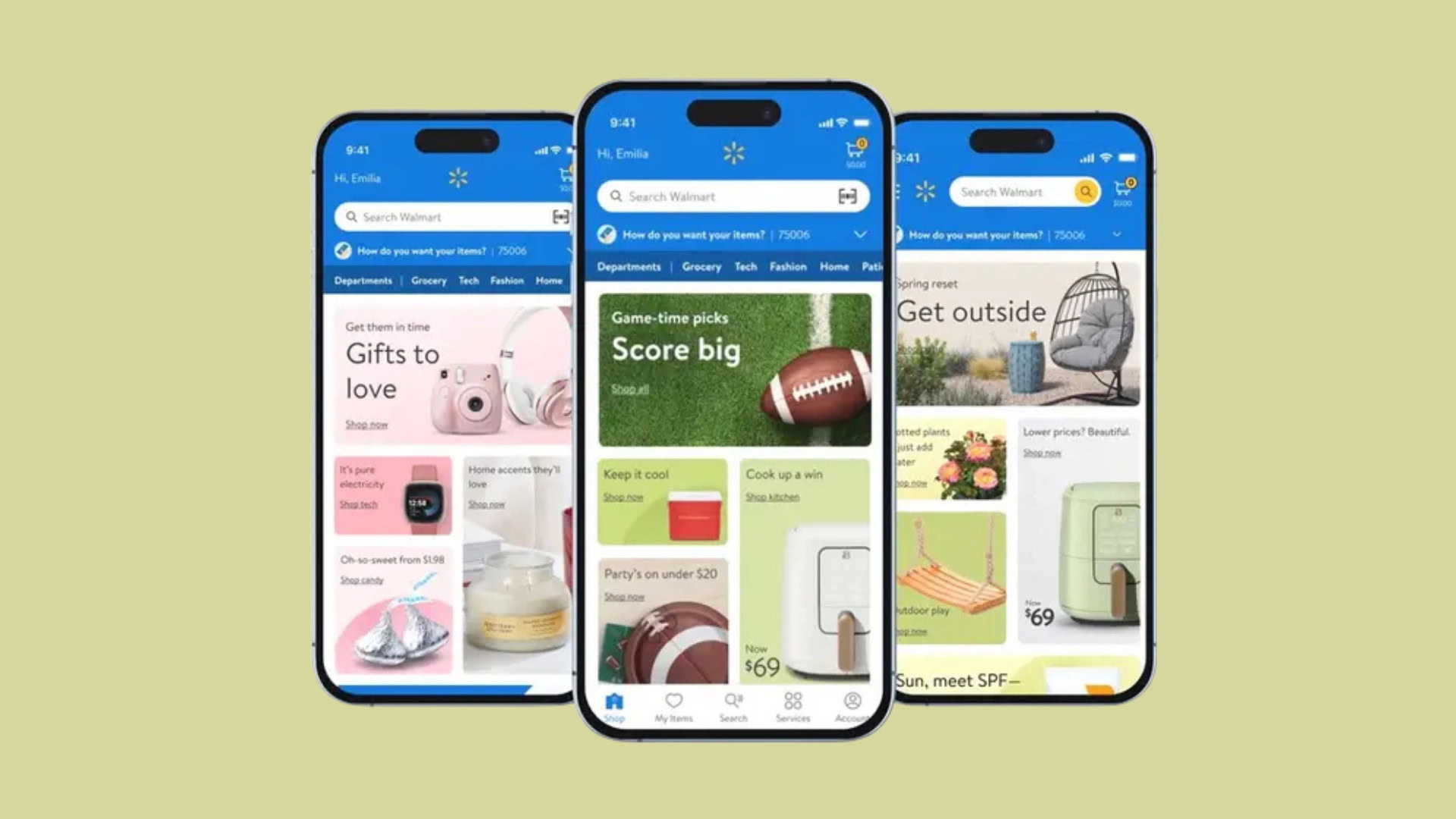

Mobile traffic didn’t just grow slowly, it surged.
In the last ten years, e-commerce has changed a lot. Shopping used to happen mostly on desktops, but now it’s mostly on mobile devices. People don’t set aside time to shop, they browse and buy in short moments, like between meetings, during commutes, or while doing other things at home.
For Walmart, this change was dramatic and happened on a large scale.
Millions of people started using Walmart’s platform mainly on their phones. Sessions, engagement, and product views all went up.
But the number of completed purchases did not increase.
People were finding products, looking through categories, and adding items to their carts. Still, many left before finishing their purchase.
This gap between wanting to buy and actually buying is where many businesses lose sales.
For Walmart, it became clear that the problem wasn’t a lack of visitors or interest.
The real issue was the user experience.
Realizing this led Walmart to launch a major UX redesign, which increased conversions by 20% and changed how the company thought about digital product design.
From Physical Retail to Digital Experience: Walmart’s UX Evolution
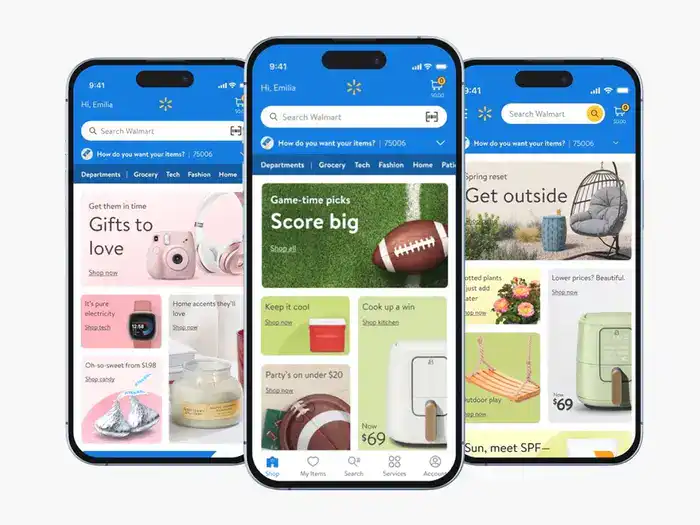
For most of its history, Walmart’s strength came from its physical footprint.
With over 10,000 stores worldwide, a large team, and advanced logistics, Walmart became known for being easy to reach and familiar to everyday shoppers. The in-store experience was straightforward and personal.
But as people’s digital habits changed quickly, Walmart faced a new challenge.
How could Walmart create the same sense of ease and trust online?
Around 2016, Walmart started to rethink its approach. Rather than seeing eCommerce as just an add-on to its stores, the company began treating digital as its own ecosystem that needed a focused UX redesign.
The goal wasn’t to copy the feeling of walking through store aisles on a screen.
Instead, Walmart wanted to create a new experience that offered convenience, clarity, and trust for mobile users.
This change started a long-term transformation in Walmart’s UX design.
Instead of just putting products online, Walmart redesigned the whole customer journey from scratch. Every step, from finding products to checking out and delivery, was updated based on real user behavior.
This approach matched Walmart’s belief in putting people first and using technology to help, making decisions based on what users need instead of company assumptions.
The effects of this UX redesign became even clearer during the pandemic.
By 2022, Walmart’s online sales had grown by more than 70% compared to before the pandemic, according to its annual report. This growth wasn’t only because of better technology.
It was also because of a better user experience.
Technology helps reach more people, but UX redesign is what turns that reach into actual sales.
The Mobile Paradox: When Growth Doesn’t Translate to Revenue
At first, Walmart seemed to be in a strong position.
The company had size, trust, and a huge range of products. It drew in millions of users from many markets and backgrounds. Mobile traffic was rising fast, just like in the rest of the industry.
But underneath that growth, there was a big problem.
Mobile users were not making purchases as often as desktop users.
This happens a lot in e-commerce. Mobile traffic is often higher, but people buy less often on mobile. This is because of how people use their phones.
Mobile users move quickly and have less patience. They are often distracted, using one hand, and not giving full attention. They want things to be fast, clear, and immediate.
If those needs aren’t met, even in small ways, users leave.
That’s why UX redesign is so important.
Without a clear UX redesign plan, bringing in more visitors just means more people run into problems. Walmart saw that growing traffic without improving the experience would only make things worse.
The goal wasn’t just to get more users.
It was to help more people finish their purchases.
The Real Problem: Friction Hidden Across the Journey
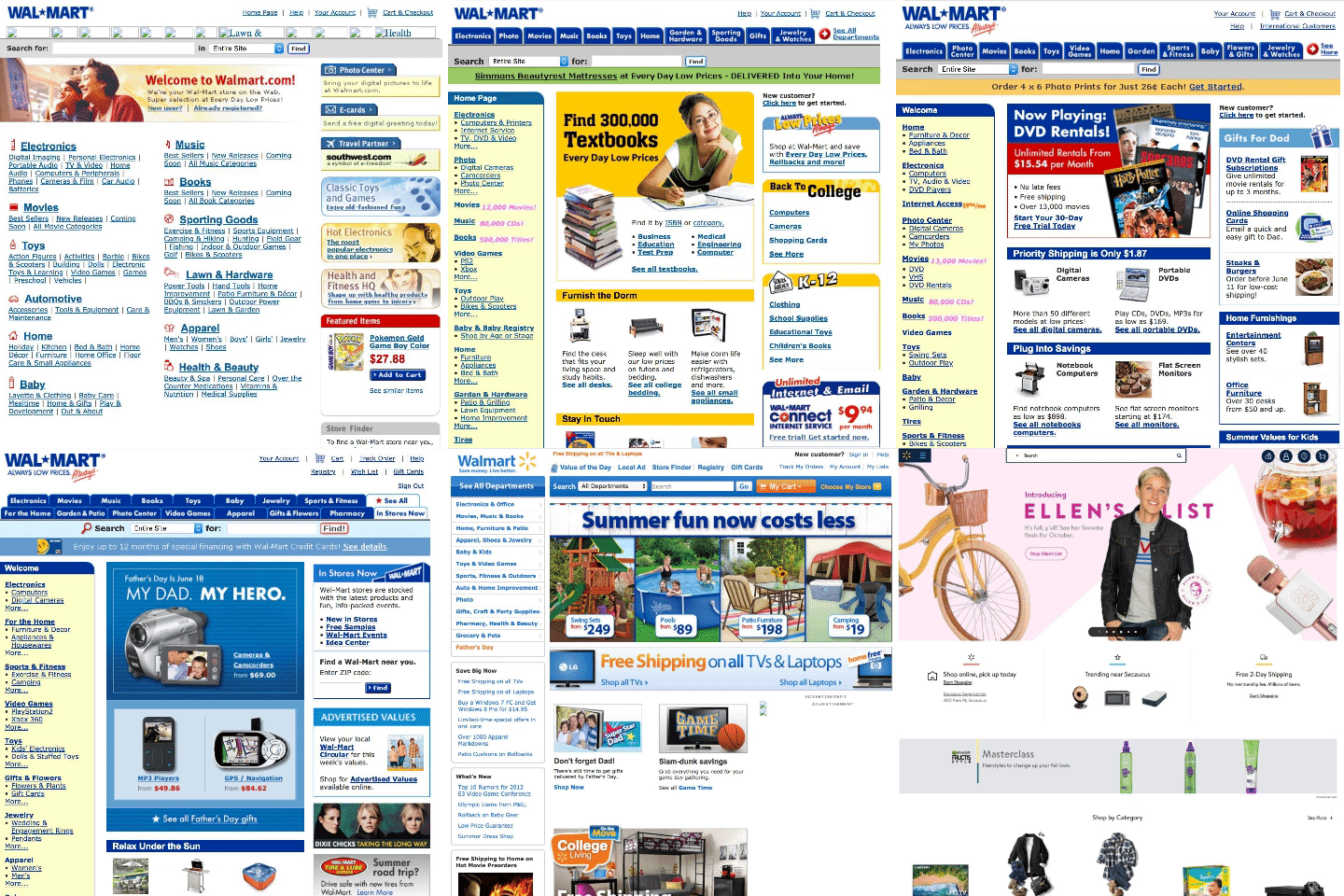
When Walmart looked at its mobile experience, it didn’t find any big problems.
Instead, it found a lot of small, connected issues.
Navigation requires effort. Users had to move through layered menus and scan dense category structures, slowing down product discovery.
Checkout introduced friction through multiple steps and repeated inputs, increasing abandonment rates.
Slow performance broke the flow. Even small delays frustrated users and interrupted their buying process.
None of these problems were huge by themselves.
But together, and at Walmart’s size, they added up.
The bigger problem was how things were set up. The experience was first designed for desktops and only later changed for mobile, so it didn’t match how people actually use their phones.
Without a real UX redesign, the experience didn’t meet what users expected.
What Walmart Changed with Its UX Redesign
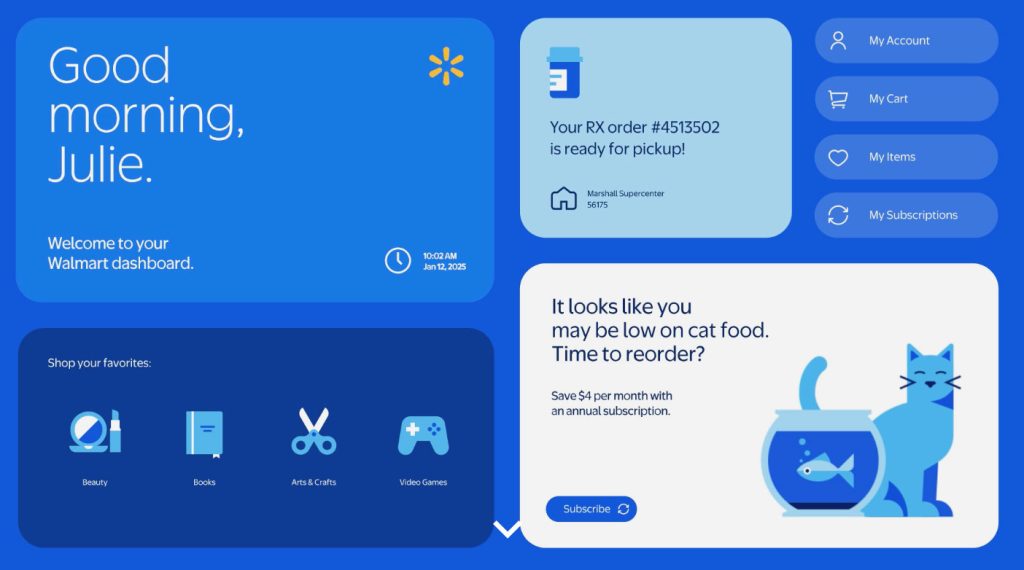
Walmart treated UX redesign as a key strategy, not just a new look.
The company rebuilt its experience based on real user behavior.
Walmart used a mobile-first design that focused on important actions and made navigation easier. Instead of giving too many choices, it helped users make decisions.
Performance was a big focus in the redesign. Faster loading and smoother interactions let users move through the site without delays. Walmart found that making the site just one second faster could boost conversions by up to 2%, showing how speed affects sales.
The buying process was made much simpler. Checkout steps went from seven to three, making it easier for people to finish buying.
The interface was cleaned up. There was less clutter, simpler layouts, and clearer actions, so users could make decisions faster.
Most importantly, the UX redesign went beyond just the look of the site.
It became a full system approach, bringing together design, technology, and operations to create a smooth experience everywhere users interacted.
Designing for Scale: Lessons from Walmart’s Digital Shift

Walmart’s UX redesign shows an important lesson.
Designing for scale isn’t just about serving more people.
It’s also about meeting different needs and situations.
As highlighted in its broader digital strategy, Walmart focused on inclusivity and adaptability. Different users interact with products differently, and the UX redesign allowed for flexibility rather than forcing a single rigid journey.
The company also redefined value.
Instead of just focusing on price, Walmart put more emphasis on saving time and making things easier. Features like faster checkout and simpler navigation were meant to reduce effort.
This shows something deeper.
UX redesign isn’t only about making things easy to use.
It’s also about how valuable users think the experience is.
When people feel a product saves them time, they’re more likely to trust it and come back.
Walmart’s UX redesign led to big results.
The Results: A Measurable Impact on Conversions
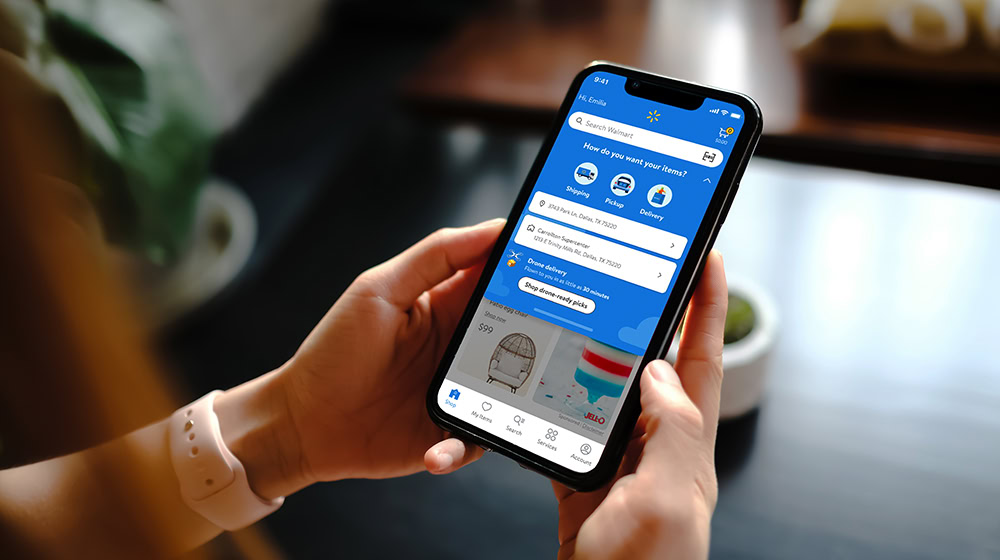
The results of Walmart’s UX redesign were not just noticeable, they were substantial and measurable across multiple performance indicators.
The most cited outcome is the 20% increase in conversions, but that number only tells part of the story. Alongside this lift, Walmart experienced a significant increase in mobile orders, improved session duration, and stronger engagement across its platform. These metrics indicate that users were not only completing purchases more often, but also interacting with the experience more confidently and efficiently.
This level of improvement did not come from a single change or feature.
It was the result of a coordinated UX redesign effort that addressed multiple layers of the experience at once. Performance improvements made pages load faster and interactions feel immediate. Structural changes simplified navigation and reduced the effort required to find products. Usability enhancements clarified actions and removed confusion throughout the journey.
Each of these changes may have seemed small in isolation.
But together, they created a compounding effect.
Every removed delay, every simplified step, and every clearer interaction reduced friction. And when friction is reduced consistently across an entire experience, users move with less resistance and more intent.
That is what ultimately drives conversions.
Why the UX Redesign Worked

Walmart’s UX redesign was effective because it aligned closely with how people naturally behave, especially in mobile environments.
One of the key improvements was the reduction of cognitive load. By simplifying layouts, clarifying navigation, and prioritizing important actions, users no longer had to think as much to move forward. Decisions became easier, and when decisions are easier, users are more likely to act.
Friction was also systematically removed from the experience. Instead of addressing one major issue, Walmart focused on eliminating dozens of small inefficiencies. This included reducing checkout steps, improving load times, and making interactions more predictable.
Trust played an equally important role.
A fast and consistent experience signals reliability. When users feel that a platform works smoothly and responds quickly, they are more comfortable completing transactions. Trust is not built through messaging alone. It is built through experience.
Most importantly, the UX redesign respected the user’s time.
Every improvement, whether it was faster performance or fewer steps, contributed to a more efficient journey. In today’s digital environment, time is one of the most valuable currencies. Experiences that save time are more likely to convert and retain users.
This is the foundation of effective UX redesign.
How to Apply This UX Redesign Strategy
You do not need Walmart’s scale, resources, or infrastructure to benefit from UX redesign. What you need is the same approach to thinking about user experience.
The first step is to experience your own product as a user. Go through your mobile journey from start to finish and pay close attention to where friction occurs. Notice where you hesitate, where something feels unclear, or where the experience slows down.
These moments are opportunities.
Next, prioritize speed as a core part of your UX redesign strategy. Performance is not just a technical concern. It directly affects user behavior and conversion rates. Even small improvements in load time can have a measurable impact.
Simplifying your flows is equally important. Look for steps, inputs, or interactions that can be removed without affecting the outcome. The fewer obstacles users encounter, the more likely they are to complete their journey.
Designing specifically for mobile contexts is also critical. Mobile users interact differently, often with limited attention and time. Your UX redesign should reflect those conditions rather than simply adapting desktop experiences.
Finally, rely on data and continuous testing. Walmart’s success was not based on assumptions. It was driven by experimentation, iteration, and real user behavior. Testing allows you to validate what works and refine your experience over time.
The Bigger Lesson: UX Redesign Is a Growth Strategy
Walmart’s success highlights a broader insight that applies to any digital product.
UX redesign is not just about improving how something looks or feels.
It is about improving how a business performs.
A well-executed UX redesign reduces friction across the user journey, increases trust through consistency and reliability, and aligns the product with real user behavior. When these elements come together, users are more likely to complete actions, return to the platform, and engage more deeply.
Your Mobile Experience Might Be Costing You Sales
More traffic should mean more revenue, but if conversions are not keeping up, something in your experience is getting in the way.
Small moments of friction can quietly push users away before they complete a purchase.
A focused UX redesign can remove those barriers and turn existing traffic into real growth.
Get a FREE STRATEGY SESSION here.
We redesign mobile experiences for conversion, not aesthetics.