.svg)
.svg)



Your product might look polished. Your marketing might be driving steady traffic. On paper, everything appears to be working.
And yet something feels off.
Conversions are lower than expected. Users sign up but do not engage. Drop-offs appear in critical flows. Support tickets repeat the same confusion. Growth slows without a clear explanation.
In many cases, the problem is not visibility, not branding, and not even features. It is friction.
A UX Audit is one of the most effective ways to uncover that friction and turn it into measurable improvement. It is not a surface-level design critique. It is a structured evaluation of how your digital product actually performs in real-world use.
This article explores what a UX Audit truly involves, when it makes sense to run one, how it works, and why it can become a powerful growth lever for your business.
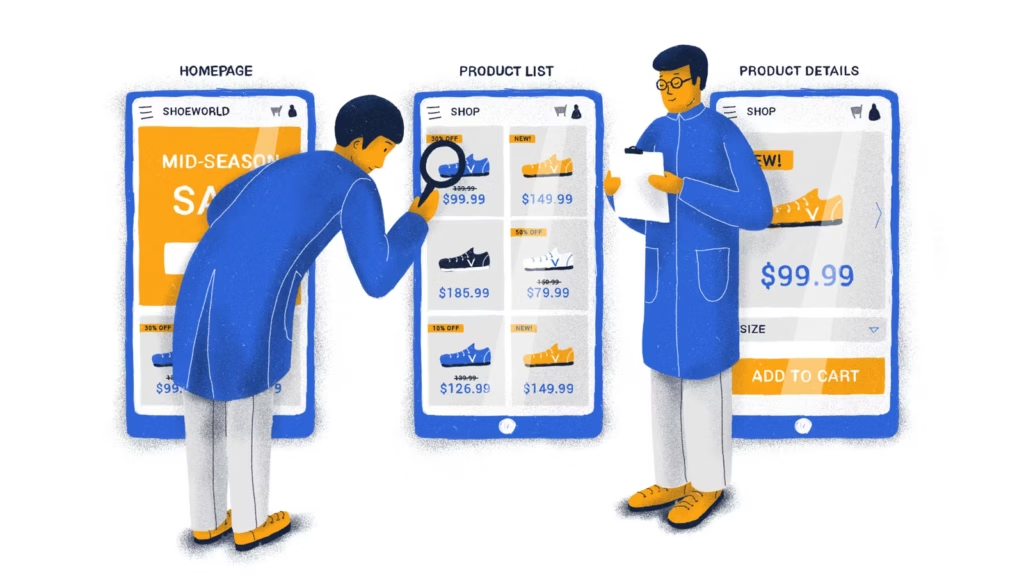
What a UX Audit Really Is
In plain terms, a UX Audit, also known as a user experience audit, is a systematic review of your digital product’s user experience. Its purpose is to identify usability issues, structural weaknesses, and gaps between user expectations and the actual experience you deliver by systematically evaluating the product’s user experience.
Think of it as a product health check.
Just as a financial audit identifies inefficiencies in spending, a UX Audit identifies inefficiencies in interaction. It examines how users move through your site or app, where they hesitate, where they abandon tasks, and where confusion undermines progress.
It answers critical questions. Why are users dropping off during onboarding? Why does traffic not convert at expected rates? Why do customers repeatedly contact support about the same issues? Why does engagement decline after initial signup?
A UX Audit does not guess. It investigates. And it does so using structured methods rather than opinions.
The Difference Between Casual Review and a Structured UX Audit
Many teams believe they are evaluating user experience simply because they discuss design in meetings. Internal feedback sessions, stakeholder comments, and aesthetic critiques are common. These conversations can be helpful, but they are not the same as a UX Audit.
A structured UX Audit follows a defined process. It begins with clear objectives and a focused scope. It applies usability principles to evaluate the interface consistently. It examines real behavioral data. It documents findings with clarity and prioritizes them according to impact.
This level of rigor matters. Without structure, feedback becomes subjective. With structure, insights become actionable.

A UX Audit connects interface design, interaction patterns, analytics data, and business objectives into a coherent understanding of product performance.
When a UX Audit Becomes Essential
You do not need a crisis to justify a UX Audit. In fact, the most successful teams use them proactively rather than reactively.
A common trigger is a sudden or gradual drop in performance metrics. Conversions decline. Engagement weakens. Funnel completion rates fall. When the cause is unclear, a UX Audit helps identify hidden friction points that data alone cannot explain.
Another key moment is before a redesign. Many redesigns fail because they are driven by aesthetic preferences or competitive pressure rather than evidence. A UX Audit ensures that the redesign addresses real usability problems instead of cosmetic adjustments.
Launches are another critical stage. Before releasing a new feature or product, evaluating the experience can prevent costly mistakes from scaling. Fixing friction early is significantly less expensive than repairing it after widespread adoption.
Even in stable growth phases, periodic UX audits function as preventive maintenance. Just as you would not wait for a system to crash before reviewing its performance, you should not wait for severe conversion drops before evaluating user experience.
If you are unsure whether your product experience is helping or quietly hurting growth, this is the right moment to investigate.
Curious what a focused UX Audit could uncover in your product?
Book a free strategy session and explore the opportunities hiding in your current experience:
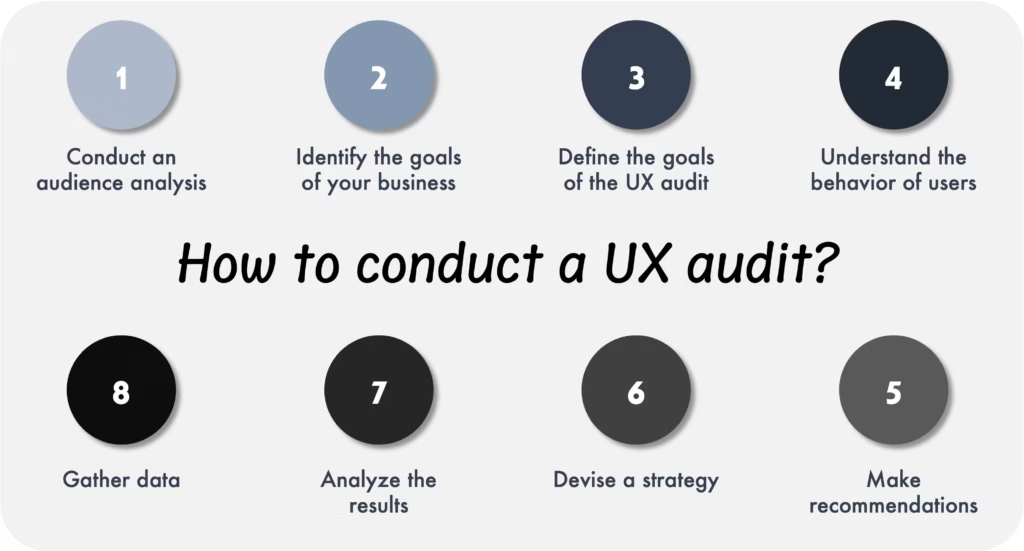
How to Prepare for a UX Audit
Preparation determines the quality of the outcome.
A UX Audit should begin with clarity about what you want to learn. Perhaps your goal is to improve onboarding completion. Perhaps it is to reduce checkout abandonment. Perhaps it is to increase adoption of a specific feature. Clear goals focus the evaluation.
Scope matters as well. Auditing every screen of a large product can dilute attention. Instead, focus on high-impact journeys. Revenue-generating flows, onboarding experiences, and frequently visited pages often provide the greatest leverage.
Existing data provides essential context. Analytics reports reveal where users drop off. Heatmaps show interaction patterns. Session recordings expose moments of hesitation. Customer feedback and support tickets highlight recurring confusion. Bringing this information together ensures that the UX Audit is grounded in reality rather than theory.
When preparation is thoughtful, the audit becomes sharper, more strategic, and far more valuable.
Methods Behind a Strong UX Audit
A comprehensive UX Audit relies on multiple perspectives rather than a single technique.
One foundational method is heuristic evaluation. This involves reviewing the product against established usability principles such as clarity of system feedback, consistency of interaction patterns, and error prevention. These principles provide a stable framework for identifying friction.
Another important layer is pattern comparison. Users carry expectations from other digital experiences. When your interface deviates from widely understood patterns without good reason, it increases cognitive load. A UX Audit identifies where these deviations create unnecessary friction.
Quantitative data adds depth. Analytics reveal where users abandon flows, which steps generate hesitation, and where engagement weakens. Data highlights symptoms. The audit investigates root causes.

When available, qualitative input strengthens conclusions. User interviews, usability testing, and surveys validate whether identified issues reflect real-world frustration. Combining quantitative and qualitative insight creates a complete picture of the user experience.
What a UX Audit Looks For
A UX Audit examines how design decisions influence behavior.
It looks for unclear navigation structures that force users to search unnecessarily. It identifies calls to action that lack hierarchy or clarity. It highlights inconsistent interface elements that behave differently across pages. These inconsistencies may seem minor but can disrupt flow and increase cognitive effort.
Accessibility is another critical area. Poor contrast, missing labels, and limited keyboard navigation exclude users and introduce risk. In a digital landscape where inclusivity matters, accessibility is not optional.
Responsiveness also plays a central role. A product that works well on desktop but struggles on mobile undermines a significant portion of traffic. Layout issues, slow loading states, and broken interactions can silently damage conversions.
Perhaps most importantly, a UX Audit identifies expectation mismatches. Marketing may promise simplicity while onboarding feels complex. Buttons may imply one action but trigger another. Pricing pages may lack clarity around value. When expectations and experience diverge, trust erodes quickly.
These findings often reveal that the biggest barriers to growth are not dramatic design flaws but small points of friction compounded over time.
Turning Findings Into Strategic Direction
An audit without prioritization creates overwhelm. The real value lies in transforming observations into a structured plan.
Findings are evaluated based on severity, frequency, business impact, and implementation effort. This process clarifies which issues deserve immediate attention and which can wait.
High-impact improvements often include simplifying onboarding steps, clarifying value propositions, reducing unnecessary form fields, or improving navigation clarity. Smaller cosmetic adjustments may be deprioritized in favor of changes that directly affect user behavior.
By organizing insights strategically, a UX Audit becomes more than a critique. It becomes a roadmap.
Instead of debating opinions internally, teams can move forward with clarity and confidence.
From Insight to Implementation
A strong UX Audit concludes with clear documentation and practical next steps.
The report should explain objectives, summarize major findings, and connect usability issues directly to business impact. Visual examples provide clarity. Recommendations outline specific improvements rather than vague suggestions.
Implementation often follows a cycle of iteration and validation. Design adjustments are made, tested, and measured. Performance metrics are monitored to confirm improvement. This feedback loop strengthens the product over time.
When handled thoughtfully, a UX Audit accelerates progress rather than slowing it. It reduces guesswork and increases strategic precision.
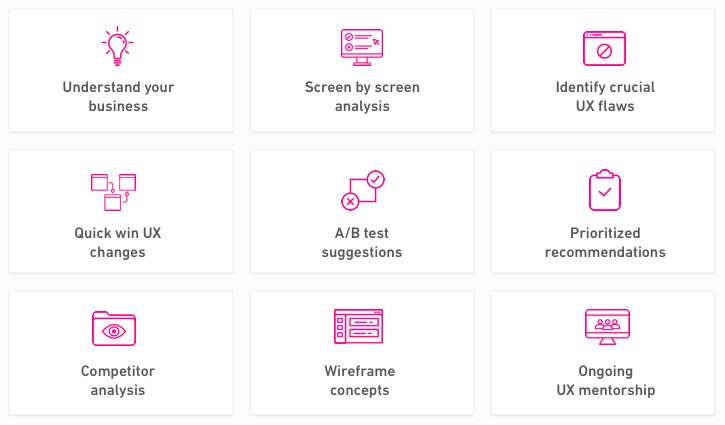
The Tangible Benefits of a UX Audit
The impact of a UX Audit extends beyond interface polish.
Improved usability leads to smoother user journeys. When friction decreases, task completion becomes easier. Users feel more confident and less frustrated. That confidence translates into higher conversions and stronger retention.
Evidence-based prioritization reduces internal conflict. Product teams align around shared insights rather than personal preferences. Engineering resources are allocated more effectively. Marketing efforts become more coherent because the experience matches the promise.
Perhaps most importantly, a UX Audit reduces risk. By validating assumptions before heavy investment, businesses avoid building features that users do not need or understand.
In competitive markets, this clarity becomes a strategic advantage.
How Raw Studio Approaches UX Audits and Product Health
At Raw Studio, a UX Audit is not treated as a checklist exercise. It is part of a broader conversation about product health and informed decision-making.
Digital products often struggle not because teams lack talent, but because assumptions go unchallenged. Internal familiarity can create blind spots. What feels obvious to a team may be unclear to a new user.
A thoughtful UX Audit exposes these blind spots.
It helps teams identify gaps between intended experience and actual behavior. It validates ideas before major development investment. It aligns design, development, and business objectives around shared evidence.
Rather than reacting to performance problems after they become costly, teams can use UX audits as proactive tools for steady improvement. This approach reduces long-term risk and strengthens product strategy over time.
The goal is not criticism. It is clarity.
UX Audit as a Growth Lever
Hidden friction rarely announces itself loudly. It lives in small hesitations and moments of confusion. It accumulates quietly across journeys.
A UX Audit brings those moments into focus.
It allows you to see where users struggle, understand why metrics stall, and prioritize improvements with confidence. It transforms vague concerns into structured insight. It shifts decision-making from instinct to evidence.
For growing businesses, this shift can be transformative.
When your product experience becomes smoother, clearer, and more aligned with user expectations, growth feels less forced. Conversions improve naturally. Retention strengthens. Support costs decline. Teams move faster because they know where to focus.
Ready to Strengthen Your Product Experience?
If you sense friction in your product, or you want clarity before your next strategic move, a UX Audit can provide direction grounded in evidence.
Your product should not rely on assumptions. It should evolve through clarity, insight, and steady improvement.