


How to Choose a UX Design Agency: A 2026 Buyer’s ChecklistHow to Choose a UX Design Agency: A 2026 Buyer’s Checklist

You have a product that needs to convert better, a redesign that is overdue, or a launch that cannot afford to fall flat. Somewhere on your shortlist is a UX design agency, or three, or ten, all making similar claims about “user-centred design” and “beautiful interfaces.” Pretty screens and business results are not the same thing, and it is hard to tell which agency will deliver the second from a portfolio built to showcase the first.
This guide is a practical checklist for founders and product leaders deciding who to hire, whether that is an agency, a freelancer, or an in-house team. It covers what an outcomes-focused UX agency actually delivers, how to read a case study without getting seduced by visuals, how pricing models work, and the questions that separate a strong partner from an expensive mistake.
Get this decision right and you buy back months of guesswork and a measurable lift in activation, conversion or retention. Get it wrong and you pay twice: once for the work, and again for the redesign that undoes it.
Table of Contents
Do You Need an Agency, a Freelancer, or an In-House Hire?
Before comparing agencies, work out whether an agency is the right structure for the problem.
A freelancer makes sense for a narrow, well-defined task with a clear brief, such as a single flow redesign or a specific set of screens. You get speed and lower cost, but you own the strategy and quality control. If the brief is fuzzy or the real problem is “why isn’t this converting,” a freelancer working alone will struggle to diagnose it.
An in-house hire is worth it once design work is a permanent need, typically once a product has enough surface area that someone must own the design system and build institutional knowledge over years. Recruiting strong product designers takes months, and one hire rarely covers research, UI and CRO at a senior level.
An agency is the right call when you need senior-level thinking across strategy, research, UX, UI and often CRO, on a timeline that does not accommodate a three-to-six-month hire. This is especially true for a launch, a full redesign, a rebrand, or a conversion problem that needs a dedicated team to diagnose and fix quickly. A good agency gives you a team, not a single opinion, and has already fixed the mistakes a first-time in-house hire is likely to repeat.
Many of Raw Studio’s clients land here after outgrowing a freelancer, using the engagement to build foundations an internal team can grow into later.
What a Great UX Agency Actually Delivers
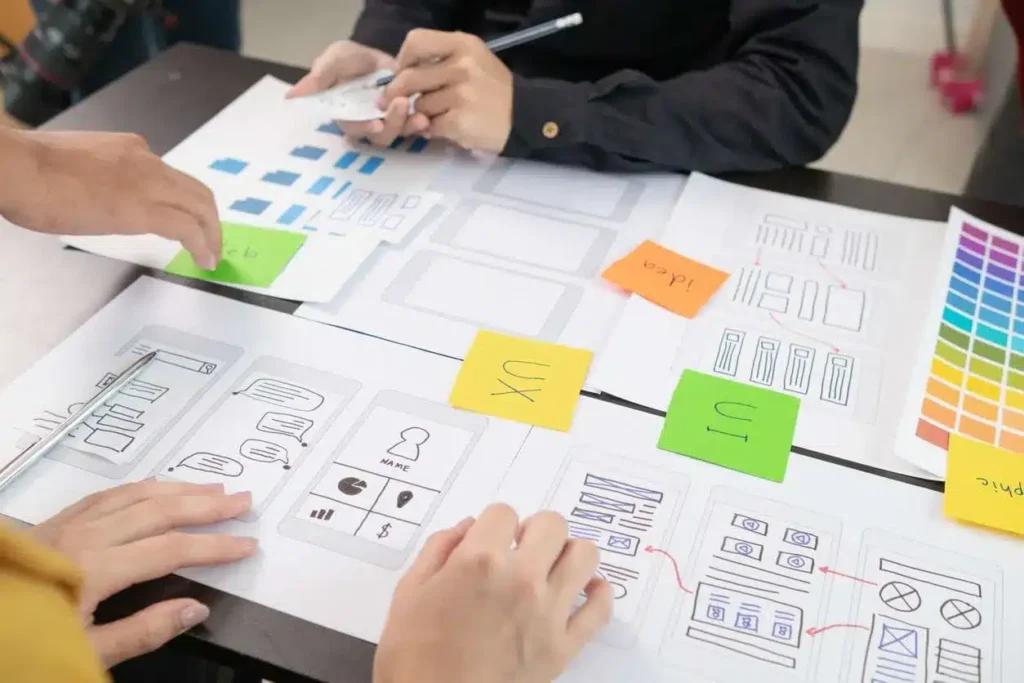
The market is full of studios that produce polished mockups and call it UX. Polish matters, but it is the output, not the value. You are paying for a process that reduces risk and drives a business outcome. Look for three things.
Research rigour
Good UX starts with evidence, not opinion: user interviews, usability testing and analytics review, and, where CRO is in scope, funnel and heatmap analysis before a single screen gets designed. An agency that jumps straight to wireframes is guessing, and you are paying for their guess.
A clear, repeatable process
Ask any strong agency to describe its process and it should manage it in a few sentences, without hedging: discovery and research, then strategy, then design and prototype, then test and validate, then handoff and measure. You should see where you provide input and how findings loop back into the design rather than being filed away.
A process should create clarity without becoming so rigid that it prevents a team from responding to new evidence. Raw Studio explores this balance in its article on why the traditional UX process can hold designers back.
A CRO and business-results focus

The best UX agencies do not treat conversion as a discipline bolted on at the end. They design with the funnel, the activation metric, or the checkout flow in mind from day one, and can talk fluently about how a design decision affects signup rate or trial-to-paid conversion. That is the difference between an agency that makes your product look better and one that makes it perform better.
This work should be supported by the right research, analytics and experimentation stack. Raw Studio’s guide to CRO tools that improve UX and UI design explains how teams can identify friction and turn design decisions into measurable improvements.
Alongside these three, expect real collaboration rather than a black box: regular check-ins and a shared understanding of trade-offs, not a big reveal at the end. If an agency’s website only shows finished screens with no mention of research or measurable outcomes, that is worth noting before you go further.
How to Read a Portfolio and Case Studies Critically
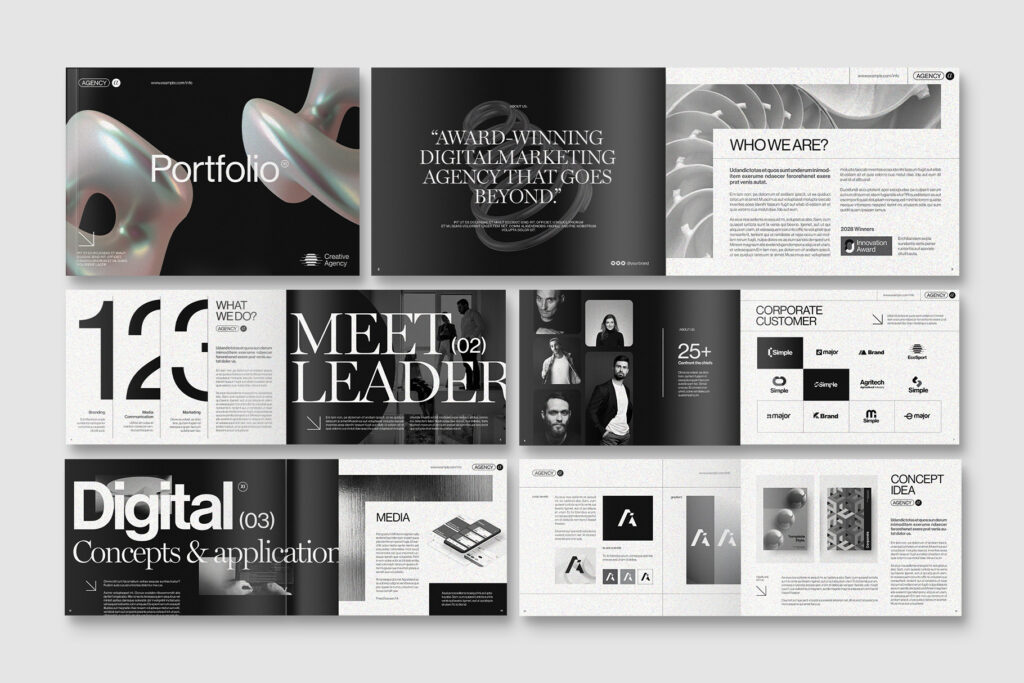
Every agency’s portfolio is a highlight reel. Read past the highlight and find the substance underneath.
Look for the problem, not just the picture. A strong case study opens with a business problem: low activation, a broken checkout, or a rebrand needed to win enterprise trust. If it opens with “here’s what we designed” and nothing about why, that is a gap.
Look for outcomes, not adjectives. “Sleek,” “modern” and “intuitive” describe nothing measurable. Look for language tied to results: conversion uplift, reduced signup friction, faster time-to-value. Reputable agencies quote real metrics, and you should ask directly for the numbers behind any case study that does not show them.
Look for a range of clients and industries. An agency that has worked across SaaS, ecommerce and fintech has had to adapt its process to different constraints, a sign of genuine capability rather than a lucky template. Raw Studio’s work with organisations from Westfield and Zip to fast-growing startups like Snappr reflects that range.
Ask what changed after launch. The most telling question is simple: what happened to the metric that mattered in the weeks after this shipped? An agency confident in its work will have an answer. One that only talks about process, never the after, has not been tracking whether the work moved the needle.
You can also examine well-documented redesigns, such as Walmart’s mobile UX redesign and its effect on conversions, to see how specific experience changes can connect to commercial outcomes.
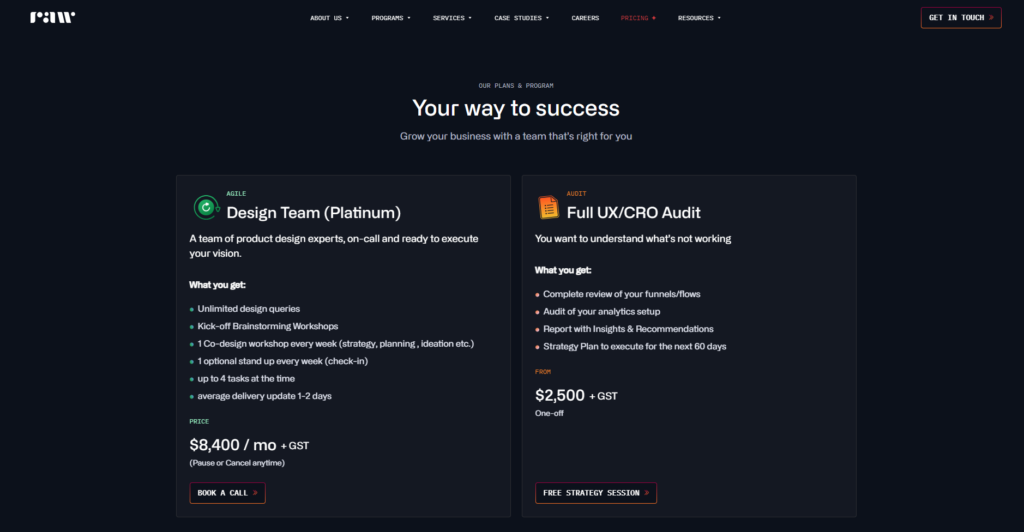
Engagement and Pricing Models
UX and product design agencies typically price in one of three ways, each suiting a different stage of need.
Project-based is a fixed scope, fixed price or price band for a defined deliverable, such as a full redesign or a rebrand. This suits teams that know what they need and want budget certainty. Expect a detailed scope document upfront and a clear list of what is included.
Retainer is an ongoing monthly engagement, useful once you need continuous design support and CRO testing rather than a one-off deliverable. It suits teams that ship regularly and want a design partner embedded in the sprint cycle without the overhead of a full-time hire.
Design sprint or paid discovery is a short, time-boxed engagement, often one to four weeks, focused on defining the problem and producing a prototype before committing to a larger build. It is the lowest-risk way to test an agency relationship and get real deliverables in return.
None of these is inherently better. The right model depends on whether your problem is defined, ongoing or still being shaped. A good agency recommends the model that fits your stage, not the one that suits its cash flow.
Questions to Ask on a First Call
Come to the first call with a short list. The answers, and how confidently they are given, tell you more than any pitch deck.
- How do you approach research, and what does it look like for a project like ours?
- Can you walk us through a case study where a design decision changed a specific metric?
- Who will actually work on our project, and what is their seniority?
- What does your process look like week to week, and where do we give input?
- How do you measure success after launch, and do you help us track it?
- What is out of scope, and what would trigger an additional cost?
- What happens if research tells us our original brief was wrong?
That last question matters more than it seems. An agency that has never redirected a client based on evidence either has not done enough research or is not willing to tell clients uncomfortable truths.
Red Flags to Walk Away From

A few patterns are worth treating as dealbreakers rather than quirks.
No mention of measurement or outcomes anywhere in the pitch or portfolio. A refusal to name past clients or provide references. Pressure to sign a large, long-term contract before any discovery work. A one-size-fits-all process not adapted to your industry, whether that is healthtech compliance or fintech security.
Junior staff pitching the work with no senior involvement. And vague answers about timeline, cost, or what happens if the first round of design does not test well.
None of these alone is fatal, but two or more together suggest the agency is optimising for winning the deal, not for your outcome.
Running a Paid Discovery or Pilot
If you are still unsure after the first call, a paid discovery phase is the lowest-risk way to find out. A well-run discovery, typically one to three weeks, includes stakeholder interviews, a review of existing user data, and a proposed direction or prototype. You come out with a tangible deliverable and a much better basis for deciding whether to commit further.
Treat the discovery phase itself as a test. Was it well-run? Did the team push back on assumptions with evidence? Did the direction feel grounded in what users need, not just what looks good in a deck? That is the working relationship you would be signing up for at scale.
This evidence-led approach is especially important for products serving specialised audiences, where ongoing research, prototyping and testing can reveal needs that generic design assumptions miss. Raw Studio discusses this in its guide to designing user experiences for niche markets.
Making the Decision
Choosing a UX design agency is a choice about who you trust to translate business goals into a product experience that performs. Prioritise evidence over polish: research rigour, a visible process, outcomes you can point to, and a team willing to answer hard questions directly. The agencies worth hiring will welcome that scrutiny, not deflect it.
Raw Studio works this way with clients across SaaS, ecommerce, fintech, healthtech and edtech, combining research-led UX design with a dedicated CRO focus so design decisions are judged on results, not just looks. See how that plays out across our case studies, explore our UX design services alongside the full range of our services, or check pricing to see what different engagement models look like.
Ready to discuss your product, redesign or conversion challenge? Book a free strategy session.
Get a UX & CRO Expert’s Eyes on Your Website. Book a free 30-minute UX Teardown and get actionable insights on what’s costing you conversions — no fluff, just fixes you can implement right away.
Book a Free UX Audit
Related posts
UX Alone Won’t Cut It: The Six Elements That Drive Product Value
Have you ever tried starting a motorcycle only to hear nothing but a sad click? You might have a full […]
Personalized Shopping Experiences With Behavior UX
Personalization has moved from being a nice touch to becoming a core expectation in ecommerce. Shoppers want faster paths to […]
How Zoom Won the Market with 3 Simplicity-First UX Decisions
Zoom UX proves that a simple product experience can beat more complex competitors, especially when users need speed, clarity, and […]
Creative product design that gets results
Take your company to the next level with world class user experience and interface design.
get a free strategy session
