
How TikTok Uses 3 Algorithm-Driven UX Systems to Maximize Engagement

TikTok UX does not simply show people short videos. It creates a highly responsive content experience that learns what each person wants, delivers it almost instantly, and becomes more relevant with every interaction.
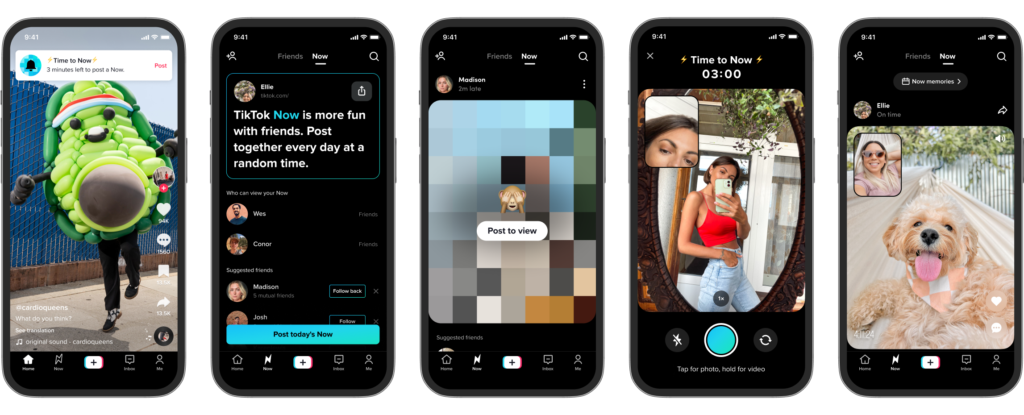
That combination has helped TikTok build one of the most compelling and habit-forming user experiences in the digital world. A user can open the app intending to watch one video, then realize that 30 minutes have passed without making a conscious decision to continue. Each swipe feels effortless, and the next video often seems surprisingly well matched to the user’s interests.
This is not the result of one clever feature. TikTok UX is built around several interconnected systems that reduce friction and continuously improve content relevance.
In this article, we will examine three algorithm-driven UX systems behind TikTok’s engagement: its personalized feed, instant content delivery, and behavioral learning engine. We will also explore why these systems work so effectively and how businesses can apply the same principles to websites, digital products, ecommerce experiences, and content platforms without copying TikTok’s interface.
Table of Contents
Why TikTok UX Feels So Addictive
Most digital products ask users to make decisions before receiving value.
A streaming service might ask someone to choose a category, browse a list of titles, open a detail page, and select an episode. An ecommerce website may require users to search, filter results, compare products, and open several tabs before finding something relevant.
TikTok removes almost all of this effort.
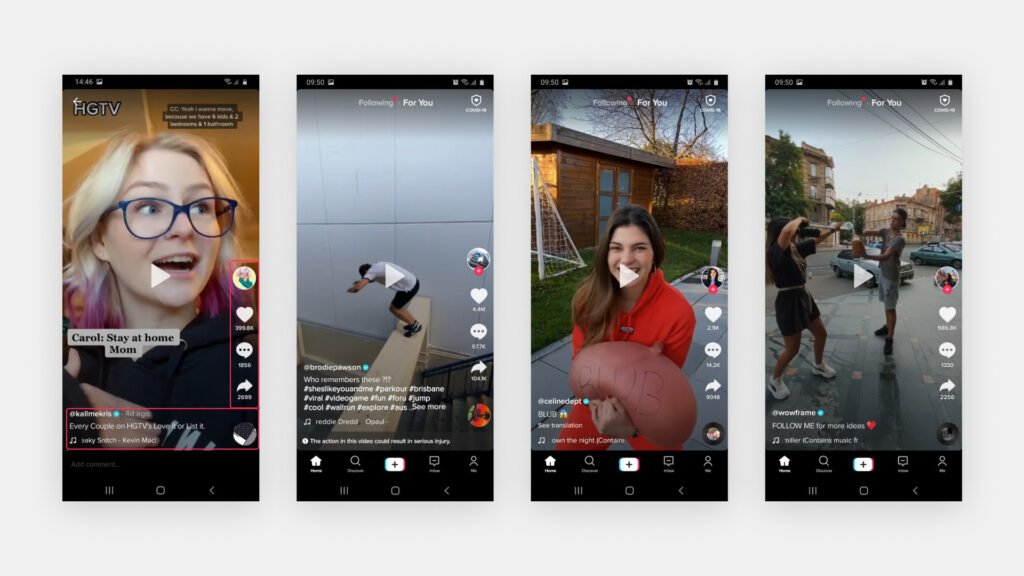
The app opens directly into a full-screen video. There is no complex homepage to navigate and no requirement to select a topic. Content starts immediately, and the user only needs to make one simple decision: keep watching or swipe.
That simplicity is a major part of TikTok UX. The platform minimizes the cognitive and physical effort required to begin and continue a session. Every swipe produces a new possibility, while every pause gives the platform more information about what the user may enjoy.
This creates a powerful engagement loop:
The user watches. TikTok observes the behavior. The algorithm adjusts its predictions. The next videos become more relevant. The user continues watching, generating even more useful behavioral data.
RAW.Studio explored a similar principle in its analysis of YouTube’s UX loops. YouTube uses recommendations, autoplay, infinite scroll, and calls to action to maintain behavioral momentum. TikTok compresses many of these mechanics into an even faster, more concentrated experience.
Its effectiveness comes from three underlying systems.
System 1: A Deeply Personalized Content Feed
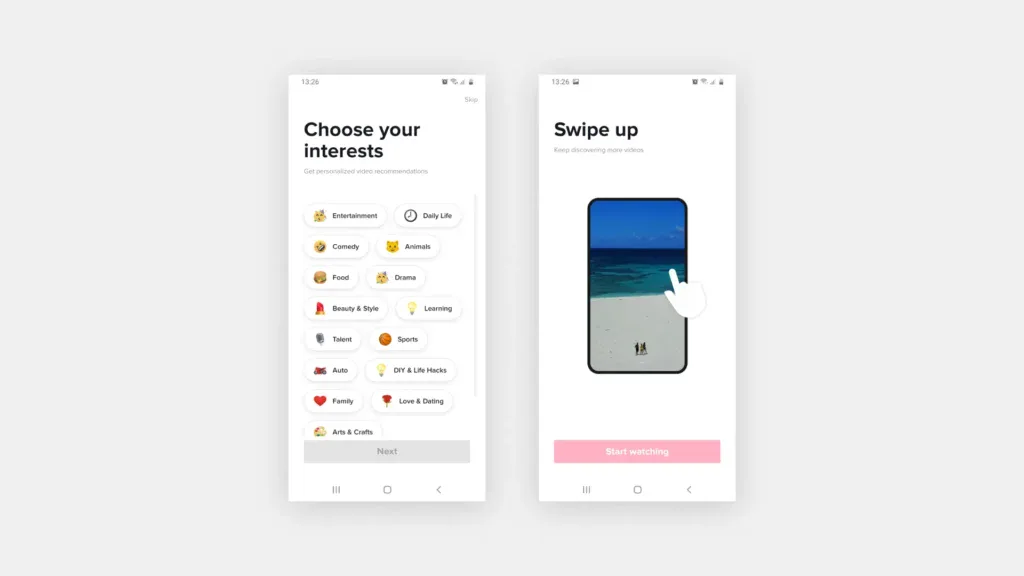
The “For You” feed is the center of the TikTok experience.
Unlike traditional social media feeds, it does not depend primarily on accounts a user already follows. It introduces content from unfamiliar creators based on the probability that the individual user will find it interesting.
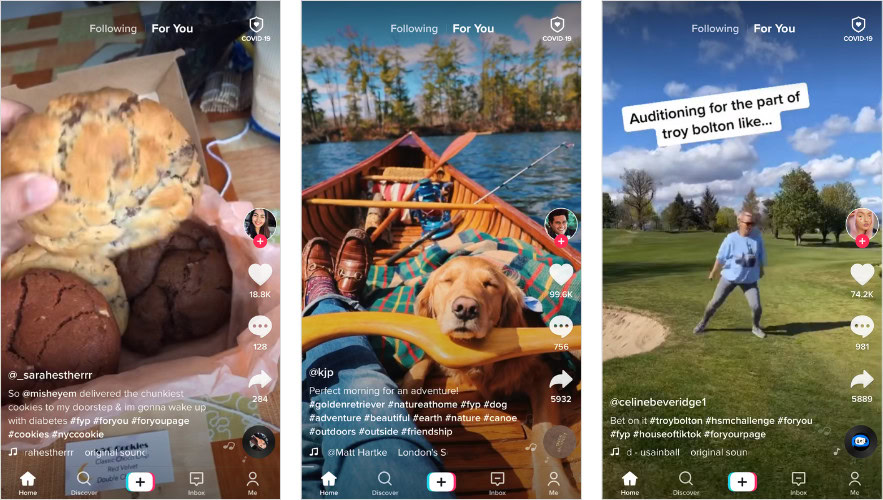
This means that two people opening TikTok at the same time can receive completely different experiences. One person may see cooking demonstrations, startup advice, and travel videos. Another may see comedy sketches, football highlights, and home renovation content.
The interface remains the same, but the experience changes according to the user.
That distinction is essential. TikTok does not treat personalization as an additional feature. Personalization is the product.
The platform can consider signals such as whether someone watches a video until the end, rewatches part of it, shares it, visits the creator’s profile, comments, follows the account, or immediately swipes away. It can also evaluate information associated with the content, including its topic, caption, audio, and engagement patterns.
No single interaction defines the entire experience. TikTok combines many small signals to estimate what the user is likely to watch next.
This produces a stronger feeling of relevance than a generic or chronological feed. Instead of asking, “What was published recently?” the system effectively asks, “What is this particular person most likely to care about right now?”
RAW.Studio’s article about YouTube UX highlights the same difference between chronological and recommendation-driven experiences. Chronological feeds prioritize time, while recommendation systems prioritize behavioral probability.
TikTok takes this principle further by making the recommendation itself the dominant interface.
Users do not need to browse through rows of thumbnails. Each recommendation receives the entire screen and begins playing automatically. The algorithm does not merely suggest content. It places its best prediction directly in front of the user.
System 2: Instant Content Delivery
Personalization would be far less effective if every swipe created a noticeable delay.
Speed is therefore another critical component of TikTok UX.
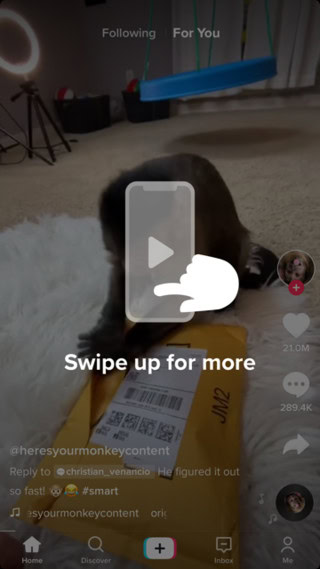
Videos appear to load continuously as the user moves through the feed. The platform prepares upcoming content so that the next interaction feels immediate. Instead of waiting for a page transition, selecting a video, or watching a loading spinner, the user swipes and receives the next experience.
This matters because even small delays can interrupt momentum.
A delay gives users time to reconsider what they are doing. They may close the app, respond to a message, return to work, or decide they have watched enough. Instant delivery removes many of these natural stopping points.
The experience feels less like navigating between separate pieces of content and more like moving through one continuous stream.
This approach reflects a broader UX principle: users are more likely to continue an action when the next step is easy, obvious, and immediate.
RAW.Studio’s analysis of Zoom’s simplicity-first UX decisions shows why reducing steps can become a competitive advantage. Zoom succeeded partly by making it easy to join meetings and complete a core task without unnecessary complexity.
TikTok applies the same philosophy to content consumption. The core action is not hidden behind menus or complicated navigation. It is available immediately and repeated through one simple gesture.
Fast delivery also supports TikTok’s variable reward dynamic. A user may not love every video, but the cost of trying the next one is almost zero. One swipe could reveal something funnier, more useful, or more personally relevant.
When the effort is minimal and the potential reward is high, users have a strong reason to continue.
System 3: Continuous Behavioral Learning
TikTok’s personalization does not remain static after onboarding. It evolves continuously.
Every session becomes a learning opportunity.
Imagine that a user occasionally watches videos about running. If that person begins completing more running videos, revisiting training tips, or following fitness creators, the feed may gradually show more content about footwear, nutrition, recovery, races, and exercise routines.
The experience adapts as the user’s interests develop.
This is more sophisticated than simply placing users into permanent categories. Human preferences change according to context, trends, life events, time of day, and temporary curiosity. Someone may be interested in travel planning for a few weeks, then shift toward cooking, productivity, or interior design.
TikTok’s system can respond to these changes because it pays attention to recent behavior.
Importantly, behavioral learning includes negative signals as well as positive ones. Quickly swiping away may tell the system that a topic, creator, presentation style, or video format is not appealing. Repeated dismissals can help the algorithm narrow its predictions.
This creates an experience that appears to become increasingly personal over time.
The system also encourages users to train it, even when they are unaware that they are doing so. Every second watched, every swipe, and every interaction contributes to future recommendations.
This is one reason the platform becomes harder to replace. A new content app may offer similar videos, but it does not immediately possess the same history of behavioral signals. TikTok’s value grows as it learns the user.
Why These Three Systems Work Together
TikTok’s engagement is not driven by personalization, speed, or behavioral learning in isolation. The strength comes from the way the three systems reinforce one another.
Personalization increases the probability that a video will feel relevant.
Instant delivery makes it effortless to test the next recommendation.
Behavioral learning uses the result to improve future recommendations.
The loop then repeats.
This produces what could be described as extreme relevance. Users are not simply browsing a large content library. They are experiencing a continuously updated stream assembled around their demonstrated behavior.
The distinction between stated and demonstrated preferences is important.
People may say they are interested in business, health, or educational content. Their actual behavior may reveal that they spend more time watching humorous stories, product demonstrations, or satisfying visual transformations.
TikTok can prioritize what users actually watch instead of depending entirely on what they claim to like.
The result is a feed that can feel unusually accurate. Users remain engaged because the platform consistently reduces the time between opening the app and discovering something interesting.
How Businesses Can Apply TikTok UX Principles
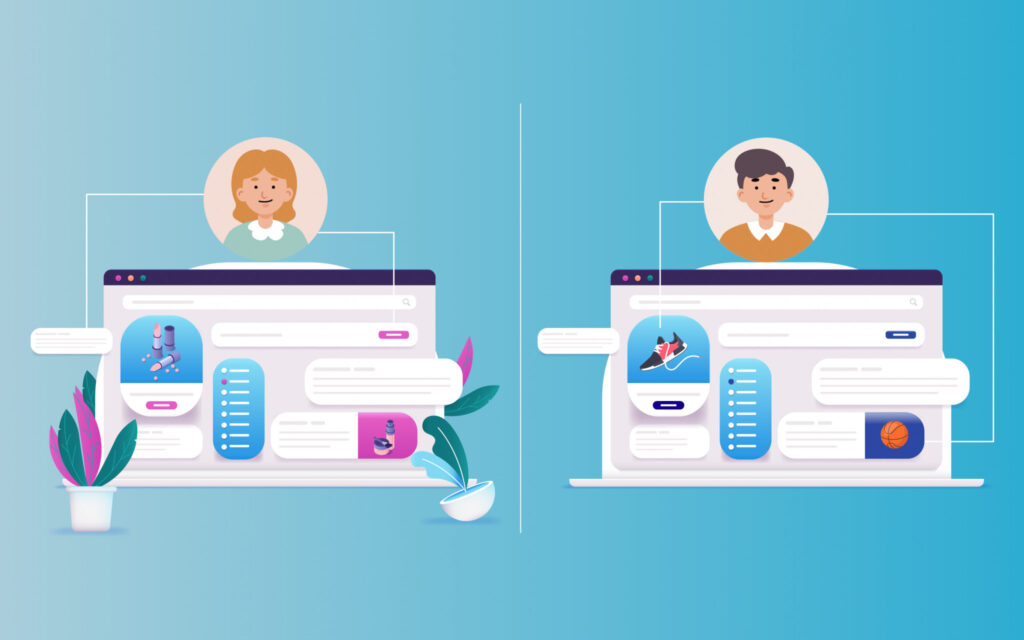
Most businesses do not need an endless vertical video feed. However, they can still apply the strategic principles behind TikTok UX.
Personalize the Experience
Businesses can begin by presenting content, products, or actions based on meaningful user context.
An ecommerce store might recommend products based on browsing behavior, previous purchases, location, or the category a customer is currently viewing. A SaaS platform could display different onboarding guidance for new users, experienced users, and administrators. A media website might recommend related articles according to the topics someone has already read.
The objective is not to collect as much data as possible. It is to use relevant information to reduce the distance between the user and the value they need.
Start with simple segments before investing in complex machine learning. Even basic personalization based on user role, intent, or previous activity can create a more useful experience than showing everyone the same homepage.
Reduce Loading Time and Interaction Friction
TikTok demonstrates that speed is part of the user experience, not merely a technical concern.
Review how long users must wait before receiving value. Examine page loading times, unnecessary form fields, extra confirmation screens, complicated menus, and repeated actions.
A customer who has already provided information should not have to enter it again. A returning user should not be forced through the same introductory experience. A recommended article or product should load quickly after it is selected.
Businesses should also identify natural stopping points that do not serve the user. A dead-end confirmation page, for example, could recommend a valuable next action. A completed lesson could lead to the next relevant module. A purchased product could connect to setup guidance rather than ending the journey abruptly.
Reducing friction does not mean pushing users endlessly. It means helping them progress without unnecessary effort.
Adapt to Real User Behavior
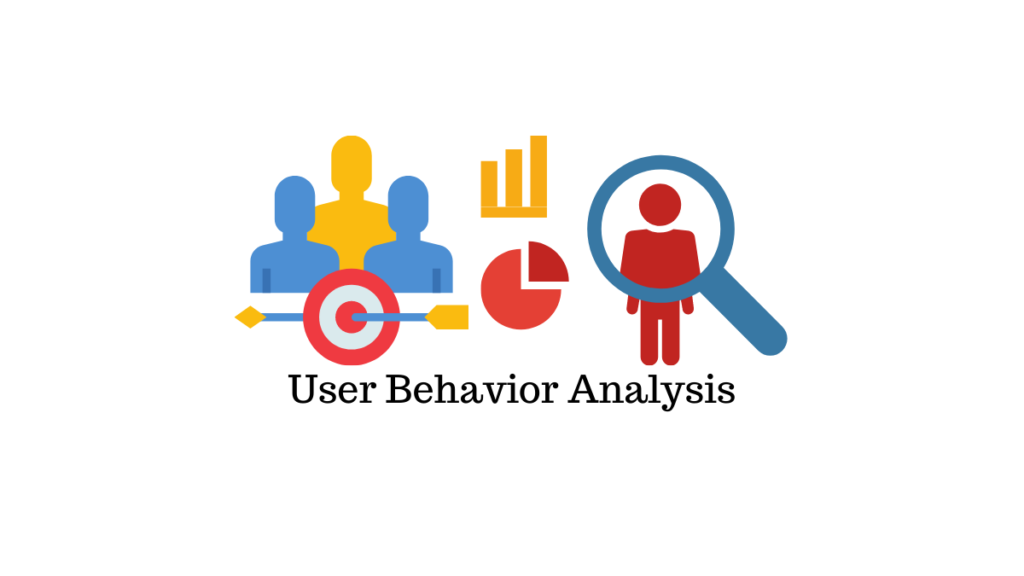
Many companies design digital experiences according to assumptions and leave them unchanged for years.
TikTok takes the opposite approach. Its system observes behavior and adjusts.
Businesses can apply this mindset through user research, analytics, usability testing, conversion analysis, and experimentation. Look at where customers hesitate, abandon a process, repeat an action, or search for help.
The goal is to find the difference between the journey the business designed and the journey users actually take.
For example, analytics may reveal that customers repeatedly visit a pricing page before reading case studies. That behavior could justify placing stronger proof directly beside the pricing information. Users may ignore a prominent homepage button but consistently select a smaller link that better reflects their intent.
Behavior is evidence. Strong UX systems use that evidence to improve.
Use Engagement Design Responsibly
TikTok’s success also raises an important question: when does effective engagement become manipulation?
Removing friction and increasing relevance can create genuine value. However, a product should not optimize attention at the expense of user wellbeing.
Businesses should define what meaningful engagement looks like. For a learning platform, success might mean completing a useful lesson rather than maximizing screen time. For a financial product, it could mean helping users make informed decisions instead of encouraging unnecessary activity.
The best engagement systems align user progress with business growth.
As RAW.Studio’s article on trust-building UX demonstrates, conversions depend on more than reducing friction. Users also need clarity, confidence, and trust.
A fast and personalized experience may generate short-term activity, but responsible design creates stronger long-term relationships.
Final Thoughts
TikTok UX is effective because the platform understands that engagement begins with relevance and continues through momentum.
Its personalized feed predicts what each user may enjoy. Its instant content delivery makes continuing nearly effortless. Its behavioral learning system improves the experience with every interaction.
Together, these systems create a powerful cycle in which consumption generates data, data improves recommendations, and better recommendations encourage further consumption.
The most useful lesson for businesses is not to copy TikTok’s visual design. It is to build digital experiences that listen, respond, and improve.
Personalize the journey where it adds value. Remove delays and unnecessary steps. Study real behavior instead of relying entirely on assumptions. Then use those insights to help customers reach meaningful outcomes more easily.
When relevance, speed, and adaptation work together, engagement becomes a natural result of a better experience.
Improve Your Product’s UX and Engagement
Is your website or product losing users because of slow journeys, generic content, or hidden friction?
Request a free UX audit and proposal from RAW.Studio to uncover opportunities to improve engagement, retention, and conversions. The team will review your current experience and identify practical ways to make it faster, more relevant, and easier to use.
Get a UX & CRO Expert’s Eyes on Your Website. Book a free 30-minute UX Teardown and get actionable insights on what’s costing you conversions — no fluff, just fixes you can implement right away.
Book a Free UX Audit
Related posts
15 Data-Backed UX Changes That Lift Conversion
Most landing pages aren’t losing conversions because of one massive, glaring error. Instead, they’re bleeding leads in small, almost invisible […]
How Stripe Uses 4 Developer-First UX Principles to Drive Massive Adoption
Stripe UX is one of the clearest examples of how developer-first design can turn a complex technical product into a […]
UX for SaaS in 2025: What Top-Performing Dashboards Have in Common
You’ve probably felt it before: that moment when you open a dashboard expecting answers and instead, you’re met with a […]
Creative product design that gets results
Take your company to the next level with world class user experience and interface design.
get a free strategy session
